

More news on this day
US-based Patel Family Office is aligning with Saudi Arabia’s AHQ on a proposed $1 billion AYARA hotel platform targeting new-build and repositioned properties across Riyadh, Jeddah and NEOM by 2029, according to emerging industry reports and publicly available information on the partners’ regional investment strategies.
Get the latest news straight to your inbox!
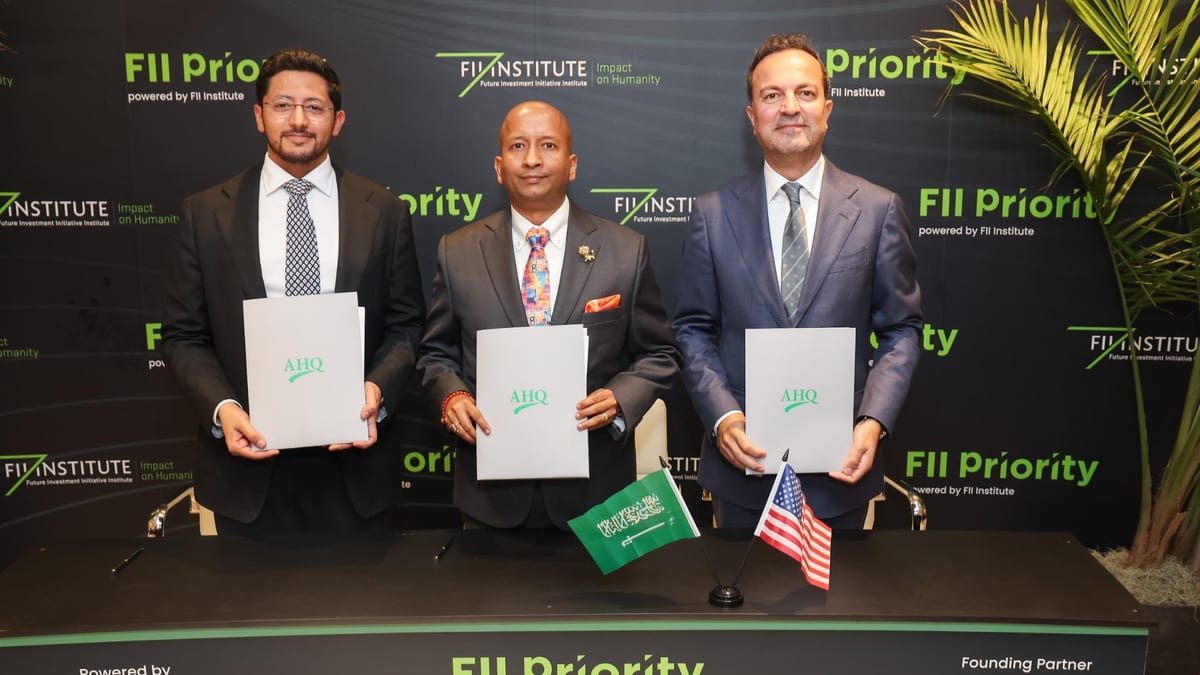
New Hospitality Platform Targets Saudi Arabia’s Growth Nodes
The AYARA concept is being positioned as a dedicated hospitality vehicle focused on Saudi Arabia’s fastest-growing urban and tourism markets, with Riyadh, Jeddah and NEOM identified as initial anchor locations. Although detailed project schedules have not yet been formally released, sector reports suggest that development is expected to progress in phases through 2029, in line with Saudi Arabia’s broader tourism build-out.
Publicly available information on Patel Family Office activity in the Middle East and North Africa indicates a sustained interest in hospitality and real estate, supported by large thematic investment funds aimed at the region. At the same time, Saudi private groups such as AHQ have been expanding into consumer-facing sectors aligned with domestic demand and Vision 2030 priorities, creating a foundation for jointly branded hotel ventures.
AYARA is expected to sit at the intersection of these strategies, combining international hospitality experience with local market access. Industry commentary frames the planned platform as part of a wider wave of cross-border family office alliances that seek to capture Saudi Arabia’s push to attract more international visitors while raising service standards across key destinations.
While full brand standards have not yet been made public, early descriptions from investment-focused coverage point to an upper-midscale to upscale positioning, with an emphasis on contemporary design, technology integration and experiential public spaces suitable for both business and leisure guests.
Patel Family Office Brings Deep US Hospitality Heritage
Background material on Patel Family Office describes it as a third-generation, entrepreneur-led family office with decades of experience across the US hotel landscape. The group highlights a track record of developing, owning and managing hundreds of hotel properties across multiple states, alongside broader real estate and private equity holdings.
In recent years, the family office has broadened its footprint beyond North America by backing regional and thematic funds focused on hospitality, real estate and infrastructure in the Middle East and North Africa. Published coverage of these initiatives outlines capital commitments running into the billions of dollars, underlining the scale of the group’s ambitions in global lodging and associated asset classes.
Industry observers note that such a background gives Patel Family Office an advantage in brand building, asset management and distribution relationships with global operators and booking platforms. These capabilities are expected to play a central role in defining AYARA’s operating standards, performance benchmarks and potential partnerships with third-party management companies where appropriate.
The family office has also promoted investment philosophies that place weight on sustainability, community impact and long-term value creation. If translated into the AYARA platform, these themes could influence site selection, building design, energy use and workforce policies across the planned hotel portfolio in Saudi Arabia.
AHQ Taps Vision 2030 Momentum in Riyadh, Jeddah and NEOM
AHQ, a Saudi-based investment group, has been increasingly visible in domestic and regional deal flows across consumer sectors, real estate and services. Public information on the group points to a strategy that aligns closely with Saudi Arabia’s Vision 2030 objectives, particularly in diversifying the economy and growing non-oil revenue streams such as tourism and entertainment.
Riyadh, Jeddah and NEOM are central to that national agenda, each at a different stage of development and appealing to distinct traveler segments. Riyadh is evolving into a major regional business and events hub, with rising demand for branded hotels near commercial corridors, financial districts and new entertainment zones. Jeddah serves as a key gateway to the Red Sea and the holy cities, with a broad mix of religious, leisure and business visitors.
NEOM, still under active development, is intended to serve as a flagship destination for innovation-focused and nature-oriented tourism along the Red Sea coast. New hotel brands entering this market are expected to experiment with cutting-edge environmental technology, modular construction and highly curated guest experiences, setting benchmarks that could be replicated across the kingdom.
For AHQ, partnering on AYARA provides a way to channel capital into these strategic locations through a cohesive hospitality brand rather than through single, stand-alone assets. The structure also allows for flexibility in tailoring individual projects to their submarkets while maintaining common design and operational principles.
Portfolio Strategy and Phased Rollout to 2029
Reports referencing the planned AYARA rollout suggest that the $1 billion allocation is likely to be distributed across several assets rather than concentrated in a single flagship project. A typical structure, based on comparable regional platforms, would involve a mix of greenfield developments, conversions of existing properties and joint ventures with local landowners or developers.
Market analysts expect Riyadh to see some of the earliest openings, responding to immediate demand from corporate travelers, events and government-led conferences. Jeddah may follow with both city-center and waterfront locations, while NEOM projects could come online later in the cycle as broader infrastructure and visitor flows mature.
The 2029 horizon provides room for adaptive phasing, allowing the partners to stage investments as key districts are completed, regulatory frameworks evolve and visitor data becomes clearer. This approach can also mitigate construction and financing risk by spreading project starts and handovers over several years instead of concentrating them in a narrow window.
In addition to room inventory, AYARA properties are expected to feature a range of non-room revenue drivers such as food and beverage venues, co-working lounges, wellness facilities and event spaces. These elements align with current global trends in hospitality, where mixed-use programming and community engagement play an increasing role in asset performance.
Implications for Saudi Arabia’s Evolving Hotel Landscape
The proposed AYARA platform fits into a rapidly changing Saudi hotel market, where international chains and new regional brands are racing to secure prime sites ahead of major tourism and events milestones later in the decade. Industry data already point to a significant pipeline of rooms under development across the kingdom’s main cities and giga-projects.
The entry of a joint US–Saudi family office-backed brand adds another dimension to this landscape, signaling how private capital is complementing the activity of established operators. Rather than competing solely on scale, AYARA is likely to emphasize differentiated design, localized experiences and digital-first guest interactions to carve out market share.
For Riyadh and Jeddah, additional branded supply could help meet anticipated demand linked to new airline routes, expanded events calendars and growing intra-Gulf leisure travel. In NEOM, a curated selection of brands, including concepts such as AYARA, is expected to shape early perceptions of the destination among international visitors.
As plans advance toward the 2029 target, further disclosures on project timelines, property counts and brand partnerships will determine how the AYARA portfolio ultimately compares with rival developments. For now, the alignment of US-based hospitality heritage with Saudi investment capital underscores the continued internationalization of the kingdom’s tourism sector and its role in the wider regional hotel investment story.