

More news on this day
The opening of a United States preclearance facility at Billy Bishop Toronto City Airport on March 10, 2026 is reshaping how travelers move between downtown Toronto and key American cities, offering faster arrivals, streamlined connections, and the prospect of a major expansion in transborder routes.
Get the latest news straight to your inbox!
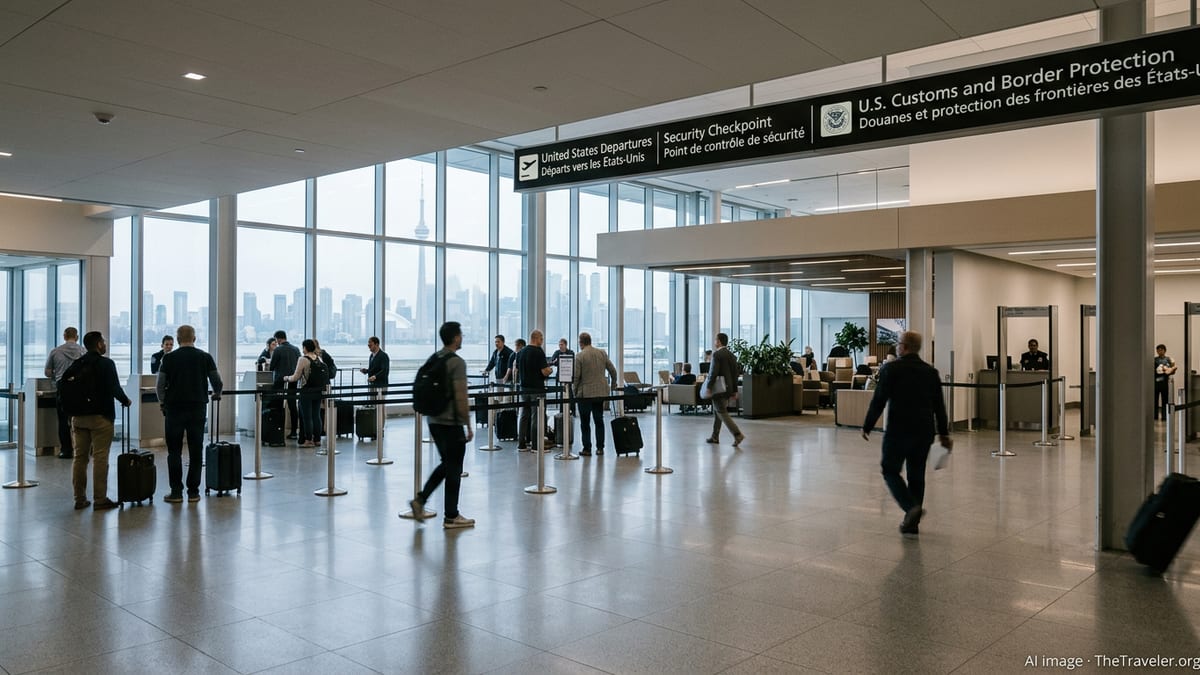
A New Chapter for Downtown Toronto’s Island Airport
The launch of US Customs and Border Protection preclearance at Billy Bishop Toronto City Airport positions the island facility as a more powerful competitor to Toronto Pearson for short‑haul cross‑border trips. Publicly available information from the airport operator and government announcements indicates that Billy Bishop is now the ninth Canadian airport to host a US preclearance operation, bringing it in line with larger hubs such as Pearson and Vancouver.
Under the new system, passengers bound for the United States complete US immigration, customs, and agriculture inspections in Toronto before boarding. Once they land in the US, they are treated as domestic arrivals, allowing them to bypass regular immigration queues and head directly to baggage claim or onward connections. For time‑sensitive business travelers based in downtown Toronto, this change significantly enhances the appeal of the centrally located island airport.
The facility’s inauguration also marks the first new preclearance location in Canada in roughly two decades, according to background information from US border authorities. The expansion aligns with a broader strategy to move border checks away from congested US arrival halls and into foreign departure terminals, where screening can be more predictable and capacity can be tailored to peak travel periods.
How the New Preclearance Process Works
The new passenger flow at Billy Bishop now mirrors that of other Canadian airports with US preclearance. Travelers first check in with their airline and drop bags if needed, then pass through security screening administered by the Canadian Air Transport Security Authority. From there, they proceed directly to the US preclearance area, where US officers conduct entry interviews and inspection of travel documents and baggage.
Airport guidance emphasizes that preclearance is similar in duration and complexity to clearing customs upon arrival in the United States, and passengers are being advised to build in extra time before departure. For many, however, the trade‑off is worthwhile: any waiting now happens in Toronto, and arrival in the US is often as simple as walking off the aircraft and exiting the terminal.
Once cleared, passengers enter a dedicated transborder lounge zone at Billy Bishop. This segregated area keeps precleared travelers separate from domestic passengers, in keeping with operational rules that govern all US preclearance facilities. The configuration also allows airlines to board US‑bound flights through dedicated gates whose passengers have already satisfied American entry requirements.
The airport notes that preclearance currently applies to all US‑bound departures from Billy Bishop. This universal approach helps ensure consistent processing and avoids confusion for travelers who may be familiar with mixed models elsewhere, where some flights are precleared and others are not.
New Routes and Network Opportunities for Airlines
The arrival of preclearance is already translating into new transborder capacity from downtown Toronto. Industry coverage shows that both Porter Airlines and Air Canada are using the facility’s opening as a springboard to launch or expand routes to major US cities, including New York, Boston, Chicago, and Washington.
For carriers, the presence of preclearance unlocks access to a wider range of American airports. US authorities typically require international arrivals to land at airports equipped with full customs and immigration infrastructure. With passengers precleared in Toronto, airlines can consider serving smaller US airports that handle only domestic traffic, opening the potential for more point‑to‑point links and niche business markets.
Airport planning documents and earlier feasibility studies had anticipated that preclearance could support dozens of additional US destinations over time. While actual route growth will depend on airline strategy and demand, the regulatory foundation is now in place for Billy Bishop to play a far larger role in the Canada–US transborder market than its size might suggest.
The facility is also expected to support schedule optimization. With shorter taxi times and a compact terminal footprint, Billy Bishop has long appealed to travelers seeking efficiency. Airlines can now pair that advantage with precleared arrivals into slot‑constrained US airports, potentially improving on‑time performance compared with operations routed through busier hubs.
Economic and Urban Impact for Toronto
Canadian federal projections released ahead of the opening suggest that preclearance could substantially increase Billy Bishop’s contribution to the regional economy over the coming years. Public materials point to an expected rise in the airport’s annual economic impact from several billion dollars today to more than double that figure once the new facility and associated route growth are fully established.
That expansion is closely tied to the airport’s unique location. Situated on the Toronto Islands, minutes from the city’s financial district by pedestrian tunnel and ferry, Billy Bishop serves as a key gateway for business travelers and short‑stay visitors. More frequent and convenient US connections are expected to strengthen ties between downtown Toronto and corporate centers such as New York and Chicago, supporting sectors ranging from finance and technology to culture and sports.
The airport authority has framed preclearance as part of a larger modernization effort, including terminal enhancements and operational improvements designed to keep noise and environmental impacts in check. The facility itself has been developed within the constraints of an airport that is subject to strict limits on hours of operation and aircraft types, reflecting longstanding community agreements around the use of the island airfield.
Local reaction, as reflected in media coverage and community discussions, has focused on the trade‑off between increased connectivity and potential growth in passenger volumes. While the airport’s curfew remains in effect, the ability to attract new routes and travelers is likely to intensify debates over future infrastructure changes, including any renewed proposals related to runway extensions or aircraft restrictions.
What Travelers Need to Know Before Flying
For passengers, the shift to preclearance means that a trip to the United States from Billy Bishop now requires planning more akin to a traditional international departure. Travelers are being urged, in publicly available airport guidance and travel advisories, to arrive earlier than they might have for previous US flights from the island airport, particularly during peak morning and late‑afternoon periods.
Frequent cross‑border travelers enrolled in programs such as NEXUS may see dedicated processing options within the preclearance area, similar to those at other participating Canadian airports. However, travelers are advised to check the latest information from border authorities and the airport, as the exact range of services and kiosks can evolve as operations ramp up.
Those with onward connections in the United States may find their journeys noticeably smoother. Because flights from Billy Bishop now arrive as domestic services, connection times can often be shorter, and airports that previously required long queues at immigration may become more manageable for precleared passengers. This benefit is particularly significant at heavily trafficked hubs where staffing and wait times can fluctuate throughout the day.
For US‑bound travelers choosing between Pearson and Billy Bishop, the calculus is shifting. Pearson continues to offer a far larger network and long‑haul options, but Billy Bishop’s combination of downtown proximity, smaller scale, and full preclearance now offers a compelling alternative for many itineraries. As airlines adjust schedules and travelers test the new setup in the months ahead, the balance of transborder traffic between Toronto’s two main airports will come under close watch in the aviation and tourism sectors.