

More news on this day
The United States has issued a sharply revised travel advisory for Côte d’Ivoire, placing the West African nation in a higher-risk category for crime, terrorism and limited medical infrastructure, and bringing its warning profile noticeably closer to neighboring Burkina Faso and Mali, both long designated as “do not travel” because of spiraling insecurity in the Sahel.
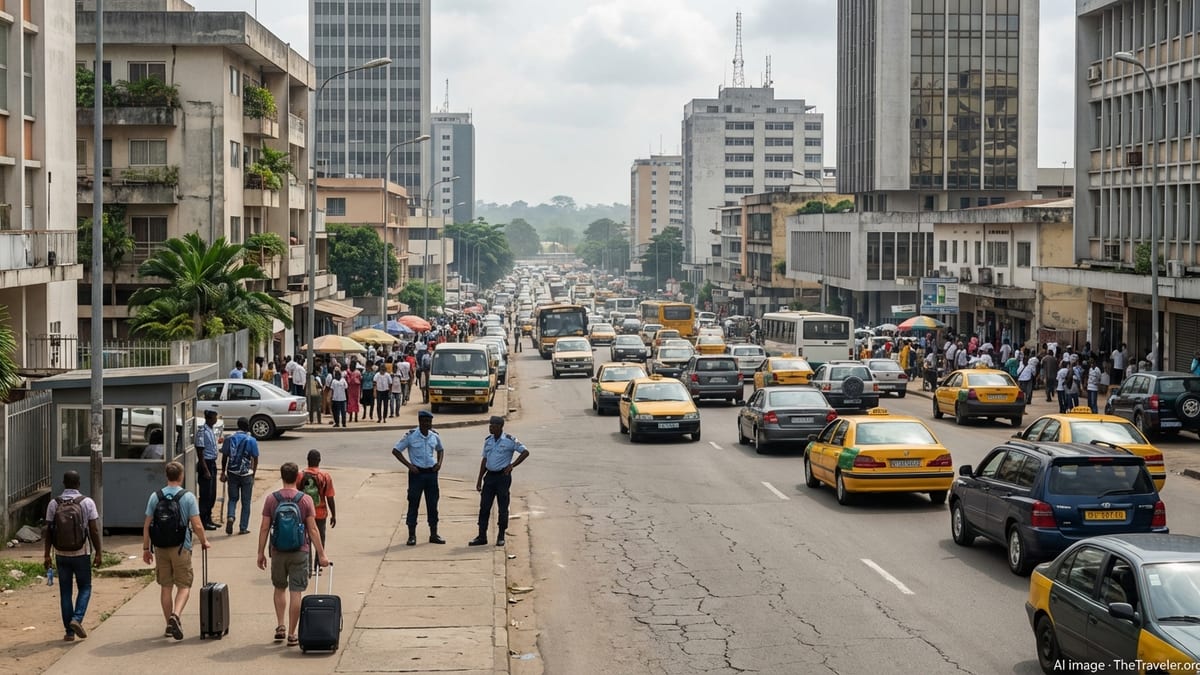
New Advisory Puts Côte d’Ivoire Under Closer Security Scrutiny
The latest update to the U.S. State Department’s global advisory list, published on February 18, 2026, now lists Côte d’Ivoire at Level 2, meaning travelers are urged to exercise increased caution. What is new is not the level itself but the combination of risk indicators flagged: unrest, crime, health and terrorism are now all explicitly cited, placing the country in a more critical bracket than many of its coastal West African peers.
By contrast, Burkina Faso and Mali remain at Level 4, the highest possible designation in the U.S. system and effectively a “do not travel” order for American citizens. Both are highlighted for acute levels of crime, terrorism, kidnapping, unrest and fragile healthcare, a mix that underscores just how volatile the central Sahel has become. Although Côte d’Ivoire is not at that threshold, the decision to cluster it with a wider set of serious risk factors is being read by security analysts as a warning that the country is under growing pressure from the Sahelian conflict to its north.
Officials emphasize that advisory updates are driven by changing conditions on the ground, and the latest revision reflects both the expanding reach of armed groups in border regions and persistent gaps in public health capacity outside major cities. For travelers and companies that had viewed Côte d’Ivoire as a relatively stable springboard into the region, the new language signals a need for more robust security planning and medical contingencies.
Travel advisories are not binding bans, but they shape insurance decisions, corporate travel policies and tourism flows. With Côte d’Ivoire now carrying formal warnings for both terrorism and health, industry observers expect more risk assessments for itineraries that once appeared routine, from business trips to Abidjan to overland routes that link the Ivorian coast with Sahelian markets.
Crime Concerns Extend Beyond the Sahel’s Frontlines
While headlines often focus on insurgent violence, the U.S. advisory update places equal weight on crime, noting an elevated risk of theft, armed robbery and carjacking, particularly in urban centers and along key road corridors. In Abidjan, a fast-growing metropolis that anchors much of the country’s economic life, petty crime and opportunistic theft remain the most common threats to visitors, but there are also periodic reports of more serious incidents involving weapons.
Security specialists say that rising economic inequality, rapid urbanization and the inflow of people displaced from conflict-hit areas in Burkina Faso and Mali are straining local policing capacities. Night-time movement in certain neighborhoods, use of unofficial taxis and carrying visible valuables are repeatedly cited as risk multipliers. The advisory reinforces standard precautions such as avoiding walking alone after dark, leaving passports secured, and using hotel or corporate drivers instead of hailing transport on the street.
Outside Abidjan and other major cities such as Bouaké and San Pedro, the risk profile changes. Poorly lit roads, limited police presence and the presence of informal checkpoints operated by bandits or rogue elements can turn even routine journeys into unpredictable ventures. Travelers are being urged to seek current, corridor-specific security advice before overland travel, especially toward the northern regions bordering Burkina Faso and Mali.
At the same time, analysts caution against conflating Côte d’Ivoire’s crime patterns with the pervasive violence seen in Sahelian conflict zones. The advisory upgrade reflects relative risk and the possibility that law enforcement may be unable to respond effectively in certain areas, not a state of general collapse. For informed travelers and organizations with appropriate mitigation measures in place, many parts of the country remain accessible, though the margin for error is narrowing.
Growing Terrorism Threats Along the Northern Border
The most striking element of the new U.S. notice is the explicit terrorism label attached to Côte d’Ivoire. Although the country has not experienced a major mass-casualty attack since the 2016 beach assault at Grand-Bassam, regional jihadist coalitions linked to Al Qaida and the Islamic State have gradually pushed south from the Sahel, probing border regions and attempting to build support networks in northern Ivorian communities.
French and regional media have documented a series of operations by Ivorian security forces over the past two years that disrupted suspected recruitment cells and logistics pipelines linked to Sahelian groups. Those arrests, some in inland towns such as Daoukro as well as in Abidjan itself, highlight what intelligence officials describe as an ongoing effort by militants to use Côte d’Ivoire as both a rear base and a potential future theater of operations. While many of these cells appear focused on funneling fighters northward, the State Department’s terrorism warning reflects concern that latent networks could be activated domestically if the security environment deteriorates.
In border districts near Mali and Burkina Faso, sporadic clashes and ambushes targeting local forces have fueled fears that the frontier could become as volatile as the tri-border area shared by Burkina Faso, Mali and Niger. The withdrawal or downsizing of foreign military operations in the Sahel has created additional security vacuums, and regional armies face significant constraints in monitoring remote, forested or sparsely populated terrain.
For travelers, the terrorism designation primarily translates into strong advice to avoid non-essential travel to border regions, minimize time in crowded or symbolic locations, and maintain a low profile. Companies that rely on ground transport between Ivorian ports and Sahelian capitals are being encouraged to review routing, convoy procedures and incident response plans, and in some cases to consider air cargo alternatives to reduce exposure to roadside attacks.
Health System Gaps Raise Red Flags for Travelers
Beyond crime and terrorism, the U.S. advisory for Côte d’Ivoire now includes a formal health risk indicator, underscoring concerns that medical infrastructure, particularly outside Abidjan, may struggle to deliver timely, high-quality care in an emergency. The label does not imply a specific, acute outbreak; rather, it points to systemic limitations in hospital capacity, specialist availability, diagnostic equipment and reliable supplies of critical medicines.
Travel medicine experts routinely warn that in many parts of West Africa, complex trauma, severe infections or cardiac events require medical evacuation to regional hubs or even Europe. That reality carries significant consequences for risk planning, especially for travelers with pre-existing conditions or itineraries that take them far from tertiary care centers. The advisory implicitly encourages would-be visitors to secure comprehensive insurance that includes evacuation coverage and to travel with essential prescriptions in original packaging.
Recent years have also highlighted how quickly routine health needs can overlap with security constraints. In Mali, for example, the combination of terrorism, kidnapping risks and a fuel crisis has periodically disrupted the movement of ambulances, medical staff and basic supplies. While Côte d’Ivoire is not in the same category of fragility, the State Department warning suggests that if a serious incident occurred in a remote area, access to advanced care could be delayed or impossible.
Public health authorities in Abidjan continue to promote vaccination against diseases prevalent in the region, including yellow fever, as a standard entry requirement, as well as advisories around malaria prevention and safe food and water practices. The U.S. notice effectively adds a layer of realism for travelers accustomed to assuming that high-end care will be readily available wherever they go, urging them to plan as if self-reliance and rapid evacuation might be necessary.
Burkina Faso and Mali Remain at ‘Do Not Travel’ Level
While Côte d’Ivoire remains in the second tier of the U.S. advisory system, the situation in neighboring Burkina Faso and Mali remains far more severe. Both countries are currently rated Level 4, with Americans urged not to travel due to extreme risks from terrorism, violent crime, kidnapping and deeply constrained health services. The U.S. government has repeatedly noted that in many parts of those countries, it cannot provide emergency consular assistance to citizens who choose to remain or to visit despite the warnings.
In Mali, the advisory was tightened in late 2025 when the U.S. Embassy in Bamako ordered the departure of non-essential staff and family members as militant attacks and a fuel blockade compounded an already precarious security picture. That specific measure was lifted in January 2026, but the overall Level 4 status remains, reflecting a still high threat of attacks in the capital and across the country, as well as the presence of active insurgent groups in multiple regions.
Burkina Faso, which has endured some of the most lethal violence of the Sahel insurgency, also carries a Level 4 designation. Large parts of the north and east are contested by jihadist factions and local militias, and rights groups have documented both extremist attacks and abuses by pro-government forces. Rural massacres, ambushes on highways and sieges of towns have disrupted everyday life and made overland travel particularly risky, even for well-protected convoys.
Together, the three countries form a contiguous belt running from the Gulf of Guinea deep into the Sahel, and the widening gap between the formal risk levels in Côte d’Ivoire and its northern neighbors highlights both the resilience and the vulnerability of a coastal state that has so far avoided the worst of the insurgency but is increasingly exposed to its spillover effects.
Diplomatic Tensions and Reciprocal Travel Restrictions
The evolving security picture is unfolding against a backdrop of growing diplomatic friction between Washington and the military-led governments of Burkina Faso and Mali. In late 2025, both countries announced reciprocal bans on U.S. nationals entering their territory, after the United States expanded its own visa and travel restrictions on several states, including those governed by Sahelian juntas. Officials in Ouagadougou and Bamako framed their decisions as matters of sovereignty and reciprocity.
These tit-for-tat measures have complicated the operating environment for international organizations and businesses that maintain a footprint across the three-country corridor. Humanitarian agencies, already facing access constraints because of armed group activity and state-imposed restrictions, must now navigate additional layers of bureaucracy and uncertainty for American staff. Companies that once managed regional portfolios from a single base are being forced to rethink where they station personnel and how they rotate teams.
Although Côte d’Ivoire is not part of the reciprocal bans, the deterioration of U.S. relations with its northern neighbors shapes the broader risk narrative surrounding the region. Analysts note that if diplomatic channels remain strained, it may become harder to coordinate cross-border security operations, share intelligence or support joint initiatives intended to contain armed groups along shared frontiers.
For travelers, these geopolitical currents matter primarily because they influence whether consular services and air links remain robust during crises. A country that is formally open may nonetheless become harder to access or leave quickly if regional tensions escalate, making advance planning and enrollment in notification systems more important than in calmer environments.
What the New Warning Means for Travelers and the Tourism Sector
For tourists and business travelers considering Côte d’Ivoire in 2026, the new U.S. advisory does not close the door on travel, but it raises the bar for preparation. Travel security firms advise that visitors treat Abidjan much like other large, complex cities that carry official cautions: choose accommodation in well-secured districts, arrange airport transfers in advance, keep daily itineraries flexible and consult trusted local partners for neighborhood-specific guidance.
Tourism operators note that many of Côte d’Ivoire’s most popular attractions, from coastal resorts to cultural festivals, are located far from the northern borderlands where the risk of militant activity is highest. However, they acknowledge that high-profile warnings can have a chilling effect on bookings, particularly from first-time visitors and group tours. Some are responding by offering more detailed pre-trip briefings, dedicated security liaisons and itineraries that minimize overland travel after dark.
For the country’s growing meetings and conferences segment, the advisory may prompt organizers to review contingency plans more carefully, including protocols for medical emergencies and options for rapid departure in the event of unrest. International companies may also revisit insurance coverage, crisis communications strategies and thresholds for postponing travel during election periods or large demonstrations.
Ultimately, the updated risk profile for Côte d’Ivoire underscores a broader trend in global travel: destinations once treated as binary categories of “safe” or “unsafe” are now assessed in more granular terms, with overlapping concerns about security, health and political stability. For travelers willing to invest in planning and to respect local advice, Côte d’Ivoire remains open. But the U.S. alert makes clear that the margin of safety can no longer be taken for granted, especially in a region where shocks from the Sahel can reverberate quickly to the coast.