

More news on this day
Resorts across the United States are accelerating investment in family-focused amenities and experiences, with properties from Florida to California unveiling expansions, new programming and upgraded accommodations aimed at multigenerational travelers.
Get the latest news straight to your inbox!
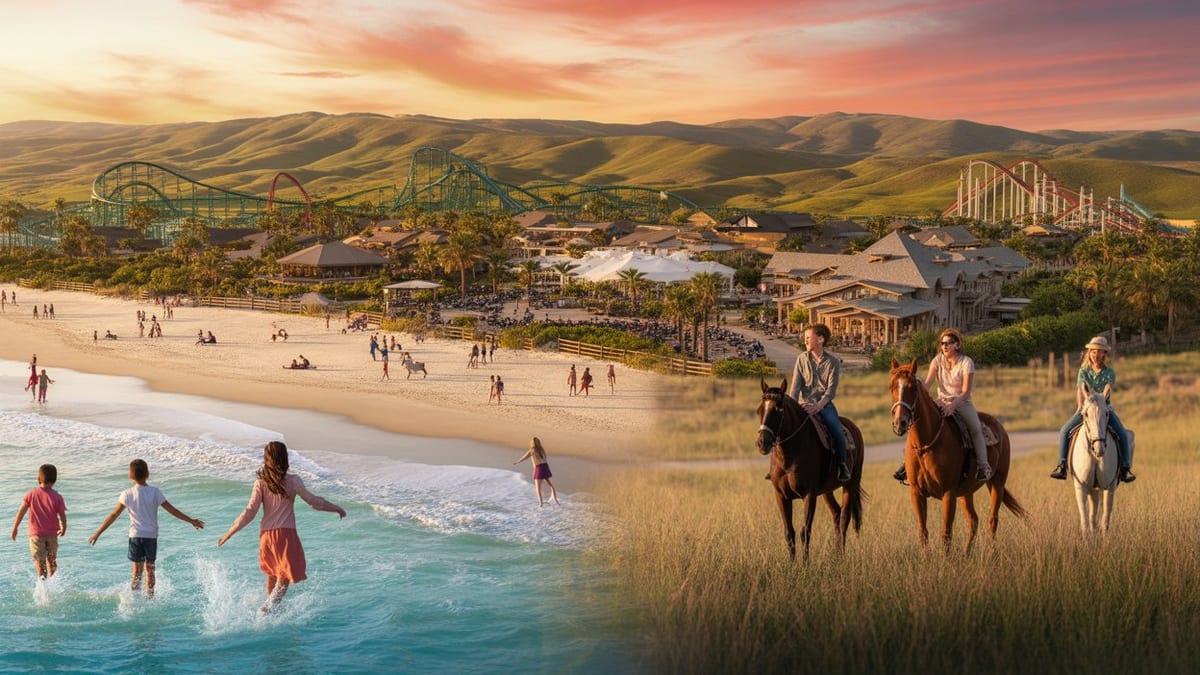
TradeWinds Reopens and Expands Its Family Focus
On Florida’s Gulf Coast, TradeWinds Island Resorts on St. Pete Beach is emerging as a bellwether for the family travel boom. Public information released in February 2025 indicates that the Island Grand property, long positioned as the more family-oriented of the resort’s two hotels, has completed a major reopening and refresh following phased redevelopment. Recent descriptions highlight 25 acres of beachfront, multiple pools and an expanded roster of kid-centric activities designed to keep school-age children and teens engaged.
Reports describe a portfolio of water-based attractions, including a three-story waterslide and floating water park elements positioned just offshore, alongside paddleboats and casual dining venues. Travel coverage notes that these amenities are being marketed specifically to large families and multigenerational groups seeking drive-to alternatives to crowded theme parks. The resort’s ongoing long-range plan also references additional family-themed pools and a higher-capacity hotel tower scheduled in later development phases, underscoring expectations for continued demand.
TradeWinds has also leaned into specialized family segments. Tourism features point to the property’s autism-friendly programming, including sensory guides and quieter spaces, as part of a broader shift toward inclusive design. Packaging around seasonal value offers, bundled experiences and flexible room categories reflects a trend in coastal resorts to cater simultaneously to parents seeking relaxation and children seeking constant entertainment.
The St. Pete Beach complex is being closely watched by analysts as a preview of how established sun-and-sand properties can reposition around families without abandoning meetings and couples markets. The mix of large-scale water attractions, educational programming and health-conscious food options illustrates how resort operators are trying to convert once-seasonal family visits into repeat, year-round business.
Peek’n Peak Turns Four Seasons Into a Family Asset
In the Northeast, Peek’n Peak Resort in western New York is using its four-season mountain setting to deepen its appeal to families who want both winter sports and warm-weather escapes. Current lift ticket and season-pass information for the 2025/26 ski year shows a strong emphasis on bundled value, with passes that can be combined with learn-to-ski lessons, resort credits and add-on experiences targeted at children and beginners.
Online package listings frame Peek’n Peak as a convenient short-break destination for families within driving distance of Erie, Buffalo and Cleveland. Summer and shoulder-season offers pair lodging with golf, aerial adventure courses and pool access, positioning the property as an alternative to long-haul beach vacations. Guest commentary in regional forums characterizes the resort as an accessible one- or two-night getaway where children can move easily between outdoor activities, pools and casual dining.
The resort’s integration into broader multi-resort pass networks indicates that operators see family travel as a stabilizing factor in a climate-challenged ski industry. By encouraging families to treat the property as a year-round base rather than a single-purpose ski hill, Peek’n Peak is part of a wider move among mid-sized US mountain resorts to smooth demand across seasons and broaden revenue streams.
For many families cautious about airfare costs, the ability to drive to a regional resort and access several activities within one campus is becoming a key differentiator. Peek’n Peak’s current strategy highlights how even legacy ski areas are investing in diversified amenities that meet that expectation.
Hotel Solea Signals a Coastal Shift in Family Luxury
On the West Coast, Hotel Solea in Carlsbad, California is preparing to open as part of a dual-hotel campus alongside the existing Westin Carlsbad Resort & Spa. Pre-opening materials describe Hotel Solea as a boutique, botanically inspired property, while the shared campus is being marketed as a “luxury resorts collection” capable of hosting both leisure travelers and destination groups.
The combined setting allows families to mix room types, pool environments and activity levels across the two hotels. Public information emphasizes the flexibility of using one brand for wellness-focused escapes and the other for more social or event-driven stays, all within walking distance of Carlsbad’s established family attractions. Industry observers note that this approach reflects a new model in family luxury, where parents may choose a quieter or more design-forward hotel while still having easy access to kid-friendly amenities nearby.
Carlsbad’s position as a hub for theme parks and beaches means the new complex is entering a highly competitive market. However, the dual-brand strategy aligns with a broader hospitality trend in which operators cluster properties to serve distinct traveler profiles on a single campus. For families, that can translate into adjoining rooms for grandparents, suite-style accommodations for parents with young children, and separate social spaces for teens, without fragmenting the group across distant hotels.
As Hotel Solea moves toward full launch, analysts expect it to test how far family travelers are willing to stretch into boutique and lifestyle-oriented accommodations, provided that core conveniences such as pools, casual dining and easy transportation to attractions remain in place.
Grand America and the Urban Family City-Break
In Salt Lake City, The Grand America Hotel continues to refine its positioning as an urban luxury property that is increasingly courting families. Publicly available descriptions highlight spacious rooms, central-city location and traditional service, while recent programming has included seasonal family packages around school holidays and major city events. Observers point to this as part of a trend in which city-center hotels are adapting to demand for short family city-breaks rather than catering almost exclusively to business travelers.
The Grand America’s mix of pool facilities, afternoon tea experiences and proximity to both cultural institutions and nearby mountain recreation gives it a distinctive profile in the family segment. Travel coverage notes that parents are seeking walkable city stays that combine museums, sports events and access to nature in one trip. In this context, large urban properties with generous public spaces and flexible connecting-room options are being repositioned as bases for multigenerational gatherings.
Urban luxury hotels like The Grand America are also sharpening their food and beverage strategies for family audiences, broadening children’s menus and offering casual dining formats alongside fine dining rooms. Industry commentary suggests that by doing so, these properties can capture weekend and holiday demand that might otherwise flow to suburban resorts or vacation rentals.
The trend underscores a blurring of lines between traditional city hotels and resort-style properties. As more families treat cities as destinations for extended stays, full-service hotels in downtown locations are adding spa, pool and concierge-led experiences that mirror resort offerings, aiming to keep guests on property for more meals and activities.
Alisal Ranch and the Rise of Experiential Family Retreats
In California’s Santa Ynez Valley, Alisal Ranch is drawing renewed attention as an example of experiential, nature-focused family travel. Current seasonal programming materials emphasize horseback riding, lake activities, kids’ camps and themed family days set against a working ranch backdrop. Travel discussions describe recent multigenerational trips where grandparents, parents and children share cabins and participate together in trail rides, archery and campfire events.
Analysts see ranch properties such as Alisal as beneficiaries of a post-pandemic preference for open space, structured activities and time away from screens. Published programming outlines show carefully scheduled mornings and evenings tailored to families, with free time in the afternoons, mirroring the way cruise lines and large resorts program their days. For parents, the combination of supervised children’s activities and adults-only options such as golf and spa services has become a strong draw.
The pricing structure of full-board or near-inclusive stays at destination ranches is also resonating with families seeking cost predictability. While per-night rates are often higher than standard hotels, the inclusion of most activities and meals provides clarity at a time of rising travel costs. This model is helping ranch resorts compete directly with international all-inclusive properties by offering immersive, place-specific experiences without the need for passports or long-haul flights.
The popularity of Alisal’s family offerings is feeding into a wider wave of investment in experiential US resorts, from lake lodges to desert retreats, signaling that the family travel boom is not limited to coastal or theme-park-adjacent markets.