

More news on this day
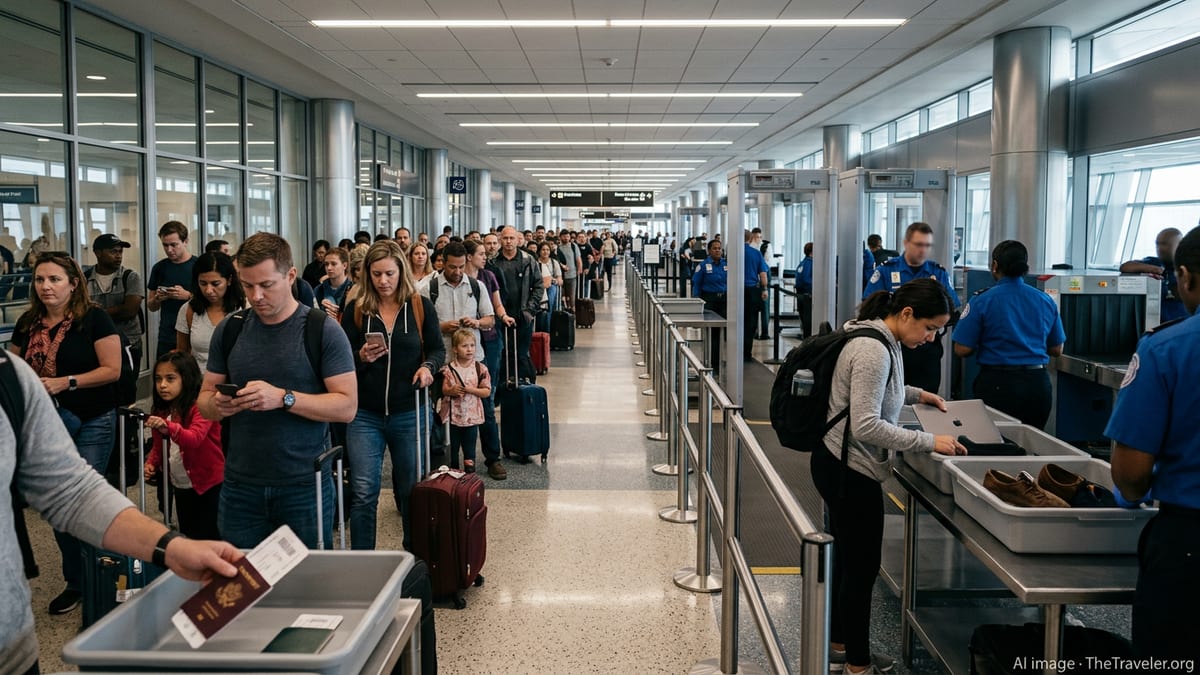
A new partial U.S. government shutdown is rippling through the country’s airports, with Transportation Security Administration staffing strains driving long security lines and new uncertainty for travelers heading into the busy spring break season.
Get the latest news straight to your inbox!
How the Shutdown Escalated Into a TSA Staffing Crisis
The latest shutdown began on February 14, 2026, after Congress failed to reach agreement on funding for the Department of Homeland Security. TSA screeners are classified as essential employees, so checkpoints remain open, but publicly available information shows that most frontline staff are working without pay until funding is restored.
According to recent coverage of the 2026 shutdown, approximately 50,000 TSA employees are required to report for duty despite missed paychecks, a repeat of the pressures seen during previous funding lapses in 2019 and again in 2025. Some analysts note that the longer these conditions continue, the more likely it becomes that officers call out or look for other work, shrinking the pool of trained screeners just as passenger volumes rise.
Research from travel industry groups examining past shutdowns indicates that even small percentages of unscheduled absences can slow security operations systemwide. Checkpoints can usually absorb a few sick calls, but when furloughs in other areas combine with mounting financial stress for unpaid workers, entire shifts can fall below minimum staffing levels, reducing the number of open lanes and sharply increasing wait times.
This year’s shutdown follows a record lapse in 2025 that already strained staffing pipelines for both TSA and air traffic control. Briefings prepared for airport authorities highlight that hiring and training bottlenecks from the earlier disruption are still being felt in 2026, leaving less margin to absorb another prolonged standoff in Washington.
Where Travelers Are Seeing the Longest Lines
The effects of the funding lapse are not evenly distributed across the country. Recent national coverage describes security lines stretching to three hours or more at a handful of large and mid-size airports, while many others are reporting only modest delays. Local news in Houston and New Orleans has drawn particular attention, describing multi-hour waits at the security checkpoints at William P. Hobby Airport and Louis Armstrong New Orleans International Airport on peak days.
Reports from travelers on social media and in local outlets suggest that some checkpoints at these airports have been operating with fewer open lanes than usual, while early-morning and evening peaks have been especially vulnerable. In some cases, staffing shortfalls reportedly forced temporary closures of certain checkpoints or terminals, funneling all passengers through a smaller number of screening positions.
Elsewhere, airports such as Atlanta, Denver, and several busy Northeast hubs have experienced periodic surges where waits stretch past an hour, particularly during weekend departures and spring break travel windows. At the same time, many smaller and medium-size facilities continue to report near-normal operations, illustrating how much depends on local staffing rosters, passenger loads, and the flexibility of airport management to reassign resources.
Checkpoints serving trusted traveler programs have not escaped disruption either. Homeland Security temporarily paused parts of Global Entry and other expedited programs earlier in the shutdown to free staff for regular inspection lines, and travelers are reporting that TSA PreCheck queues in some cities are slower than usual or being consolidated with standard lanes when staffing is tight.
What This Means for Your Upcoming Flights
For travelers, the most immediate impact is unpredictability. Publicly available wait time data and traveler accounts show that a given airport can operate smoothly on one day and then experience severe backups the next, depending on how many officers are available for each shift and how many flights are scheduled in the same window.
The Transportation Security Administration continues to advise passengers to arrive early, and many airlines are echoing that guidance. In cities where shutdown-related delays have already surfaced, aviation and travel coverage suggests arriving at least three hours before domestic departures and even earlier for international flights, particularly in the early morning, late afternoon, and Sunday peak periods.
The shutdown is also complicating the experience for those who normally rely on expedited programs. While TSA PreCheck, Global Entry, and other trusted traveler options remain in operation, the suspension of enrollment and some processing activities has created backlogs for new applicants. At the checkpoint, some airports are reassigning PreCheck-dedicated officers to standard lanes, which can slow premium queues and sometimes lead to PreCheck passengers being screened in regular lines.
So far, large-scale flight cancellations directly tied to TSA staffing have remained limited, according to major airline and airport updates. However, analysts warn that if more officers begin to miss shifts or leave altogether as unpaid weeks stack up, airlines could respond by adjusting schedules at the most affected airports to reduce pressure on chokepoints and avoid missed departures due to passengers stuck in security.
How Airports, Airlines and Communities Are Responding
Airports and local communities are taking visible steps to support unpaid security staff and keep operations running. Recent coverage notes that several major hubs, including Denver International Airport, have asked the public and partner organizations for small-denomination grocery and gas gift cards to stock food pantries and relief stations for TSA personnel working through the shutdown.
Airport operators are also adjusting internal staffing plans. Some facilities have consolidated checkpoints during slower periods to concentrate limited officers, while others have shifted administrative personnel with security training back to front-line roles. Aviation industry associations are using this shutdown to renew calls for structural changes that could insulate critical security and air traffic functions from future funding battles.
Airlines, for their part, are updating passenger guidance and reworking day-of-travel messaging. Many carriers are sending targeted alerts urging customers to build in extra time at specific airports, and some are temporarily easing check-in cutoffs or change-fee rules when long lines make it difficult for passengers to reach the gate in time. Travel insurers and credit card issuers are also fielding more questions about whether shutdown-related delays qualify for trip delay or interruption benefits, a gray area that often depends on the fine print of each policy.
Union groups and worker advocates are drawing attention to the financial strain on TSA officers and other essential personnel who must keep reporting to work without pay. Public information released by labor organizations emphasizes that many screeners live paycheck to paycheck and could face mounting challenges covering transportation, food, and child care if the stalemate continues into late March and beyond.
Practical Steps Travelers Can Take Right Now
While individuals cannot control the political process in Washington, there are concrete steps passengers can take to reduce the risk of missed flights. Travel experts and airport advisories consistently recommend arriving earlier than usual, especially at airports already identified in news reports as trouble spots. Building in an extra hour or more for security can provide a buffer if lines suddenly worsen.
Checking security wait time tools offered by airports and airlines before leaving for the terminal can also help. Many major airports publish real-time or near-real-time checkpoint conditions in their apps, and some carriers incorporate this information into their own notifications. Travelers can use this data to choose terminals or checkpoints with shorter waits when there is a choice, or to adjust departure times from home or the hotel.
Passengers should also be prepared for flexibility. Experts suggest carrying essential items such as medication, documents, chargers, and a change of clothes in a carry-on bag in case of missed connections or unexpected overnight stays. Keeping airline apps up to date, enabling push notifications, and monitoring gate and departure boards frequently can help travelers react quickly if security backups begin to affect departure times.
Finally, travelers planning trips in late spring or early summer may want to monitor how long the shutdown lasts and how quickly staffing normalizes once funding is restored. Analyses of previous shutdowns indicate that some airport staffing and training disruptions can linger for weeks even after paychecks resume, meaning that today’s political standoff could continue to influence the airport experience well into the upcoming vacation season.