

More news on this day
Hours-long security lines, missed flights and frayed tempers are turning the first big spring break travel weekend into a nationwide test of America’s airport security system, as a partial government shutdown and chronic staffing shortages converge at some of the country’s busiest hubs.
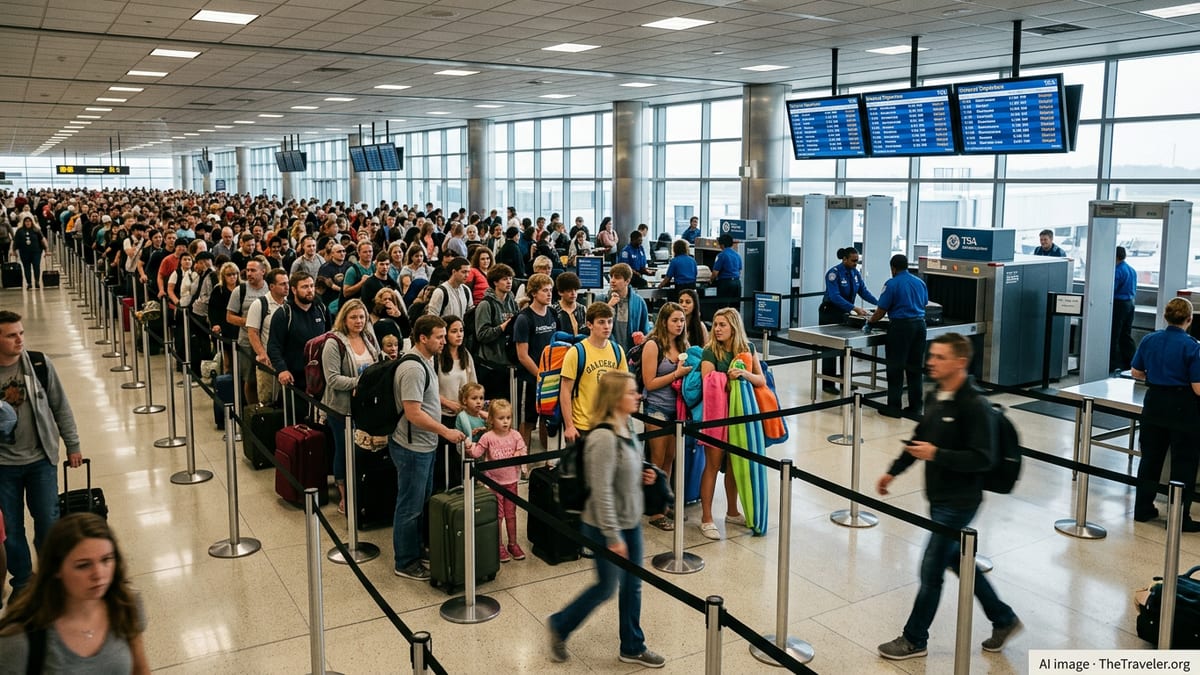
Major Airports Buckle Under Record Spring Break Crowds
Security checkpoints at several large U.S. airports were overwhelmed over the weekend as spring break crowds surged into terminals already operating with thin staffing. Airports in Houston, New Orleans and Atlanta reported unusually long queues, with some passengers standing in line for more than three hours before reaching Transportation Security Administration screening.
At Houston’s William P. Hobby Airport, wait times on Sunday afternoon averaged around three and a half hours, according to airport and airline officials, with lines snaking through concourses and into public ticketing areas. George Bush Intercontinental, the city’s larger hub, also reported elevated waits as early departures filled with vacationers bound for beach and ski destinations.
Louis Armstrong New Orleans International Airport and other leisure-heavy gateways across the Sun Belt saw similar patterns as college students and families tried to take advantage of the school holiday window. Social media posts showed dense crowds squeezed into roped corridors, with some travelers warning others to arrive at least three hours before departure even for domestic flights.
While security bottlenecks are common during peak holiday periods, airport managers say this spring break is different because there is little slack left in the system. With traffic approaching or exceeding pre-pandemic levels and staffing still lagging, relatively small disruptions are now rippling quickly through already stretched operations.
Shutdown Fallout Deepens TSA Staffing Crisis
The immediate trigger for the current wave of delays is the partial shutdown of the Department of Homeland Security, which oversees the TSA. The funding lapse, in effect since mid February, has forced thousands of frontline security officers to work without full pay, contributing to higher absence rates and accelerating an already serious attrition problem at checkpoints nationwide.
Union representatives and airport executives say many officers have been calling out or seeking temporary work elsewhere as they brace for their first fully missed paycheck this month, a financial shock for employees who were already struggling with high living costs in major metro areas. Some airports reported open lanes that could not be staffed, effectively reducing capacity just as passenger volumes peaked.
Senior TSA officials warned Congress earlier this year that the protracted budget standoff risked a repeat of earlier shutdown-related disruptions, when hundreds of officers resigned rather than work indefinitely without pay. That trend appears to be resurfacing, with departures from the agency climbing in recent months and training pipelines unable to keep pace.
In an effort to conserve resources, the agency has adjusted schedules, consolidated screening operations at off peak times and leaned more heavily on overtime. However, those measures are proving insufficient in the face of surging leisure demand, leaving many travelers stuck in slow moving lines despite arriving hours ahead of their flights.
Travelers Confront Cancellations, Missed Flights and Mounting Costs
The operational strain at security checkpoints is quickly translating into tangible pain for passengers. Airlines reported a spike in missed departures over the weekend as travelers arrived at their gates too late to board, often after spending hours in line despite building in what would normally be ample buffer time.
Some carriers offered same day standby options or fee waivers for affected customers, but others enforced standard rebooking rules, leaving families to absorb hefty last minute fare differences. For travelers connecting through congested hubs, even slight check in or screening delays cascaded into full day disruptions as later flights filled up during the busy holiday period.
Airport concourses and gate areas, meanwhile, have become de facto waiting rooms for stranded passengers searching for alternatives. Food courts and seating areas at several airports were crowded with people recharging devices and refreshing airline apps, hoping for open seats on later flights. Anecdotal reports described families breaking down trips into multi hop itineraries or shifting to red eye departures to avoid the worst of the lines.
For some would be vacationers, the chaos has prompted a more drastic response. Travel agents and booking platforms say they are beginning to see a small but noticeable uptick in cancellations and date changes for upcoming March departures, particularly for shorter weekend getaways where losing several hours to security queues can effectively erase much of the trip.
Regional Hotspots Highlight Fragility of the System
While delays have been reported across the country, a handful of airports have emerged as emblematic flashpoints for the current crisis. Houston’s Hobby, a major base for low cost and point to point carriers serving beach destinations, has drawn particular attention after images of its packed security hall circulated widely. New Orleans and Orlando, both heavily reliant on leisure travelers, have also seen surging waits tied to spring break traffic and major events.
Large connecting hubs such as Atlanta, Dallas Fort Worth and Denver are experiencing a different kind of pressure. There, even modest slowdowns at security are amplified by tight banked departure schedules and heavy connecting flows, leaving little margin for error. A brief closure of one checkpoint or a staffing shortfall on a single shift can quickly back up lines and push departure banks off schedule for hours.
Smaller regional airports are not immune. Travelers at mid size facilities in the Midwest and Mountain West reported lines stretching well beyond what is typical for those locations, where passengers are accustomed to arriving 60 to 90 minutes before flights. With fewer lanes and limited ability to reassign staff, these airports can struggle to recover quickly from even short lived spikes in demand.
The patchwork of experiences has left travelers confused about how early they need to arrive and which airports are most affected. In the absence of a unified national dashboard, many are relying on mobile apps, airline alerts and word of mouth reports from friends or social media to gauge conditions before heading to the airport.
Uncertain Timeline for Relief as Peak Travel Continues
How long the spring break crunch will last depends largely on developments far from the departure hall. Without a political agreement to restore full funding for the Department of Homeland Security, TSA officers are expected to continue working under significant financial stress, raising the risk of further absences and resignations just as the busy travel period enters its next phase.
Industry groups are urging lawmakers to act quickly, warning that sustained disruptions could dent consumer confidence ahead of the even busier summer season. Airports Council and airline associations say they have limited ability to mitigate security driven delays, since they do not control federal staffing levels or screening protocols and can only adjust queuing space and passenger messaging at the margins.
In the short term, many airports are advising travelers to arrive at least three hours before domestic flights and four hours before international departures, especially at known hotspots and during early morning and late afternoon peaks. Some are temporarily expanding queueing areas, redeploying customer service staff to help manage lines and stepping up public announcements urging passengers to have documents and carry on items ready before reaching checkpoints.
For spring break travelers still hoping to salvage their plans, the reality is that patience and flexibility may be as essential as passports and boarding passes. With no firm end date to the shutdown and security staffing stretched thin, the nation’s airports are entering a precarious stretch in which each day of heavy demand could bring fresh rounds of gridlock to terminals already pushed to their limits.