

More news on this day
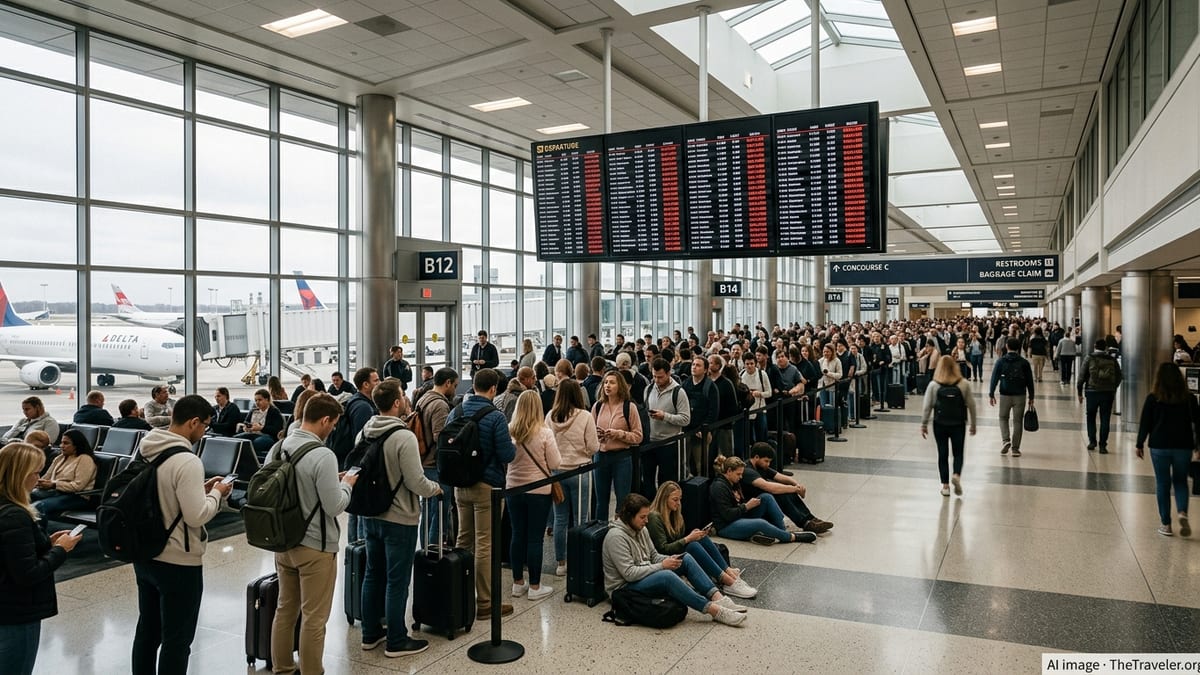
Spring travel across the United States is being upended in March 2026 as a volatile mix of severe weather, a partial government shutdown and record passenger volumes triggers widespread flight cancellations, rolling delays and long lines at major airports.
Get the latest news straight to your inbox!
Storm Systems Trigger Wave After Wave of Disruptions
A series of powerful storm systems sweeping across the country in March has repeatedly thrown airline schedules into disarray at the height of the spring break rush. On March 7, publicly available flight-tracking data showed more than 470 cancellations and over 5,300 delays nationwide as thunderstorms, snow and low clouds forced ground stops at key hubs such as Chicago O’Hare and Atlanta.
The turbulence did not end there. Separate coverage of the March 9 travel period reported more than 4,900 flight disruptions, including about 600 cancellations, as strong winds and severe thunderstorms hit major airports, particularly in Atlanta and Orlando, both critical gateways for leisure travelers. Reports indicate that more than 750,000 passengers were affected in a single day as crews and aircraft fell out of position and delays compounded through the network.
Another large storm complex from March 13 to 17 brought blizzard conditions to the Upper Midwest and High Plains and severe weather farther south and east, again rippling into the aviation system. At Boston Logan, at least several dozen flights were cancelled on March 17, while Dallas Fort Worth reported significant delays as the storm moved through. Airlines have continued canceling and rescheduling flights in the days since, as they work through backlogs and reposition aircraft.
Major Hubs Bear the Brunt of Cancellations and Delays
America’s largest hubs have been at the center of the disruption, with some airports repeatedly registering among the worst in the country for both cancellations and delays. Recent tallies collated from aviation data services show Chicago O’Hare logging more than one thousand delays in a single day on multiple occasions, along with hundreds of cancellations as storm systems crossed the central United States.
In the Southeast, Atlanta’s Hartsfield Jackson airport, the world’s busiest by passenger numbers, has been particularly vulnerable when severe weather intersects with high demand. One widely cited day of disruption in mid March saw hundreds of flights canceled and delayed at Atlanta alone as storms moved across the region, backing up departures and forcing aircraft to divert.
Orlando, a major gateway for theme park and cruise passengers, has also faced intense strain during peak spring break weekends. Travel industry reports describe more than 300 disruptions in a single day at Orlando International, including double digit cancellations, as families attempted to start or end vacations during the same weather pattern that battered the Southeast.
Other key hubs have seen rolling problems, including New York area airports, Denver, Houston and Dallas. In some cases, even a localized power outage or ground delay program at a single airport has cascaded into missed connections and overnight stays for travelers across several regions.
Government Shutdown and Security Staffing Add to Airport Chaos
The current partial shutdown of the Department of Homeland Security, in effect since mid February, is adding a second layer of stress for travelers already grappling with unreliable flight schedules. Transportation Security Administration officers are reported to be working without pay, and multiple outlets describe uneven staffing at security checkpoints as spring break volumes climb.
Publicly available coverage of conditions at some airports in Texas and along the East Coast points to security lines spilling into terminal lobbies on peak mornings, with non expedited queues in Austin reported by local media and social posts as stretching to around two hours. Similar scenes have been documented at other busy leisure gateways, where rising passenger numbers intersect with staffing constraints.
At the same time, not all airports are experiencing the same level of disruption at checkpoints. Some mid sized facilities report relatively stable screening times despite carrying more passengers than last year, underscoring how uneven the impact of the shutdown can be depending on local staffing and scheduling patterns.
Even where screening itself is functioning reasonably well, travelers are being urged through various public advisories and news reports to arrive earlier than usual, as long check in lines, crowded drop off roads and overburdened parking facilities add minutes at every stage of the departure process.
Spring Break Crowds Push System Close to Capacity
The weather and policy backdrop is colliding with one of the busiest leisure travel periods of the year. Large hub airports serving traditional spring break destinations are forecasting record or near record passenger numbers in March 2026, with Dallas Fort Worth expecting several million passengers during the holiday period and Orlando projecting its single busiest day of the year.
High load factors mean that when flights are canceled or significantly delayed, there are fewer empty seats available to rebook stranded passengers. Published estimates from aviation and travel outlets suggest that on some of the worst days this month, hundreds of thousands of travelers have experienced a disruption of at least several hours, with many forced to extend hotel stays, split groups onto separate flights or accept circuitous routings to reach their destinations.
Downstream effects are also being felt in secondary markets. When hubs such as Chicago, Atlanta or New York experience long ground stops, smaller regional airports often see their inbound and outbound flights canceled outright, since there is little operational slack in the system. Travelers starting their journeys from these airports can find themselves with limited options for same day alternatives.
Industry analyses of past years indicated that airlines had gradually improved on time performance after the pandemic, but current data for March 2026 shows how quickly that progress can be reversed when extreme weather, infrastructure constraints and policy disruptions collide during a peak demand window.
What Travelers Can Expect in the Coming Weeks
With spring break travel continuing into early April and the partial government shutdown still unresolved as of late March, analysts expect periods of elevated disruption to persist, even on days without severe weather. Aviation experts cited in recent coverage suggest that recovery from each storm system is taking longer than in prior years because aircraft and crew schedules are already densely packed, leaving little margin for error.
Travel and consumer advocacy organizations are advising passengers to monitor flight status closely, sign up for airline alerts and build extra time into connections, especially when routing through weather prone hubs in the Midwest and Southeast. Many carriers have issued short term travel waivers around specific storm dates, allowing ticketed passengers to move flights without change fees, though availability is often limited on popular routes.
Observers also note that the pattern of rolling delays, sporadic ground stops and lengthy security lines is likely to continue until at least one of the pressure points eases, whether through calmer weather, policy resolution in Washington or the natural tapering of spring break demand. Until then, the combination of crowded terminals, overburdened staff and fragile schedules is expected to keep the United States air travel network under significant strain.