

More news on this day
The United States has sharply escalated its travel warnings for Saudi Arabia, Bahrain, Kuwait, Qatar, Jordan and the United Arab Emirates, as the fast‑moving Iran war triggers new security fears, embassy drawdowns and widespread disruption to air travel across the Middle East.
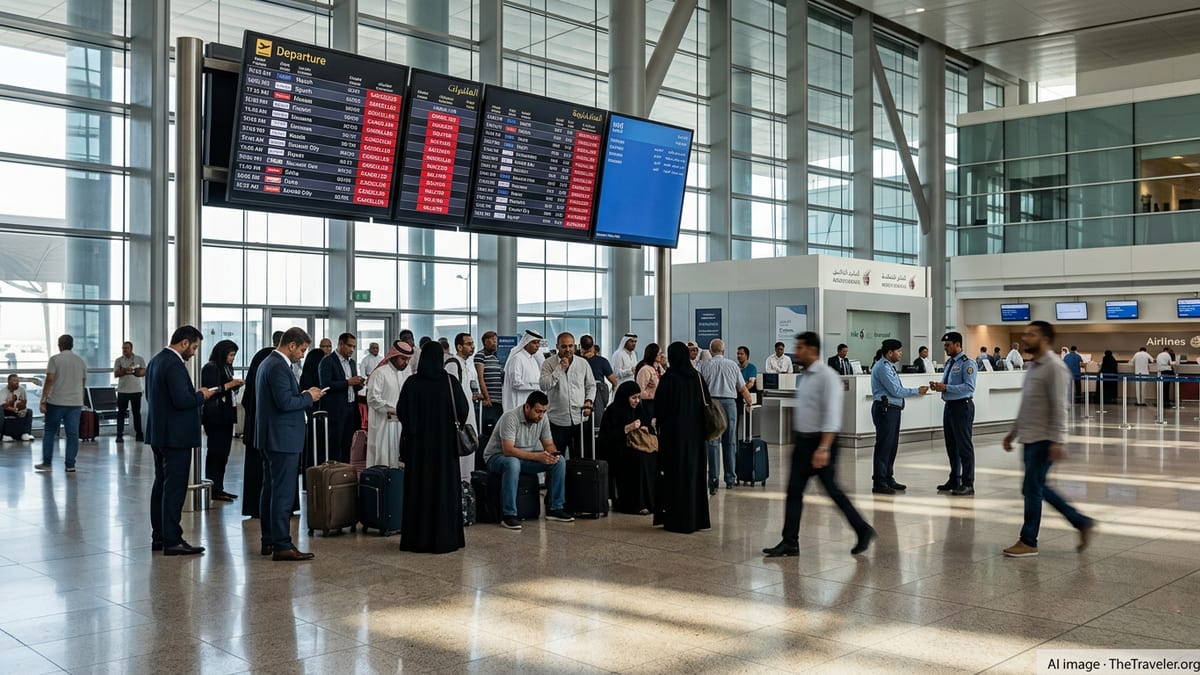
Saudi Arabia’s Advisory Raised as Embassy Staff Ordered Out
Saudi Arabia has moved into sharper focus in the latest round of U.S. travel advisories, with the State Department raising the kingdom’s rating to Level 3, or “reconsider travel,” and ordering non‑emergency U.S. government personnel and their families to depart. The move, issued in an updated advisory dated March 8, 2026, reflects heightened concerns over Iranian missile and drone attacks on Saudi territory and the increased likelihood of strikes on sites associated with U.S. interests.
The advisory cites the risk of armed conflict, terrorism and potential Iranian retaliation following U.S. and Israeli military operations, as well as long‑standing concerns about local laws, including restrictions on expression and social media use. Officials warn that the U.S. government’s ability to assist citizens in an emergency could be “very limited or nonexistent” in parts of the country, particularly near sensitive energy infrastructure and military facilities.
The shift for Saudi Arabia comes days after a drone attack on Ras Tanura, a key Saudi Aramco refinery on the Gulf coast, and reports of attempted strikes nearer to major urban centers. Diplomatic sources say U.S. contingency planning has intensified in Riyadh and Jeddah, where security postures around diplomatic compounds, hotels and transport hubs have been visibly tightened.
While major airports in Riyadh and Jeddah remain technically open, authorities and carriers are juggling intermittent airspace restrictions and diversions affecting routes across the wider Gulf. Travelers are being warned to expect last‑minute schedule changes and to build in additional time for security screening and possible rerouting.
Gulf Neighbors Swept into Wider “Depart Now” Warnings
The updated Saudi advisory comes as part of a broader regional warning encompassing Bahrain, Kuwait, Qatar, Jordan and the United Arab Emirates, among other states. In a sweeping alert first issued in early March and reiterated in several subsequent statements, the State Department has urged Americans in more than a dozen Middle Eastern countries to leave “now” using available commercial options, citing “serious safety risks” tied to the Iran war.
Bahrain, Kuwait and Qatar, all of which host significant U.S. military assets, are regarded by security analysts as particularly exposed to Iranian retaliation. Officials in Manama, Kuwait City and Doha have confirmed multiple attempted missile and drone incursions in recent days, some intercepted over residential and commercial districts. The risk profile has risen accordingly for nearby civilian areas, including business districts and waterfront neighborhoods popular with expatriates and travelers.
Jordan and the United Arab Emirates, while not direct front‑line combatants, have also been pulled deeper into the conflict’s orbit, facing a mix of attempted strikes, airspace closures and political blowback. U.S. consular messaging across the region has converged on the same core guidance: depart while commercial flights are still operating, avoid military sites and large gatherings, and have a personal evacuation plan that does not rely solely on government assistance.
Regional governments, for their part, have struck a delicate balance between projecting normality and acknowledging heightened risk. Authorities in Abu Dhabi, Dubai, Doha and Manama continue to emphasize that security forces are on high alert and that air defenses are functioning, even as they quietly coordinate with foreign embassies on possible evacuation corridors and emergency landing arrangements.
Flight Cancellations, Airspace Closures and a Patchwork of Options
For travelers and airlines alike, the most immediate impact of the escalating conflict has been severe disruption to air connectivity across the Gulf. Airlines from Europe, Asia and North America have canceled or suspended services to key hubs in the United Arab Emirates, Qatar, Bahrain and Kuwait, or have rerouted flights to avoid contested airspace over the Gulf, Iraq and parts of Saudi Arabia.
Several carriers have temporarily halted operations to Bahrain and Kuwait altogether, while Qatar Airways and other Gulf-based airlines have sharply reduced frequencies and diverted long‑haul routes to more southerly corridors. Aviation authorities in multiple countries have issued rolling notices to air missions restricting overflights in zones deemed at risk of missile or drone activity, forcing pilots to adopt longer and more fuel‑intensive routings.
Within Saudi Arabia, domestic connectivity remains largely intact, but services to and from neighboring Gulf states have been pared back or suspended as airspace closures ripple across the region. Travelers on multi‑stop itineraries involving Riyadh, Jeddah, Dubai, Doha or Kuwait City are being advised to monitor airline communications closely, as schedules can shift with little warning in response to new security assessments.
Industry experts caution that even when some routes reopen, operations may remain unpredictable for weeks, if not longer, as airlines work through backlogs of stranded passengers and insurance providers reassess risk premiums for flying over or into the Gulf. Passengers are being urged to keep flexible tickets where possible and to confirm their coverage for war‑related disruptions before departure.
What the New Advisories Mean for Travelers on the Ground
For U.S. citizens who are already in Saudi Arabia and neighboring states, the new Level 3 advisory and “depart now” messaging translate into a clear shift from routine caution to active risk management. Consular officials are encouraging travelers to register in the Smart Traveler Enrollment Program so they can receive security alerts and be contacted if government‑facilitated departure options emerge.
On the ground, that means reassessing the necessity of every trip within the region, avoiding non‑essential movement after dark, steering clear of government buildings, energy installations and areas around foreign military facilities, and maintaining a low public profile. Hotels housing foreign workers and business travelers are tightening access controls, while many multinational firms have activated their own evacuation or relocation plans for staff in high‑risk locations.
Travel and security advisers say independent leisure travel to Saudi Arabia, Bahrain, Kuwait, Qatar and parts of Jordan and the UAE has effectively ground to a halt in the short term, as tour operators suspend departures and cruise lines reroute or cancel Gulf itineraries. Corporate travel is also being curtailed, with many companies shifting meetings online or relocating them to alternative hubs in Europe or Asia.
Travelers who choose to remain despite the advisories are being told to prepare for the possibility of sudden airport closures or new curfews, to stock basic supplies in case of short‑notice shelter‑in‑place orders, and to keep travel documents, cash and essential medications within easy reach. The State Department has stressed that while it is working with partners on potential charter or military evacuation flights, such efforts are limited and cannot be guaranteed for everyone.
Planning Ahead: Alternatives and the Road to Recovery
With advisories tightening and flight options narrowing, many travelers are rethinking their plans for the coming months. Popular transit hubs such as Dubai, Doha and Abu Dhabi, which typically serve as gateways for longer journeys between Europe, Asia and Africa, are seeing bookings diverted to alternative routes via Istanbul, Cairo, Athens and other secondary hubs not currently under the harshest restrictions.
Tourism officials in the Gulf concede that the near‑term outlook is bleak, particularly for Saudi Arabia’s nascent leisure tourism sector, which had been counting on new visas and mega‑projects to draw international visitors. Large events, conferences and sporting fixtures scheduled for the spring are under review, with some already postponed or shifted to other regions less affected by the conflict.
Analysts note that the speed of any eventual recovery will depend heavily on how quickly the security situation stabilizes and whether critical infrastructure, including airports and refineries, can be shielded from further attacks. If hostilities ease and airlines restore confidence in key transit corridors, the Gulf’s extensive aviation networks could begin a phased comeback, though higher costs and lingering caution may persist.
Until then, U.S. officials are advising prospective visitors to monitor official advisories closely, consider alternative destinations and be prepared for rapid changes. For those with essential reasons to travel into or through Saudi Arabia and its Gulf neighbors, the new message from Washington is blunt: reconsider if you can, and if you go, do so with eyes wide open to the risks.