

More news on this day
Some of the United States’ most iconic destinations are grappling with a surge in visitor numbers, as New York City, Las Vegas, Honolulu and the Great Smoky Mountains juggle booming tourism with mounting complaints over congestion, soaring costs and eroded quality of life for residents.
Get the latest news straight to your inbox!
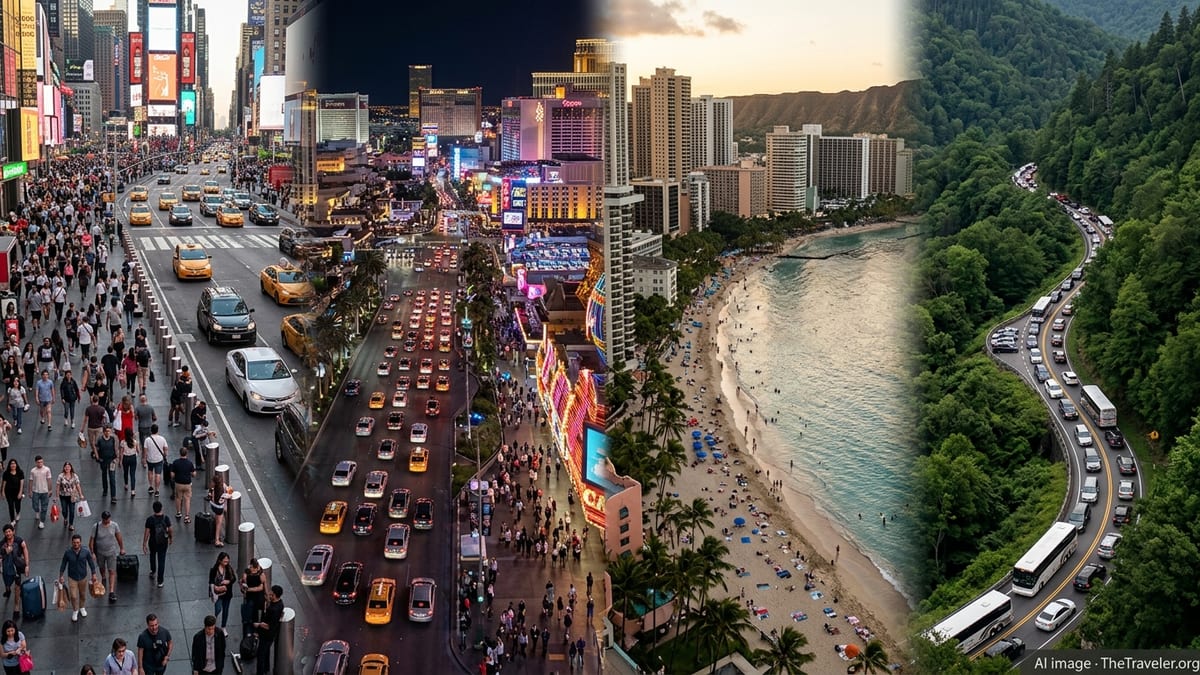
New York City Nears Record Tourism as Crowding Concerns Mount
New York City’s tourism engine has largely roared back from the pandemic, pushing visitor numbers close to historic highs. City budget documents and tourism reports indicate that nearly 65 million people visited in 2024, only slightly below the record of about 66.6 million visitors set in 2019. Projections for 2025 point toward a new high of roughly 68 million arrivals, underscoring how quickly the five boroughs have re-emerged as a global magnet for leisure and business travelers.
The renewed influx is most visible in Manhattan’s core, where sidewalks around Times Square, Midtown and Lower Manhattan are again packed for much of the day. Transit crowding has also returned, with heavily used subway lines and key transfer hubs seeing crush loads during peak tourism seasons. Publicly available city planning material notes that tourism is a major driver of jobs and tax revenue, but it also acknowledges mounting pressure on public space, transit and sanitation services.
Residents’ frustrations increasingly surface in neighborhood forums, where complaints range from suitcase-choked sidewalks and short-term rentals in apartment buildings to noise and trash near major attractions. Local planning discussions now focus more heavily on how to spread visitors beyond a handful of hyper-concentrated districts, using tools such as marketing campaigns for outer borough attractions and improved wayfinding to less trafficked cultural sites.
City agencies are simultaneously weighing strategies to accommodate future growth while preserving livability, including pedestrianization measures in parts of Midtown and continued investment in transit and streetscape improvements. The debate reflects a broader question facing major global cities: how to welcome tens of millions of visitors a year without turning everyday public spaces into permanent bottlenecks.
Las Vegas Strip Feels the Squeeze Even as Visitor Growth Levels Off
Las Vegas has long marketed itself as a 24-hour playground, and its central Strip remains one of the most heavily trafficked corridors in the country. Local traffic and economic reports describe the Tropicana Avenue and Las Vegas Boulevard junction as among the busiest intersections in the United States, with both pedestrian and vehicle volumes driven by mega-resorts, sports venues and constant event programming. Even as overall visitation has not yet surpassed the 42.5 million visitors logged in 2019, spending per visitor has risen, indicating that crowds are more concentrated in core entertainment zones.
Recent state economic analyses show that Las Vegas is still in a period of adjustment, with overall visitor volumes fluctuating as the city absorbs new attractions and major events, including professional sports and large-scale concerts. At the same time, anecdotal accounts from visitors and workers describe packed pedestrian walkways, long taxi and rideshare queues, and intense congestion at key intersections along the Strip, especially on weekends and during conventions.
The Strip’s design funnels tremendous volumes of people through a relatively narrow corridor lined with casinos, retail complexes and footbridges. Local transportation documents and county reports highlight ongoing efforts to manage the strain, including restrictions on mobile billboards, redesigned pedestrian crossings and improved traffic signal coordination. Large construction projects, such as the closure and demolition of the former Tropicana resort to make way for a new stadium and resort complex, have further squeezed capacity and contributed to bottlenecks.
While Las Vegas tourism officials emphasize the economic importance of attracting high-spending visitors, there is growing discussion about how to maintain a safe, walkable Strip experience at peak times. Measures under consideration or in progress include expanded use of pedestrian overpasses, enhanced transit links to off-Strip hotels and continuing adjustments to event scheduling to reduce periods of extreme congestion.
Honolulu and Waikiki Wrestle With Overtourism and Climate Pressures
In Honolulu, the challenge extends beyond crowding to the broader resilience of an island destination under strain. Visitor arrivals to Oahu and the state of Hawaii remain robust, sustaining hotels and vacation rentals clustered around Waikiki Beach and other coastal areas. Publicly available information from state tourism and tax authorities shows that policymakers have moved to increase taxes on hotel rooms and short-term rentals, with revenue earmarked for addressing shoreline erosion, wildfire risks and other climate-related threats amplified by intensive coastal tourism.
Waikiki’s narrow beachfront and dense high-rise skyline mean that even modest increases in visitor numbers can translate into shoulder-to-shoulder conditions on sidewalks, beaches and in nearshore waters. Residents and community groups frequently flag concerns related to traffic, crowded parks and pressure on local infrastructure, particularly in neighborhoods that border major visitor zones. The growth of vacation rentals has drawn scrutiny for its effects on long-term housing availability and affordability, spurring new regulations in some parts of the islands.
State-level planning materials emphasize a shift toward “destination management” rather than pure marketing, with a greater focus on limiting environmental damage and encouraging more responsible visitor behavior. This includes proposals for expanded user fees, reservation systems at sensitive natural sites, and pre-arrival education campaigns aimed at reducing conflicts between tourists and local communities.
In Honolulu, discussions about tourism now intersect with climate adaptation, as authorities look to fund beach nourishment projects for Waikiki and strengthen protections against storms and sea level rise. The combination of high visitor density, vulnerable coastlines and constrained land supply makes Oahu a test case for how mature island destinations can recalibrate tourism without undermining a critical pillar of their economies.
Great Smoky Mountains National Park Struggles With Peak-Season Gridlock
Far from the skyscrapers and neon, the Great Smoky Mountains National Park faces its own version of overtourism. National Park Service data and independent analyses consistently rank the Smokies as the most visited national park in the United States, with more than 12 million recreational visits recorded in 2024. Although that figure is slightly below the 13.3 million visits logged in 2023, it still represents a volume of traffic unparalleled elsewhere in the park system.
The park’s road network, including scenic drives such as the Cades Cove Loop and parkways near Gatlinburg and Pigeon Forge, frequently experiences backups stretching for miles during peak spring and autumn seasons. Reports from visitor advocates and local media describe situations where parking lots fill early in the day, trailheads are overcrowded, and wildlife viewing areas become clogged with stopped vehicles. The surrounding gateway towns, which rely heavily on tourism, simultaneously contend with their own congestion and infrastructure challenges as visitors queue for lodging, restaurants and roadside attractions.
National visitation statistics show that many U.S. parks are seeing rising numbers, but the Smokies’ combination of free entry, proximity to population centers in the eastern United States and extensive roadway access makes it particularly susceptible to crowding. Management discussions have increasingly centered on reservation systems, shuttle options and seasonal closures as potential tools to reduce the crush of private vehicles in sensitive valleys and along popular ridges.
Local business leaders and conservation groups often frame the issue as a balance between sustaining visitor-driven economies and preserving the natural and cultural resources that draw people to the Smokies in the first place. As the park continues to attract millions of annual visitors, the debate over how to accommodate them without degrading the experience or the environment is intensifying.
Shared Pressures Prompt Calls for New Tourism Playbook
Across New York City, Las Vegas, Honolulu and the Great Smoky Mountains, the specifics of overtourism differ, but the underlying tensions are strikingly similar. Each destination relies heavily on visitor spending yet faces growing pushback over gridlocked streets, full-to-bursting public spaces and rising housing and infrastructure costs in surrounding communities.
Public documents and recent policy moves suggest that the focus in many of these places is shifting from simply attracting more visitors to managing when, where and how they arrive. Examples include higher accommodation taxes earmarked for climate and infrastructure projects in Hawaii, traffic and pedestrian-flow interventions on the Las Vegas Strip, and exploratory discussions about reservation systems and shuttles in the Smokies. In New York, tourism strategies increasingly highlight lesser-known neighborhoods and cultural institutions in an effort to disperse crowds.
Travel industry analysts note that post-pandemic demand for experiences, outdoor recreation and big-city events has combined with the growth of low-cost air travel and short-term rentals to concentrate unprecedented numbers of people in already popular areas. As these hotspots navigate the coming high seasons, the effectiveness of new management measures will be closely watched by other destinations confronting their own versions of the same problem.
For travelers, the intensifying strains mean that planning, timing and destination choice are becoming more important than ever. For host communities, the question is whether they can transform surging visitor interest into lasting benefits without being overwhelmed by their own success.