

More news on this day
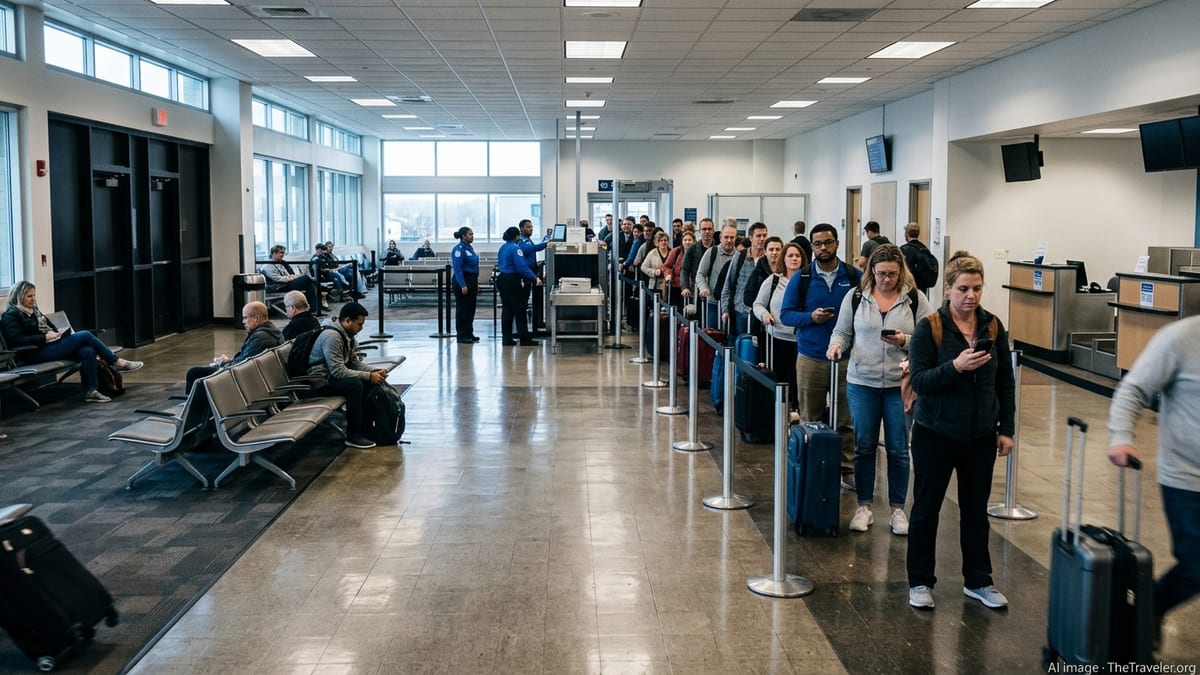
Mounting Transportation Security Administration staffing strains during the ongoing Department of Homeland Security shutdown are beginning to reshape U.S. air travel, with long security lines at major hubs and growing concern that the next phase of disruption could hit the country’s smallest commercial airports.
Get the latest news straight to your inbox!
Partial Shutdown Enters Second Month as TSA Pay Gaps Widen
The current Department of Homeland Security funding lapse, which began on February 14, 2026, has kept Transportation Security Administration officers on the job but increasingly without full pay. Publicly available information shows that TSA employees received only a partial paycheck at the end of February and are expected to miss their first full paycheck in mid March, prompting unions and industry groups to warn of rising financial strain on front line security workers.
Analyses from travel and finance outlets note that this kind of prolonged disruption can translate into higher unscheduled absences among screeners when shutdowns drag on. Historical comparisons to the 2018 to 2019 and 2025 shutdowns indicate that even relatively small increases in call outs can quickly slow checkpoint throughput at busy terminals, creating bottlenecks that ripple through already crowded spring travel schedules.
Current coverage of airport operations describes multi hour lines at major hubs in Houston, Atlanta, New Orleans and Charlotte during peak periods, even as airlines attempt to adjust staffing and boarding processes. While flight operations continue nationwide, the combination of heavier spring break demand and constrained security manpower is leaving less margin for error when disruptions occur.
Small and Regional Airports Face Disproportionate Risk
While the most visible impact of the shutdown so far has been longer queues at big city airports, recent guidance from travel trade groups and industry advisories underline that smaller and regional airports are likely to face the greatest operational risk if TSA staffing pressures intensify. These facilities typically operate with lean security teams, limited ability to reassign staff between checkpoints and fewer alternative flights when a single departure bank is disrupted.
Advisory documents circulated to travel agencies during recent shutdowns highlight scenarios in which limited staffing can force reduced hours at security checkpoints or temporary consolidation of screening into a single lane. In extreme cases, such constraints can lead to the temporary suspension of commercial service if minimum screening requirements cannot be met throughout the day.
Observers point to previous funding standoffs, including the 2025 shutdown, when select terminals at Philadelphia International Airport and other facilities briefly closed security checkpoints due to staffing shortages. Those episodes were resolved after schedules were adjusted and some staff returned, but they serve as a template for the kind of localized shutdown that could recur at small airports if current pressures deepen.
Industry commentary also notes that small communities often have fewer alternative transportation options, meaning any loss or curtailment of service can have outsized economic impacts on local tourism, business travel and cargo connections.
Warning Signs: Long Lines, Program Suspensions and Worker Fatigue
Recent news coverage describes security lines stretching for hours at certain large airports, particularly at morning departure peaks when leisure and business travelers converge. Reports indicate that TSA has attempted to mitigate delays by shifting personnel to the busiest checkpoints and encouraging overtime, but that approach risks accelerating burnout among officers already coping with delayed pay.
Publicly available information from travel and government focused outlets shows that the Department of Homeland Security has temporarily curtailed or adjusted trusted traveler services as part of broader cost saving measures. Programs such as Global Entry were briefly halted in February before being restarted in March, while TSA PreCheck has remained under scrutiny during the shutdown as officials balance efficiency gains against resource constraints.
Analysts warn that these steps, while intended to preserve core security operations, can inadvertently push more passengers into standard screening lanes, compounding pressure on limited staff. Combined with seasonal storms and ongoing air traffic control staffing challenges unrelated to DHS funding, the result is a travel system that is more vulnerable to cascading delays when anything goes wrong.
Worker advocacy organizations and travel industry coalitions have launched public campaigns urging Congress to end the shutdown and to guarantee pay for essential aviation security personnel during future funding gaps. Their statements argue that chronic uncertainty over pay and benefits makes it harder for TSA to retain experienced officers, a problem that can ultimately narrow the agency’s options when staffing must be flexed quickly.
Prospect of Targeted Closures and Schedule Cuts
Transportation and travel specialists increasingly describe a scenario in which outright nationwide airport closures remain unlikely, but targeted shutdowns or schedule reductions at smaller airports become more plausible if staffing trends worsen. Public commentary from aviation analysts suggests that TSA would try to protect the most heavily used hubs and key business markets by concentrating available personnel there, even if that meant reducing coverage at lightly used checkpoints elsewhere.
In practical terms, this could look like shorter screening hours, fewer open lanes during midday lulls or even the consolidation of screening for multiple gates into a single checkpoint at some regional fields. If absenteeism rises further, day specific suspensions of departures at low volume airports could emerge as a last resort to keep the overall system operating safely with the staff available.
Travel guidance produced for clients during recent shutdowns already advises passengers using smaller airports to monitor flight status closely, arrive earlier than usual and be prepared for abrupt schedule changes. Some analysts suggest that airlines might temporarily re route passengers through larger hubs or consolidate lightly used routes if security availability becomes too constrained at certain outstations.
Such measures would add time and complexity to trips for travelers in small and midsize communities, but could also help maintain overall connectivity while the shutdown continues. The balance between maintaining minimum service and concentrating resources where they are most needed is likely to shape how the next stage of disruption unfolds.
What Travelers Should Watch in the Weeks Ahead
As the shutdown stretches toward the heart of the spring break period, aviation observers recommend that travelers pay close attention to both national level developments and local airport conditions. Publicly available forecasts from industry groups suggest that passenger volumes will remain high through March and early April, increasing the risk that any incremental loss of TSA staff could translate rapidly into visible disruptions.
For now, most major airports continue to process passengers despite long waits, and flight operations remain broadly intact. Yet the combination of growing worker fatigue, delayed paychecks and limited flexibility at small facilities is keeping the possibility of localized closures on the table, particularly at airports with minimal staffing buffers.
Travel analysts emphasize that the trajectory of TSA related disruption will depend heavily on how long DHS funding remains unresolved and whether interim measures are taken to stabilize pay for essential staff. If negotiations in Washington falter and the shutdown continues deeper into the spring and summer travel seasons, the pressure on the system, and on the country’s smallest commercial airports in particular, is expected to intensify.