

More news on this day
Air travelers across the United States are being warned to brace for fresh waves of disruption as Transportation Security Administration officers, working without pay amid the ongoing Department of Homeland Security shutdown, begin quietly searching for other jobs and weighing whether they can afford to stay on the front lines of airport security.
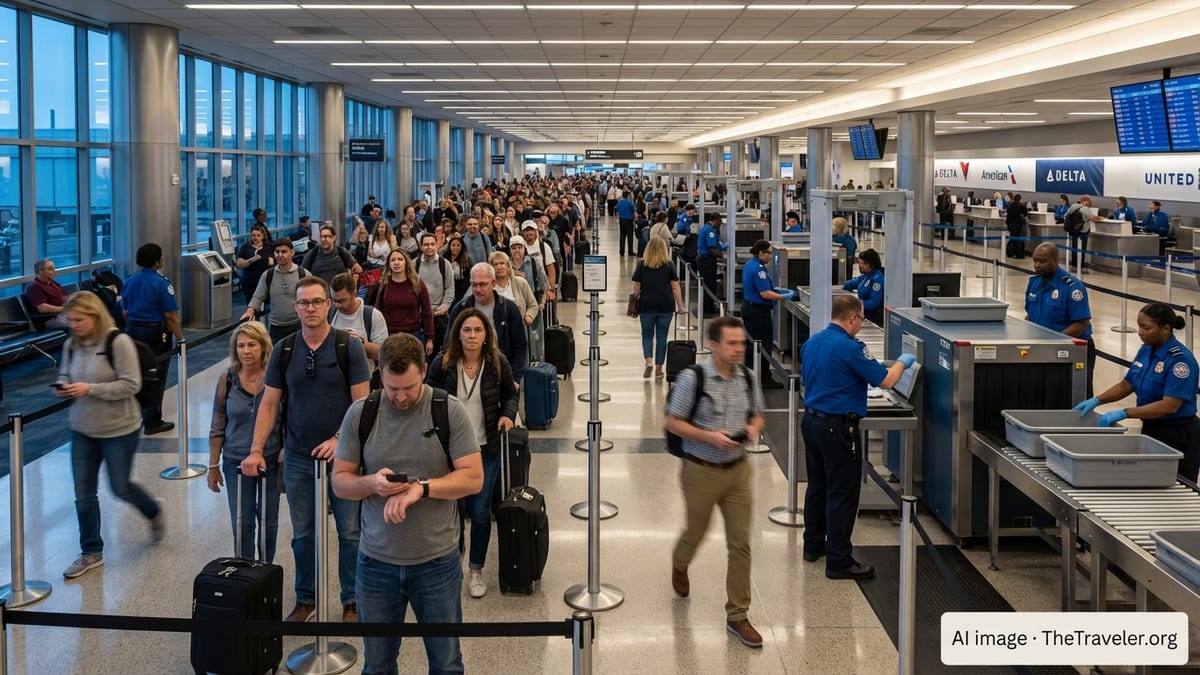
Shutdown Strains TSA Workforce and Airport Operations
The partial shutdown of the Department of Homeland Security, which began on February 14, has left tens of thousands of Transportation Security Administration employees classified as essential and reporting for duty even as questions mount about when their next full paycheck will arrive. Union representatives and aviation analysts say the financial strain is intensifying fatigue and frustration inside security checkpoints, creating ideal conditions for a slow but steady exodus of experienced screeners.
While TSA maintains that security operations remain safe and functional, the agency has acknowledged that staffing is under pressure and that managers are already making airport by airport adjustments to keep the busiest hubs running. In practice, that can mean consolidating lanes, stretching shift lengths, cutting back on overtime where it is not absolutely required, and redeploying staff from secondary airports to major metropolitan gateways.
The impact for travelers may not be immediately obvious on every route, but as the shutdown drags on, even small changes in staffing can ripple through tightly scheduled flight banks. Longer lines at security, sporadic lane closures and last minute gate changes are becoming more common at certain peak times of day, especially during early morning departures and late afternoon business travel surges.
Industry veterans warn that the system is highly sensitive to even modest staffing gaps. A shortfall of screeners at just a few key checkpoints in cities such as Atlanta, Chicago, Denver or Los Angeles can quickly cascade into missed connections and rolling delays that spill into the broader network over the course of the day.
From Patriotism to Paychecks: Officers Confront Hard Choices
For many TSA officers, this is not the first time they have been asked to work through a funding crisis. Previous shutdowns in 2013 and 2018 to 2019 forced airport security staff to stay on the job without timely pay, and some frontline workers say the current situation feels like a troubling repeat. This time, however, inflation, higher rents and lingering debt from the pandemic era are leaving fewer financial cushions to absorb missed or delayed paychecks.
In interviews with national and local outlets, officers describe taking on gig work, applying for part time retail jobs and looking at more stable private sector security roles. Some are updating résumés between shifts or speaking to recruiters on their days off, hoping to line up alternatives in case the shutdown runs deep into the spring. The calculation is not just about finances, workers say, but also about the stress of bearing national security responsibilities while their own families struggle to cover basic expenses.
Union officials warn that the combination of burnout, financial hardship and a historically tight labor market could accelerate departures. Airport security jobs that were once seen as relatively stable federal positions now compete with warehouse, logistics and private security roles that in some cases offer higher hourly pay, signing bonuses and more predictable schedules. If experienced officers leave in significant numbers, TSA will face the double challenge of hiring and training replacements while still coping with the constraints of the shutdown.
The longer term risk is a hollowing out of institutional knowledge inside airport checkpoints. Senior screeners play a key role in mentoring new hires, spotting subtle behavioral cues and handling complex secondary inspections. A loss of those skills cannot be quickly replaced by short term transfers or temporary duty assignments from other locations.
Trusted Traveler Turmoil Adds to Passenger Anxiety
Tensions spiked among frequent flyers on February 22 when the Department of Homeland Security announced that it would suspend TSA PreCheck, a popular program that allows prescreened travelers to use faster dedicated lanes. Within hours, following outcry from airlines, travel groups and lawmakers, officials reversed course and confirmed that PreCheck would remain operational, even as the wider shutdown continues.
Global Entry, the U.S. Customs and Border Protection program that speeds arrivals for low risk international travelers, has not been as fortunate. Enrollment centers and many in person interviews have been paused, and applicants are being told to expect extended delays before they can complete the process. For business travelers who rely on rapid border crossings to keep tight schedules, the uncertainty is adding another layer of stress on top of security line unpredictability and potential flight disruptions linked to staff shortages.
The back and forth around these programs has drawn sharp criticism from industry leaders, who argue that user funded services such as TSA PreCheck and Global Entry should be insulated from political clashes over appropriations. They note that the programs are designed to enhance security by allowing officers to focus more attention on unknown or higher risk passengers, and warn that undermining them could ultimately make airports less efficient and less secure.
The episode has also fueled confusion among passengers, many of whom only learned about the possible suspension through social media or news alerts. Airport officials say they have fielded a surge of questions at check in desks and information counters from travelers unsure whether their trusted traveler benefits would be honored when they arrived at the checkpoint.
Airports and Airlines Scramble to Contain the Fallout
Faced with the prospect of a prolonged shutdown and a TSA workforce stretched thin, airports and airlines are moving quickly to minimize the impact on passengers. Some large hubs are opening backup checkpoints earlier in the morning or keeping them staffed later into the evening to spread crowds more evenly across available lanes. Others are deploying additional customer service agents in terminal lobbies to direct travelers toward shorter lines or alternative screening areas.
Airlines are also updating travel alerts and mobile apps more frequently, encouraging passengers to arrive earlier than usual, especially for early morning departures and flights from airports that have previously experienced checkpoint bottlenecks during government funding lapses. Carriers are working closely with TSA field leadership to anticipate pinch points and adjust schedules where possible, though they have limited ability to reconfigure dense traffic during peak seasons.
Behind the scenes, airport managers are reviewing contingency plans that were refined during earlier shutdowns and during the pandemic. These include strategies for reallocating non federal staff to manage crowd control, expanding communication with local law enforcement and emergency services, and coordinating with concessionaires that may need to adjust opening hours if security screening schedules change abruptly.
Yet there is only so much that local operators can do while the underlying funding stalemate remains unresolved in Washington. Many airport directors say the real solution lies in insulating critical security functions from recurring political brinkmanship, whether by shifting more costs to user fees, creating automatic backstop funding mechanisms, or restructuring how federal security roles are budgeted.
What Travelers Can Expect in the Weeks Ahead
For now, travelers planning domestic or international journeys through U.S. airports should prepare for a more unpredictable experience than usual. Security wait times are likely to vary widely from day to day and airport to airport, depending on local staffing levels and the pace at which officers start to seek outside employment. Sudden lane closures, temporary terminal shifts and unannounced adjustments to trusted traveler operations remain possible as TSA adapts to staffing realities on the ground.
Travel advisors recommend building in additional time before departure, particularly at major hubs and during traditionally busy travel periods such as Monday mornings and Thursday and Friday afternoons. Passengers are also being urged to monitor airline communications closely, keep contact details updated in booking profiles, and check airport and carrier apps on the day of travel for real time guidance on checkpoint conditions.
Consumer groups caution that while individual travelers have limited ability to influence federal budget negotiations, they can document severe disruptions, missed connections or out of pocket expenses linked to security delays and share those experiences with airlines, airports and elected representatives. Such feedback has in past shutdowns added pressure on policymakers to move toward a resolution when airport operations came under sustained public scrutiny.
Until lawmakers reach a funding agreement that restores full pay and stability for TSA workers, the nation’s aviation system will continue to operate in a state of heightened fragility. Each paycheck cycle that passes without clarity increases the likelihood that more officers will decide they can no longer afford to stay, turning a political standoff in Washington into a very real and personal source of travel chaos at security lines nationwide.