

More news on this day
Travel across the United States is entering a period of unusual strain as a protracted Department of Homeland Security shutdown collides with a drumbeat of warnings about terrorism, domestic extremism, and strained aviation infrastructure, creating a more fragile environment for anyone planning a trip.
Get the latest news straight to your inbox!
Shutdown Squeezes Airport Security and Air Traffic Systems
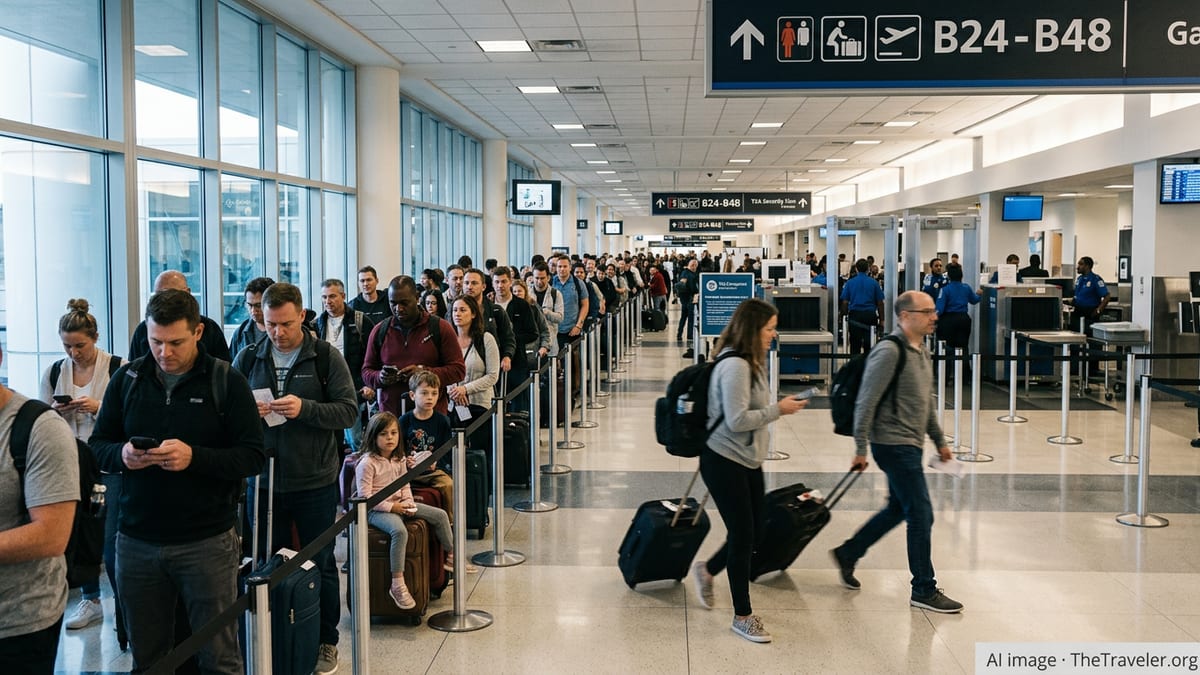
The partial shutdown of the Department of Homeland Security that began on February 14 has left tens of thousands of Transportation Security Administration officers and other frontline aviation staff working without pay. Publicly available data and media reports indicate that unscheduled absences are rising, security lines are lengthening, and some airports are struggling to keep all checkpoints open as the busy spring travel period ramps up.
Coverage from aviation and national media outlets describes hourslong security queues at major hubs, with lines in some terminals stretching into baggage halls and parking garages. Analysts note that the current disruption follows a longer government funding lapse in late 2025 and that the cumulative effect is eroding morale and accelerating staff departures in an already thinly staffed system.
Industry groups warn that sustained unpaid work periods can push screeners to seek second jobs or leave federal service entirely, compounding a staffing crisis that takes months to reverse because new officers require extensive vetting and training before they can operate independently. Travel organizations and airport executives have urged lawmakers to quickly restore stable funding, arguing that the shutdown has turned predictable screening into a daily uncertainty for passengers.
Air traffic control is also under stress. Prior shutdowns showed that even when safety-critical personnel remain on duty, the absence of pay and support staff can reduce capacity, delay training, and heighten fatigue risks. Recent commentary from pilot unions and airline leaders suggests concern that the current impasse is again pushing the system toward the limits of what it can safely absorb.
Programs Restarted, But Trust in Reliability Is Fraying
In recent days, the federal government has moved to restart some suspended traveler programs, including Global Entry, following extensive coverage of long lines for arriving international passengers. Customs and Border Protection has brought staff back into the program as part of a broader effort to ease bottlenecks at key international gateways.
Even so, the on-again, off-again status of trusted traveler lanes has raised questions about the reliability of programs travelers pay extra to access. Frequent fliers and corporate travel planners tracking the situation through airline and airport alerts are finding it harder to forecast connection times and pickup schedules, particularly at large hubs where arrival delays can ripple across the network.
Some aviation analysts and local airport authorities are again highlighting a little-used federal framework that allows airports to contract private companies to perform security screening under Transportation Security Administration oversight. A small number of U.S. airports already use this model, and recent reporting suggests that pressure may grow for more facilities to explore it as a hedge against future shutdown-driven disruptions.
For travelers, the practical takeaway is that procedural stability can no longer be assumed. Industry guidance increasingly recommends arriving earlier than usual, building in longer layovers for connections through large hubs, and paying close attention to airport and airline notifications, especially while the current shutdown persists.
Security Bulletins Signal a Persistently Elevated Threat Environment
The disruption from the shutdown is unfolding against a backdrop of heightened security warnings about terrorism and targeted violence. The Department of Homeland Security’s most recent Homeland Threat Assessment, released for the 2025 cycle, describes a persistently high risk from both foreign terrorist organizations and domestic extremists, with public spaces and large gatherings identified as potential targets.
A recent speech by the Federal Bureau of Investigation director on worldwide threats to the homeland underscored concerns about individuals inspired by groups such as the Islamic State and al Qaida, as well as self-radicalized actors motivated by a mix of ideologies. The address highlighted that attacks overseas and geopolitical flashpoints continue to resonate within the United States and can spur plots or opportunistic violence.
Reports from federal agencies and independent security analysts also draw attention to domestic extremism, including ideologically motivated violence directed at government facilities, infrastructure, and public events. Internal documents discussed in national media in late 2025 described investigative activity focused on threats to immigration enforcement sites, signaling an ongoing concern about attacks that could unfold in or near transportation corridors and civic venues.
Although the United States has not experienced a coordinated, large-scale attack on the scale of September 11 in recent years, law enforcement case studies and open-source reporting on incidents in New Orleans and other cities show that relatively simple tactics, from vehicle rammings to shootings in crowded entertainment districts, can cause significant casualties and disruption. For travelers, this means the baseline threat level remains elevated even when no specific plot is publicly known.
Public Events, Transit Hubs and Tourist Areas Under Scrutiny
Transportation hubs, sports stadiums, concert arenas and downtown entertainment zones are receiving particular attention in recent threat assessments. Federal and local agencies routinely stress that large, open venues linked to transit networks present attractive targets for attackers seeking high-impact, high-visibility results with comparatively simple methods.
Recent high-profile cases have prompted event organizers in major U.S. cities to review security plans, add screening checkpoints, and coordinate more closely with law enforcement and private security contractors. While much of this activity occurs behind the scenes, visitors often notice visible changes such as bag checks, magnetometers, temporary street closures, and restrictions on vehicle access near entrances.
For travelers, these steps can translate into longer waits at stadium gates or theater doors and more crowded approaches to transport nodes, particularly around holidays and major sporting events. Analysts emphasize that such measures are designed to create distance between potential threats and large crowds but acknowledge that they can also intensify congestion and stress for visitors unfamiliar with local layouts.
Tourist-heavy districts that blend nightlife, short-term rentals, and major attractions remain a focus of situational awareness campaigns. Public information from security agencies encourages visitors to stay alert in dense pedestrian areas, note emergency exits, and report unattended bags or unusual behavior, especially in locations connected to public transit or major roadways.
What Travelers Can Do to Navigate a More Fragile Landscape
While much of the current risk environment is structural and driven by political and security dynamics beyond individual control, travelers can take steps to reduce their exposure and improve resilience. Travel experts and safety specialists recommend treating government shutdowns and heightened threat periods as signals to build in extra buffers rather than reasons to cancel trips automatically.
For air travel, that often means arriving earlier than in previous years, especially at large hubs that have appeared in recent coverage of long security lines. Adding time between connecting flights, avoiding tight last departures of the day where possible, and monitoring flight status and checkpoint wait times through airline and airport channels can mitigate some of the uncertainty created by staffing turbulence.
On the security front, travelers are increasingly encouraged to think in terms of awareness rather than anxiety. That includes planning routes that minimize unnecessary time in bottlenecked chokepoints, staying attuned to exit routes in crowded venues, and keeping identification and essential medications accessible in case of sudden evacuations or re-screening.
Ultimately, the convergence of a prolonged Department of Homeland Security funding impasse and a robust threat picture means that travel in the United States is carrying a more pronounced layer of background risk and inconvenience. Until political negotiations produce more stable funding and security trends ease, trip planning is likely to require more time, flexibility, and attention from travelers who have grown accustomed to a smoother experience.