

More news on this day
US travelers heading to or transiting through Hong Kong are being urged to reassess what they carry on their phones and laptops after the city expanded police powers to demand device passwords and decryption assistance in national security cases, with potential prison terms of up to three years in some circumstances for providing false information.
Get the latest news straight to your inbox!
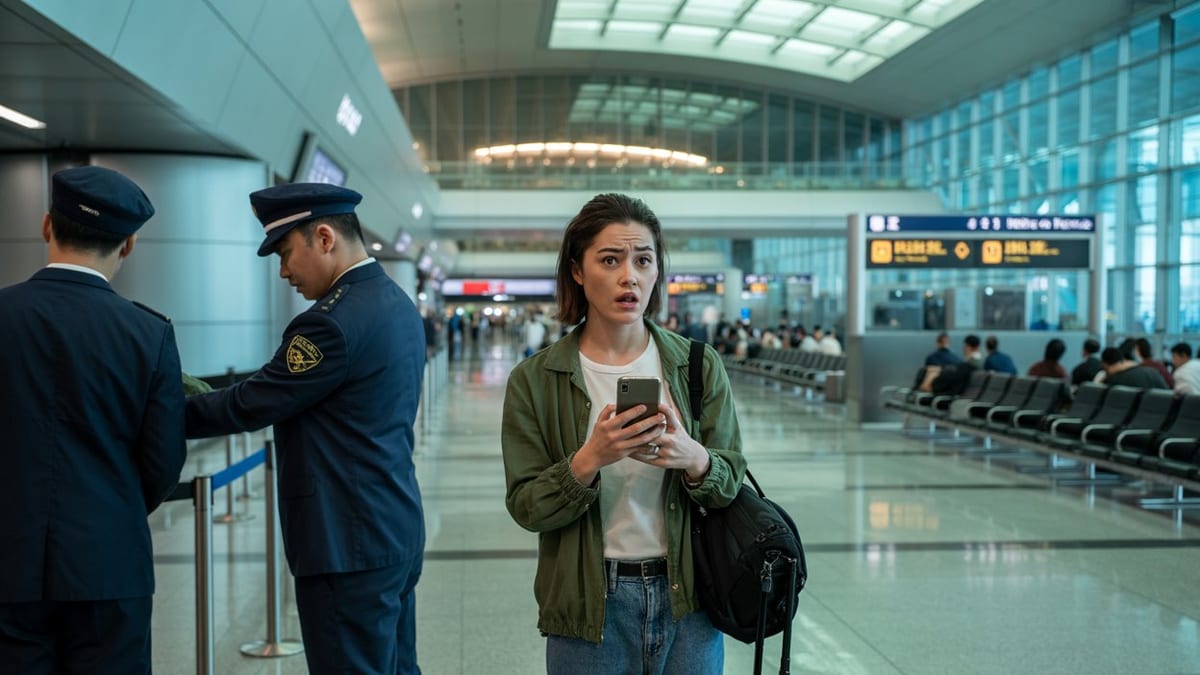
Image by Travel And Tour World
What Changed In Hong Kong’s Security Rules
Recent amendments to the implementation rules of Hong Kong’s Beijing-imposed National Security Law have broadened the circumstances in which police can require access to digital devices. Publicly available information shows that officers investigating suspected national security offenses may now compel individuals to unlock their phones, tablets, or computers, or otherwise assist with decryption so that data can be accessed.
According to multiple news reports, refusal to cooperate in these situations can itself be treated as an offense punishable by up to one year in jail and a substantial fine. Separate provisions indicate that providing false or misleading information to investigators in a national security case may carry penalties of up to three years’ imprisonment, significantly raising the legal stakes for anyone whose devices become the focus of an inquiry.
The changes sit alongside Hong Kong’s newer Safeguarding National Security Ordinance and are part of a wider effort to tighten enforcement around speech, organization, and information deemed threatening to national security. For travelers, the key practical shift is that digital devices are explicitly within scope, and failure to assist with access can now trigger its own legal exposure.
Officials in Hong Kong have rejected suggestions that the rules permit unfettered trawling of phones, emphasizing that device searches are tied to national security investigations and, in many scenarios, require judicial authorization. However, for foreign visitors, the on-the-ground reality remains that a phone or laptop could become central evidence if they are drawn into a security-related inquiry.
Why US Travelers Are Being Singled Out With Warnings
The new rules have prompted updated messaging from US consular channels and renewed attention from American media and advocacy groups. Public advisories emphasize that US citizens in Hong Kong are subject to local law, including the National Security Law and its implementing regulations, regardless of whether they are residents, short-term visitors, or simply connecting through the airport.
Coverage in international outlets notes that the scope of “national security” in Hong Kong is defined broadly, with potential reach into online speech, political discussion, or information-sharing that might be considered benign elsewhere. This breadth has fueled concern that foreign travelers, including US tourists and business visitors, could be questioned over social media content, messaging apps, or stored documents if authorities believe there is a security dimension.
Commentary from legal and policy analysts highlights that Hong Kong’s approach to data access is converging with, and in some respects mirroring, practices already seen in mainland China. At the same time, the city retains its own common-law–based legal system, which means that court warrants, evidentiary standards, and legal procedures continue to play a role in how these powers are exercised.
For US travelers, the core message emerging from public reporting is not that device searches are guaranteed, but that the consequences of a security-related dispute over access can now be serious. A situation that once might have resulted in questioning or device seizure alone may now carry the risk of criminal liability if investigators decide a traveler has been uncooperative or misleading.
How Phone and Laptop Searches Could Affect Your Trip
For most visitors, the most likely interface with the new rules will be at points of contact with law enforcement, which can include police on the street, specialized national security units, or officers operating in coordination with border and customs agencies. Reports indicate that the powers can apply to people under active investigation as well as those believed to hold information relevant to a national security case.
That means a traveler could, in theory, be asked to unlock a device even if they are not personally suspected of an offense, for example if they are associated with a person or organization under scrutiny. Refusing to provide a passcode or otherwise help with decryption in these circumstances is what carries the risk of separate penalties under the revised rules.
Publicly available coverage also notes that people merely transiting through Hong Kong’s international airport can fall under the reach of the National Security Law if an incident or investigation involves them during their time in the territory. Business travelers, journalists, academics, and NGO staff are among those being urged by risk advisers to assume that any device they carry could be inspected.
At the same time, there is no indication that mass, routine phone checks are occurring at entry for ordinary tourists on a blanket basis. The heightened concern stems less from volume of checks and more from the expanded legal consequences if a digital search becomes part of a security case.
Practical Steps US Travelers Can Take Right Now
Digital-security specialists and corporate travel risk consultants, as cited in open reporting, widely recommend reducing the amount of sensitive data carried into higher-risk jurisdictions, including Hong Kong. A common suggestion is to travel with a minimal or “clean” device that does not store extensive work files, personal archives, or contact lists and that can be remotely wiped if lost or confiscated.
Travelers are also encouraged to log out of nonessential accounts, limit installed messaging apps, and avoid carrying large collections of documents, photos, or chat histories that could be misinterpreted in a legal environment where national security concepts are broadly framed. Using strong, unique passwords and enabling full-disk encryption remain standard best practices, but in Hong Kong’s case, travelers should understand that they may be legally required to assist with decryption.
US citizens are further advised in public guidance to familiarize themselves with what online activities might intersect with Hong Kong’s security laws, particularly posts or content that reference local politics, sovereignty issues, or foreign sanctions. While many visitors will never encounter scrutiny, awareness of how previous online behavior could be viewed in a different legal context can help inform decisions about what to carry on a device.
Finally, risk professionals stress that anyone considering civil-society work, journalism, or political research in Hong Kong should seek tailored legal and security advice well before departure. For general tourists, the focus is primarily on minimizing unnecessary data exposure and being prepared for the possibility, however remote, of being asked to unlock a device.
Global Context: Hong Kong Is Part Of A Wider Border-Search Trend
Hong Kong’s move does not exist in isolation. Public reporting points out that a growing number of jurisdictions have empowered border agents and police to search digital devices and, in some cases, require travelers to provide passwords or biometric access as a condition of entry.
In the United States, for example, civil liberties groups have long raised concerns about Customs and Border Protection’s authority to inspect devices at airports and land crossings, including for US citizens returning home. In several other countries frequently visited by Americans, such as Australia and the United Kingdom, laws also provide for compelled access to encrypted devices in specific investigative contexts.
What makes Hong Kong stand out, analysts note, is the combination of its role as a major international hub, the broad language of its national security framework, and the explicit criminal penalties attached to refusing to assist with decryption or providing inaccurate information. This mix elevates the risk calculus for travelers whose personal or professional lives involve politically sensitive material.
As global norms around privacy at borders continue to shift, experienced travelers increasingly treat phones and laptops as inspection-prone containers rather than private spaces. For Americans planning flights through Hong Kong, the new rules are a signal that digital risk management is now as essential as checking passport validity or visa requirements.