

More news on this day
Flight operations across the United States faced fresh disruption as Boston Logan International Airport recorded 91 delayed departures and arrivals alongside eight cancellations, affecting Spirit Airlines, Envoy Air, JetBlue and other carriers on busy corridors linking Boston with Orlando, Fort Lauderdale, Atlanta and additional domestic hubs.
Get the latest news straight to your inbox!
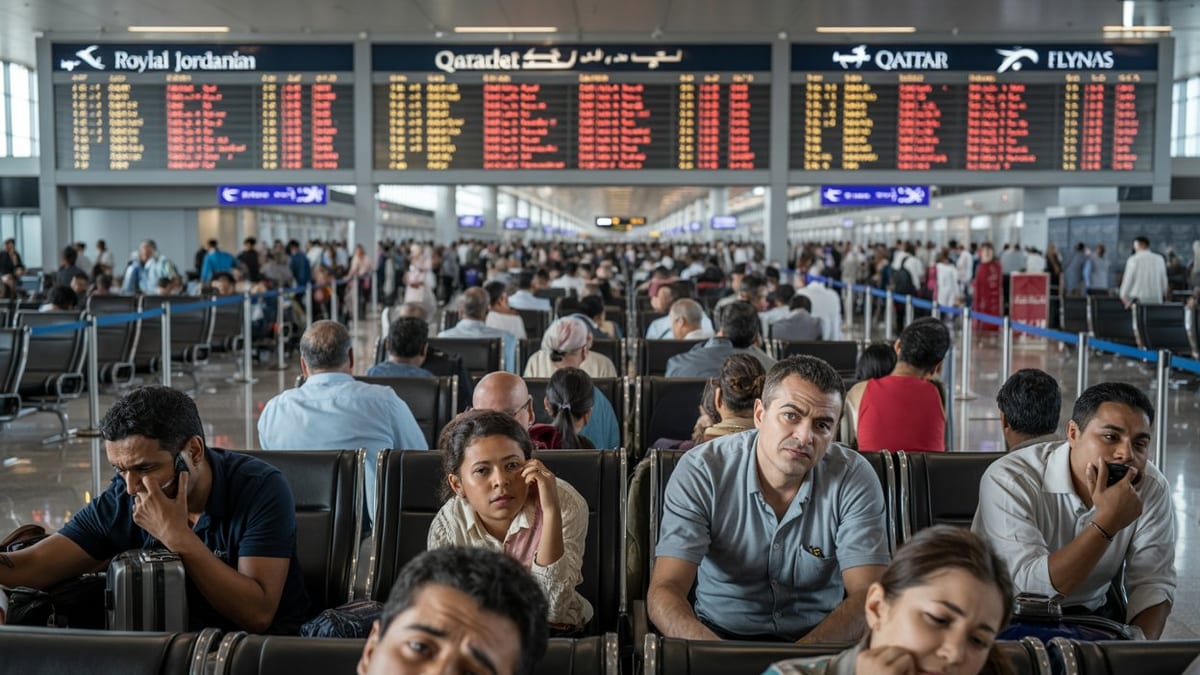
Operational Strain Hits a Key New England Hub
The latest round of disruptions at Boston Logan underscores how quickly schedules at one of New England’s most important aviation hubs can unravel. Publicly available tracking data for major US airports shows a cluster of delays building through the day at Boston, with the total reaching 91 flights held and eight cancelled connections. These numbers, while modest compared with the most severe national meltdowns, still translated into hours of missed connections and rebookings for passengers at peak travel times.
Boston Logan typically handles hundreds of daily movements across more than 40 airlines, and even a relatively small percentage of disrupted flights can trigger a noticeable slowdown in the terminal experience. Congested departure boards, lengthening security queues and aircraft waiting for available gates contributed to a sense of uncertainty for travelers trying to move through the airport on tight connections.
Reports indicate that the disruption was not linked to a single catastrophic incident, but rather to a blend of weather impacts in the broader network and routine operational constraints such as congestion on key routes and air traffic management initiatives. With Logan already operating near capacity at several peaks during the day, modest schedule pressure can result in a sharp rise in delay statistics.
According to coverage of recent US air travel patterns, major hubs have seen repeated episodes of multi-hour delays when local conditions intersect with wider network challenges, including crew positioning and tight aircraft rotations. In this context, Boston’s 91 delays and eight cancellations fit into a broader pattern of intermittent strain across the national system.
Spirit, Envoy Air, JetBlue and Others Feel the Impact
Among the carriers most visibly affected at Boston were Spirit Airlines, Envoy Air and JetBlue, alongside a range of other domestic operators that rely on Logan as either a focus city or key spoke in their networks. JetBlue, which maintains one of its largest operations at Boston, saw delayed departures on several of its short-haul routes, amplifying the risk of missed connections for travelers bound for other US cities.
Spirit Airlines, which serves Boston from leisure-heavy markets, reported schedule disruptions that complicated travel plans for passengers heading to Florida’s main tourism gateways. Delayed aircraft arrivals from previous sectors contributed to pushes in departure times on Boston flights, illustrating how a minor schedule slip at one airport can cascade across several others by late afternoon and evening.
Envoy Air, operating regional services for a larger legacy carrier, also experienced knock-on effects. Regional jets connecting Boston with smaller cities depend closely on punctual inbound aircraft and crew. When mainline and low-cost operators experience operational slowdowns, regional partners can face gate constraints and air traffic flow programs that lead to rolling delays.
Other airlines with a significant Boston presence, including major network carriers and international operators, were indirectly affected as well. Even when specific flights remained on time, congested taxiways, longer queues for departure slots and competition for available gates occasionally added several minutes to turn times, eroding schedule resilience throughout the day.
Florida and Southeastern Routes Among the Hardest Hit
Routes linking Boston with Florida and the broader Southeast, including Orlando, Fort Lauderdale and Atlanta, were particularly exposed. These corridors form some of the busiest domestic flows from Logan, carrying a mix of leisure, family and connecting traffic. When delays set in on these sectors, the consequences extend well beyond point-to-point travelers.
Orlando and Fort Lauderdale are major transfer points for Caribbean and Latin America services operated by multiple US and foreign carriers. Passengers leaving Boston on delayed flights risked arriving too late to board onward evening departures, forcing rebookings for the following day or rerouting via alternative hubs. This created further pressure on already high load factors during the spring travel period.
Atlanta, one of the largest connecting hubs in the United States, also featured prominently in the disruption pattern. Published data on recent nationwide travel challenges highlights how problems at major hubs like Atlanta can ripple outward through the network. In this latest episode, the reverse also held true: disruptions originating at or involving Boston added complexity for airlines managing tight bank structures at Atlanta and other southern hubs.
Travel industry coverage has repeatedly noted that Florida-bound flights are among the first to show visible signs of strain during busy periods, owing to strong seasonal demand and relatively high load factors. When schedule buffers are thin, even short ground holds or minor weather deviations along the route can tip these flights into delay status and contribute to broader statistics like those seen at Logan.
Broader Pattern of Recurrent US Flight Disruptions
The Boston disruptions arrived against the backdrop of a US air travel system that has seen repeated waves of delays and cancellations in recent weeks. Recent analyses of nationwide performance point to several thousand late departures and more than one hundred cancellations on some days, concentrated at major hubs but also spilling into secondary airports.
Experts who track delay propagation have linked the pattern to a combination of strong passenger demand, staffing limitations, infrastructure constraints and increasingly volatile weather. New research on the evolution of security and operational delays across the US aviation network indicates that high-volume airports now exhibit more pronounced delay cascades than in the pre-pandemic era, as airlines operate tighter schedules with fewer spare aircraft and crews.
Boston Logan’s experience illustrates how local disruptions can no longer be viewed in isolation. A congestion event in Boston can interact with thunderstorms around Atlanta, staffing issues in New York or runway work at another hub, producing complex chain reactions that are difficult for carriers to untangle quickly. Once a bank of departures begins running late, slots for later flights become harder to secure, and recovery can extend well into the following day.
For travelers, this means that even when their origin and destination airports appear to be operating normally, their flights can still be delayed by upstream issues several legs away. The Logan episode, with its 91 delays and eight cancellations, fits squarely into this new normal of more frequent, though not always catastrophic, travel disruption.
What Travelers Can Do When Disruptions Strike
Consumer advocates and travel industry guides emphasize that passengers caught in events like those at Boston Logan still have several practical steps available to reduce the impact. Publicly accessible guidance notes that travelers should monitor their flight status closely using airline apps and flight-tracking platforms, particularly when news reports highlight emerging delays at major hubs.
When a delay or cancellation becomes likely, rebooking options are often most generous early in the disruption, before alternative flights fill up. Many airlines now allow customers to self-service changes within their apps or websites, sparing them long queues at airport service desks. In more severe cases, carriers may provide meal vouchers or hotel accommodation, particularly when disruptions are tied to controllable operational factors rather than severe weather or air traffic control mandates.
Travel information services also recommend building more generous connection times into itineraries that route through busy hubs, especially during peak holiday or storm seasons. For Boston-bound travelers continuing on to Orlando, Fort Lauderdale, Atlanta or other high-demand destinations, an extra hour of scheduled connection time can make the difference between a stressful sprint and a manageable transit when delays arise.
Ultimately, the latest wave of disruptions at Boston Logan highlights the importance of flexibility and preparation in US air travel. As airlines, airports and regulators work to strengthen resilience in the system, passengers are increasingly encouraged to treat delay risk as a routine factor in planning, rather than an occasional exception.