

More news on this day
Air travelers across the United States are facing renewed disruption after a fresh round of cancellations by major carriers including Delta Air Lines, United Airlines, Spirit Airlines and Qatar Airways, with more than 40 flights scrubbed across multiple days and ripple effects spreading through major hubs such as Atlanta, Dallas, Denver, New York JFK, Miami, Las Vegas and San Francisco.
Get the latest news straight to your inbox!
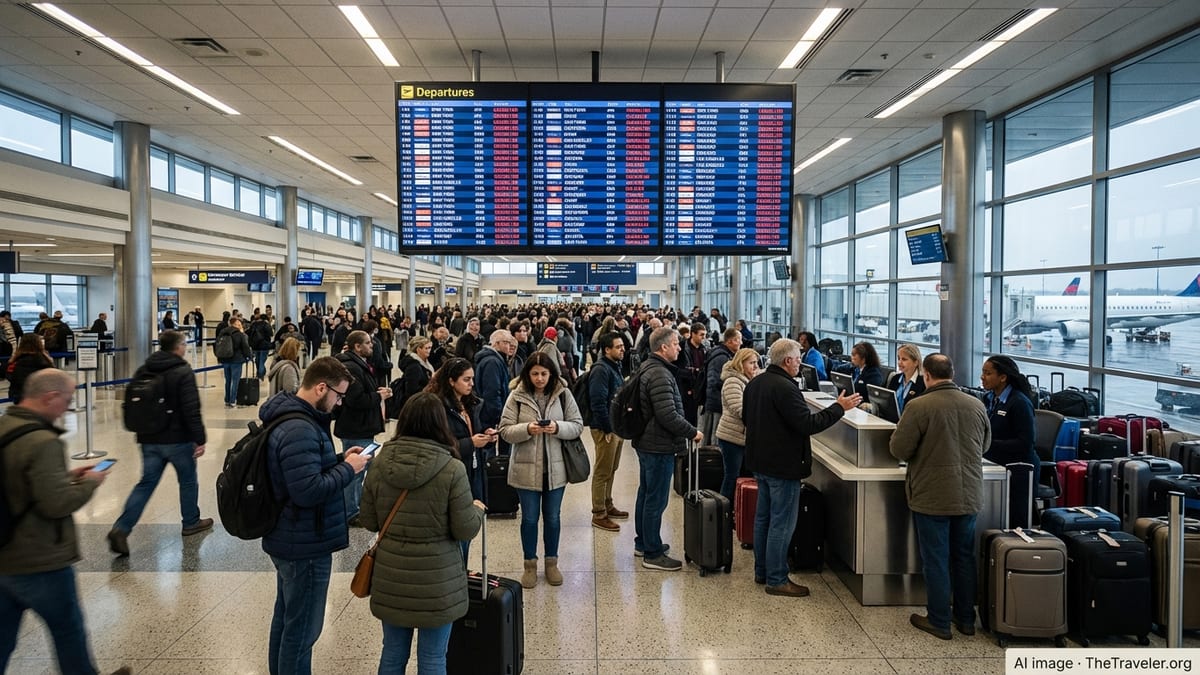
Fresh Cancellations Hit Key National Hubs
Publicly available flight-tracking data and airline status boards show a cluster of cancellations affecting a mix of domestic and international services, concentrating on some of the country’s busiest airports. Routes into and out of Atlanta, Dallas Fort Worth, Denver, New York JFK, Miami, Las Vegas and San Francisco have seen a noticeable number of flights removed from schedules, with the impact varying by carrier and airport.
Delta and United appear among the most visible carriers in the current wave, reflecting their dense schedules at major hubs. Spirit Airlines has also canceled several point-to-point services, while Qatar Airways has adjusted a small number of long haul operations connecting its Doha hub with US gateways. Although the overall number of flights affected is modest in percentage terms, the cancellations are heavily focused on peak bank times, heightening disruption for connecting passengers.
Recent patterns indicate that many of the scrapped flights are late-evening and early-morning services. Those time bands are particularly sensitive because they anchor complex connection banks and aircraft rotations. When those flights are removed, it can strand travelers overnight and complicate recovery for airlines the following day.
Operational Strains and Weather Combine to ‘Trigger’ Disruption
Industry analyses of recent US air travel disruption highlight a familiar combination of factors behind this latest episode: localized weather problems, high winds and convective storms, along with operational strains inside airline and airport systems. Even when the immediate trigger is relatively contained, such as a short ground delay program or a storm cell over a hub, the knock-on effect across interconnected schedules can be significant.
Previous cases have shown how quickly conditions can escalate. During the July 2024 CrowdStrike-related IT outage, for example, ground stops at several US airlines rapidly produced cascading cancellations as aircraft and crew fell out of position and duty-time limits were reached. In the current situation, publicly reported data suggests a smaller, more targeted disturbance, but the dynamic is similar: when one part of the network slows or stops, subsequent flights become harder to operate on time.
Spirit and other low cost carriers can be particularly exposed when a disruption occurs because their networks often rely on tight aircraft utilization and thinner buffers. When multiple flights are delayed or diverted, even a limited number of cancellations can reverberate along an aircraft’s entire day of flying, affecting passengers far from the original trouble spot.
Passengers Confront Missed Connections and Rebooking Bottlenecks
For travelers, the most immediate effects are missed connections, longer layovers and unexpected overnights. With many of the cancellations occurring on routes funneling into large hubs, passengers connecting onward to secondary cities often bear the brunt. When an Atlanta or Dallas arrival is cancelled, for example, the onward options into smaller regional markets can be limited, particularly late in the day.
Reports from passenger forums and social media posts indicate that rebooking options on alternative flights have in some cases been constrained, as remaining seats fill quickly. Travelers on heavily traveled corridors such as New York to Florida, or West Coast links between Denver, Las Vegas and San Francisco, may gain access to more same day options. Those starting from or heading to smaller airports, however, sometimes encounter rebooking windows extending into the next day.
Airlines have been updating digital tools and mobile apps in recent years to automate rebooking for disrupted passengers, but day of travel surges still create bottlenecks. When cancellations cluster around connection banks, customer service desks and phone lines tend to experience sharp spikes in demand, slowing assistance for those who need more complex itinerary changes or special accommodations.
What Travelers Can Do Right Now
While the current wave of cancellations is relatively contained in scale, travel specialists consistently advise passengers to take a proactive approach when conditions begin to deteriorate. Monitoring flight status frequently in the 24 hours before departure, and again on the way to the airport, remains one of the most effective ways to catch early signs of trouble.
Travel experts also suggest building in additional connection time when routing through congestion prone hubs such as Atlanta, Dallas Fort Worth, Denver, New York area airports, Miami, Las Vegas and San Francisco, especially during seasons when storms and low visibility are more common. A slightly longer layover can create a buffer if an inbound leg runs late or requires a last minute aircraft swap.
For those already affected by cancellations, publicly available airline customer service policies typically outline options that can include rebooking on the next available flight on the same carrier, or in some circumstances, refunds. Travelers are encouraged to document their expenses and keep records of all communications, as these details may be relevant later for travel insurance claims or reimbursement requests under carrier specific policies.
Outlook for the Coming Days
Forecasts for US air travel over the coming days point to continued sensitivity to weather and operational constraints, even if the current spike in cancellations subsides. High demand on key business and leisure corridors into hubs like Atlanta, Dallas, Denver, JFK, Miami, Las Vegas and San Francisco means that even a modest number of additional cancellations or extended delays can quickly fill remaining seats and squeeze recovery capacity.
Aviation analysts note that airlines have worked to build more resilience into schedules since several high profile meltdowns in recent years, including major weather events and technology outages. Thicker staffing, more spare aircraft on the ground, and refined crew scheduling tools have helped reduce the likelihood of large scale collapses in operations. However, the interconnected nature of modern airline networks means that smaller disruptions, such as the current set of cancellations, will remain part of the travel landscape.
For now, travelers planning trips through the affected hubs are being advised by travel planners and industry observers to remain flexible with timing and routing, consider earlier departures in the day when possible, and prepare contingency plans such as alternative airports or overnight stays. While the present disruption is not on the scale of historic nationwide ground stops, its targeted impact on major gateways is a clear reminder of how quickly conditions can shift for US air travelers.