

More news on this day
Hundreds of passengers across the United States are facing major travel headaches today as at least 128 flight cancellations and nearly 500 delays ripple through major hubs including New York, Miami and Los Angeles, with airlines such as Delta Air Lines, Spirit Airlines and Emirates adjusting operations in response to global airspace turmoil and persistent domestic bottlenecks.
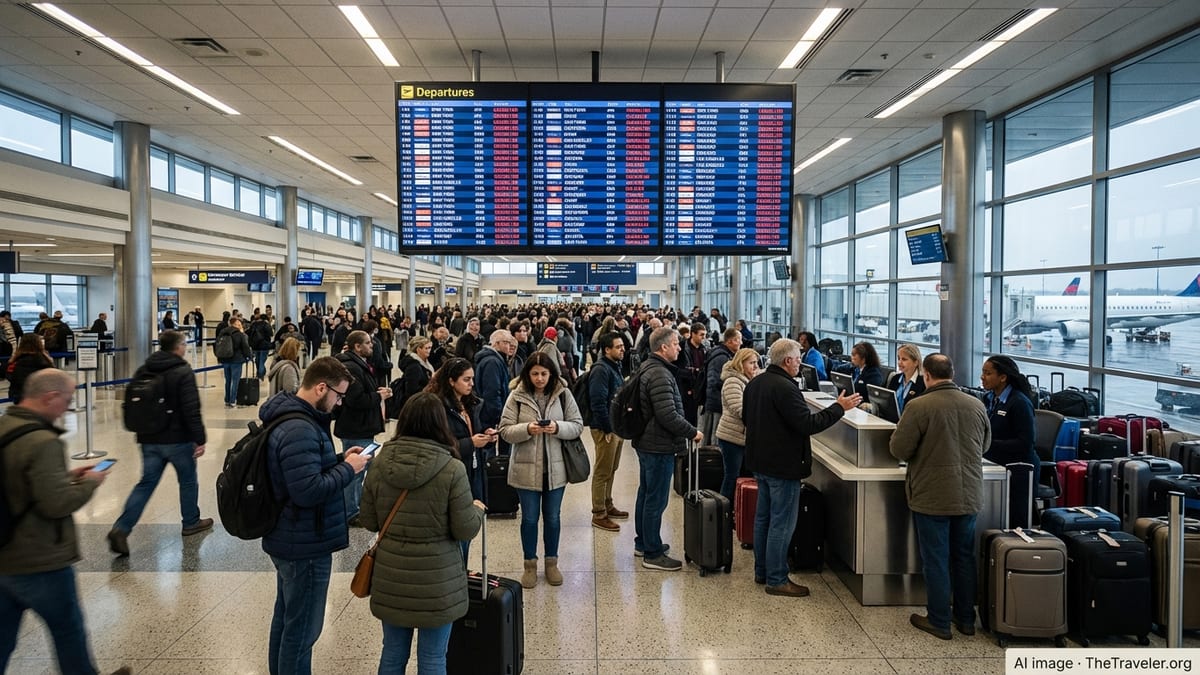
Global Tensions Ripple Into US Airports
The latest wave of disruption comes as airlines worldwide continue to reroute and trim schedules in response to widespread airspace closures in the Middle East, forcing long-haul carriers to alter transcontinental routes and tightening aircraft availability across global networks. While most US domestic flights do not pass through the affected zones, the knock-on effects are being felt at major gateways that handle connecting traffic to Europe, Africa and Asia.
Emirates and other international carriers have curtailed or suspended services on some routes, creating gaps in aircraft rotations that can ultimately affect codeshare and connecting itineraries for US travelers. For passengers departing from or arriving in New York, Miami or Los Angeles on global airlines, this means that even flights that appear routine on paper may be vulnerable to last-minute schedule changes as carriers work around closed or restricted airspace.
Aviation analytics platforms continue to show elevated levels of disruption compared with a normal spring weekend, with cancellations and significant delays concentrated at large coastal hubs. While total global cancellations now run into the thousands, US-specific numbers remain lower but are still substantial enough to derail travel plans for tens of thousands of passengers.
Operational planners say the full impact on US schedules may not be fully visible for another 24 to 48 hours as aircraft and crew are repositioned and airlines rebuild timetables. Travelers with upcoming long-haul flights that connect through Europe or the Gulf are being urged to monitor their bookings closely and consider potential rebooking options in case disruptions worsen.
How Major Carriers Like Delta, Spirit and Emirates Are Responding
Delta Air Lines has been focusing on maintaining core domestic operations while adjusting selected international departures and arrivals that rely on shared aircraft or crew with disrupted routes. Passengers flying Delta from cities such as New York and Los Angeles are seeing scattered cancellations and a higher-than-usual number of rolling delays as the carrier consolidates lightly booked departures and builds buffers into congested parts of the network.
Spirit Airlines, which operates a dense schedule of domestic and near-international services from Florida and other East Coast gateways, has reported a smaller number of outright cancellations but a noticeable uptick in delays. Because of its point-to-point model and tight aircraft utilization, any disruption early in the day can cascade across its network, meaning that a single weather or congestion issue in South Florida may be felt several legs later in cities far from the original problem.
Emirates, a key link between US cities and destinations across the Middle East, Africa and Asia, has been among the international carriers most exposed to the current airspace restrictions. Flights that usually pass through or near affected regions have been rerouted or suspended, and that has left some US-bound passengers stuck in transit or facing last-minute itinerary changes. Travelers booked on Emirates from New York, Miami or Los Angeles should expect longer flight times on operating routes and the possibility of same-day schedule adjustments.
Industry analysts note that while each airline publishes its own policies on rebooking, meal vouchers and hotel coverage, the overall pattern in this disruption has been a preference for schedule trimming and rerouting rather than mass cancellations in the United States. Still, staffing constraints, aircraft availability and air traffic control programs can quickly shift that balance if conditions deteriorate.
New York, Miami and Los Angeles See Concentrated Disruptions
New York area airports are again at the center of the turbulence, with John F. Kennedy International and LaGuardia experiencing a combined wave of cancellations and delays tied to heavy traffic, international connections and periodic air traffic control flow restrictions. For travelers, that translates into crowded terminals, extended security and check-in lines, and limited same-day rebooking options on popular routes.
Miami International Airport is seeing elevated disruption levels as airlines balance strong leisure demand with the need to reshuffle aircraft tied to Caribbean, Latin American and transatlantic services. Weather-related ground stops and congestion in South Florida earlier in the day contributed to additional knock-on delays, leaving some travelers waiting hours beyond scheduled departure times or being offered alternative routings through secondary hubs.
On the West Coast, Los Angeles International is grappling with a combination of long-haul schedule shifts and domestic connection issues. Carriers that serve both Asia-Pacific and US domestic markets from LAX are adjusting departure banks to accommodate rerouted aircraft and crews, occasionally leading to last-minute gate changes and rolling departure estimates. Passengers relying on tight connections at LAX are particularly vulnerable, as even modest inbound delays can cause missed onward flights and overnight stays.
Across all three cities, airport authorities are urging passengers to arrive earlier than usual, verify terminal and gate information on official apps, and build additional buffer time into ground transport plans. With taxi and ride-hailing demand surging when multiple flights are delayed simultaneously, even leaving the airport can take longer than normal once travelers finally land.
What US Passengers Need to Know About Cancellations and Rights
For US travelers caught up in today’s disruptions, understanding airline obligations around cancellations and long delays is critical. Federal rules require that if an airline cancels a flight or makes a significant schedule change and the passenger chooses not to travel, the customer is entitled to a refund of the unused portion of the ticket, even on nonrefundable fares. That refund can be requested in cash or to the original form of payment, rather than a credit or voucher, if the passenger prefers.
Beyond basic refunds, service commitments such as meal vouchers, hotel rooms, ground transportation and rebooking on other airlines depend largely on each carrier’s individual policy and whether the disruption is considered within the airline’s control. The US Department of Transportation maintains a public dashboard outlining what major airlines pledge to provide in these situations, but carriers still make case-by-case decisions based on the cause of the disruption and available capacity.
Delta, Spirit and other US airlines have generally committed to rebooking passengers on their own flights at no extra cost when a controllable cancellation or significant delay occurs, subject to seat availability. Some full-service carriers go further by arranging travel on partner or other airlines, while many low-cost carriers are more limited in their ability to provide such alternatives. International airlines serving the United States, including Emirates, follow both US rules and their home-country policies, which can sometimes offer additional protections.
Consumer advocates advise passengers to keep thorough documentation, including screenshots of delay notifications and any additional expenses incurred during the disruption. In certain situations, particularly with long overnight delays attributed to airline-controlled causes, this record can be helpful when seeking reimbursement or negotiating travel credits after the immediate crisis has passed.
Practical Steps for Travelers Facing Disruptions Today
Travel experts stress that the most effective tool for navigating today’s disruptions is proactive communication. Passengers are urged to use airline mobile apps and text alerts to monitor real-time changes to departure times, gates and aircraft assignments, rather than relying solely on airport departure boards. In many cases, airlines will open self-service rebooking options in their apps as soon as an irregular operation is flagged, allowing travelers to switch flights without waiting in long customer service lines.
Arriving at the airport early is especially important on busy days with widespread disruption, as security checkpoints and check-in counters can quickly become congested when multiple flights are delayed simultaneously. Travelers with time-sensitive commitments, such as cruises or international connections, are being encouraged to consider earlier departures or even postponements if their plans allow, as buffer time remains the best protection against cascading delays.
At the gate, passengers should listen carefully for boarding announcements about volunteer rebooking, as some airlines offer travel credits to customers who are willing to give up their seats on oversold or heavily disrupted flights. For those willing to be flexible, this can be an opportunity to secure compensation while still arriving at their destination on a later departure.
For the next several days, industry observers expect the US system to operate under continued strain as airlines absorb the global shock to long-haul networks and deal with routine weather and staffing challenges at home. Travelers flying in and out of New York, Miami and Los Angeles are likely to remain on the front line of that stress, making preparation, flexibility and awareness of passenger rights more important than ever.