

More news on this day
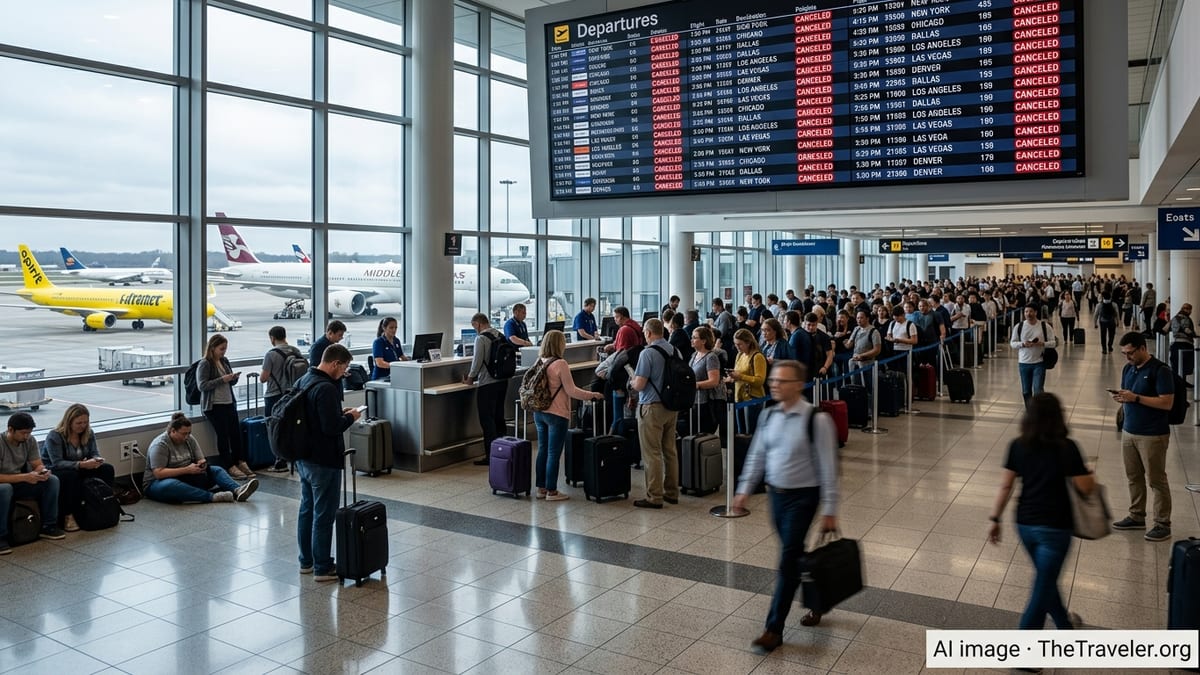
Air travel across the United States is facing renewed disruption as more than 100 additional flights were canceled on Saturday, affecting major carriers including Spirit, Delta, United, JetBlue, Emirates and others on key routes serving New York, Chicago, Dallas, Los Angeles, Las Vegas and Denver, according to live airline tracking data and published media reports.
Get the latest news straight to your inbox!
Fresh Cancellations Add To A Difficult Month For Flyers
The latest wave of cancellations comes at the end of a turbulent March for US aviation, with a series of powerful storm systems, high winds and operational strains triggering thousands of scrubbed flights nationwide in recent days. Publicly available tracking data for Saturday indicates that hundreds of flights are delayed and well over 100 are fully canceled, with a significant share tied to major network and low cost carriers.
Reports indicate that disruption is concentrated around some of the country’s busiest hubs and leisure gateways, where weather constraints and aircraft and crew repositioning are still rippling through schedules. New York’s airports, Chicago O’Hare, Dallas Fort Worth, Los Angeles International, Denver and Las Vegas are all showing elevated levels of cancellations and delays, creating a challenging environment for both domestic and international travelers.
While the total number of scrubbed flights is lower than during the most severe weather episodes earlier in the month, the new cancellations are hitting at the start of busy spring travel periods. This timing increases the likelihood that passengers will face crowded rebooking options and longer waits for alternative flights.
Major US Airlines Struggle To Stabilize Schedules
Large network carriers are again at the center of the disruption picture. Delta Air Lines, United Airlines and JetBlue are each recording clusters of cancellations on Saturday across their domestic networks, particularly on routes feeding congested hub airports. Publicly available information shows that services connecting into New York, Chicago, Los Angeles and Denver feature prominently among affected flights.
Operational challenges appear to be driven by a combination of lingering weather constraints in some regions, aircraft being out of position after earlier storms, and tight crew availability as airlines work through the tail end of several days of schedule disruption. Industry analysts note that when repeated weather systems move through multiple hubs in quick succession, even large carriers with extensive fleets can struggle to fully recover.
United and Delta, which rely heavily on hub-and-spoke networks, are particularly exposed when connections through major hubs falter. Missed inbound aircraft or crews can quickly cascade into additional cancellations, even in cities not directly experiencing adverse weather at that moment, leaving some passengers surprised to see their flights scrubbed under clear skies.
Spirit And Other Low Cost Carriers See Outsized Impact
Spirit Airlines is once again experiencing an outsized share of cancellations relative to its schedule, according to airport and tracking data reviewed on Saturday. Low cost and ultra low cost carriers typically operate tighter aircraft utilization, leaving less margin to absorb disruptions when storms or ground stops slow the system.
Routes linking popular leisure destinations have been especially vulnerable. Publicly available schedules and cancellation logs show that services involving Las Vegas, Los Angeles and certain New York area airports are among those most affected for Spirit and other discount airlines. Travelers using these carriers often have fewer alternative departures to choose from on the same day, which can translate into longer delays or overnight stays when flights are canceled.
Smaller point to point networks can also feel the strain when crews are stranded in the wrong city after an earlier cancellation. Once a sequence of flights is broken, a single aircraft or crew being out of place can impact multiple subsequent departures, compounding the disruption for passengers through the rest of the day.
International Travelers Also Caught In The Disruption
The latest cancellations are not limited to domestic routes. Long haul services have also been affected, including flights operated by major international carriers such as Emirates that depend on US hub connectivity for onward travel. When feeder flights into gateway airports like New York, Los Angeles or Dallas are canceled, connecting passengers can miss transatlantic or transpacific departures even if those long haul flights remain scheduled.
Published coverage and schedule data indicate that some international departures have been canceled outright where aircraft or crews are unable to reach the United States in time, or where knock on effects from earlier storms have made it difficult to operate full long haul rotations. Travelers originating overseas and connecting through US hubs are reporting missed connections, rebooked itineraries and extended layovers as airlines juggle equipment and crew availability.
Because long haul flights typically operate less frequently than domestic shuttles, a single cancellation can create a backlog of passengers who must be accommodated on later departures. This can lead to several days of elevated load factors on remaining flights, with fewer open seats for new bookings or same day changes.
Key Hubs From New York To Denver Under Pressure
Among US airports, those serving major metropolitan areas and popular leisure corridors remain under the greatest pressure. New York area airports, including LaGuardia and Newark, continue to see elevated levels of cancellations and delays tied to the recent sequence of storms and strong winds that have affected the Eastern United States through mid March.
In the Midwest, Chicago’s role as a central connecting point means that cancellations there reverberate across multiple airlines’ networks. Flights into and out of O Hare have seen repeated disruption in recent days, affecting onward connections to cities such as Dallas, Denver and Los Angeles. Dallas Fort Worth and Denver themselves are also handling higher than usual numbers of schedule changes as airlines adjust routings and timing.
On the West Coast and in the Southwest, Los Angeles International and Las Vegas remain focal points for both domestic leisure routes and international services. When weather elsewhere forces airlines to reshuffle aircraft, these high demand airports can experience rolling delays and cancellations even under clear local conditions, as carriers prioritize limited resources across their global networks.
What Travelers Can Do As Disruptions Continue
With operational challenges still working through the system, travelers scheduled to fly this weekend and into early next week are being urged by airlines and airports, via public statements and advisories, to monitor their flight status closely. Same day schedule changes remain possible, particularly on connections through the busiest hubs or in regions that have recently experienced severe weather.
Passenger advocacy groups and consumer travel outlets recommend checking flight status repeatedly in the 24 hours before departure and again before leaving for the airport, using both airline websites and airport departure boards. They also highlight the value of having a backup plan in mind, such as alternative routings or nearby airports, especially for time sensitive trips.
As the broader US aviation system works to regain its footing after a turbulent stretch, industry observers note that even modest additional disruptions can trigger new clusters of cancellations. For now, travelers heading to or through New York, Chicago, Dallas, Los Angeles, Las Vegas and Denver should be prepared for continued irregular operations and build extra flexibility into their plans.