

More news on this day
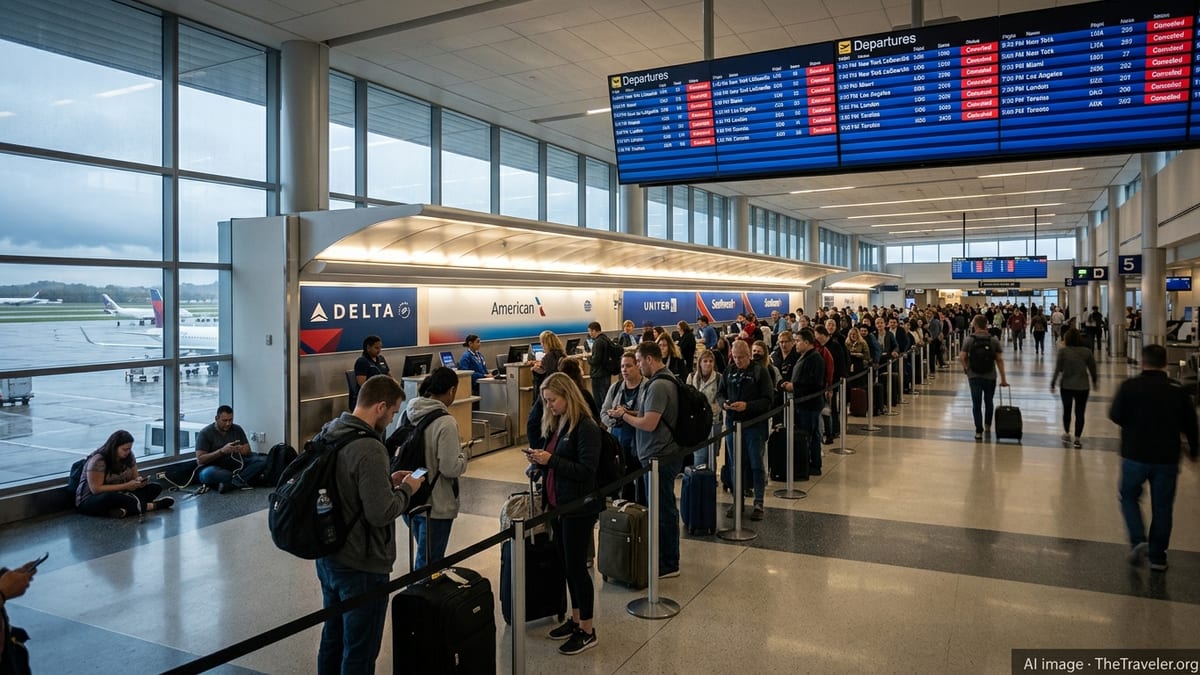
U.S. air travelers are facing a fresh bout of disruption as more than 200 flights are canceled across major hubs including New York, Los Angeles, Denver, and Chicago, with impacts rippling onto transatlantic and Middle East routes operated by Delta Air Lines, United Airlines, KLM, British Airways, Southwest Airlines, and other carriers.
Get the latest news straight to your inbox!
Major US Hubs See Clusters of Scrapped Departures
Published data from flight-tracking platforms on March 25 indicates that cancellations are concentrated at New York’s LaGuardia and John F. Kennedy airports, Los Angeles International, Denver, and Chicago’s main hubs. These airports function as critical transfer points in the U.S. network, so even a few hundred cancellations can generate outsized knock-on effects for domestic and international itineraries.
Carriers including Delta, United, Southwest, and several international partners have culled departures throughout the day, with a mix of outright cancellations and aircraft swaps leading to missed connections. The pattern shows short-haul domestic links bearing the brunt of the changes in the early hours, followed by a growing number of long-haul services trimmed from afternoon and evening schedules.
Reports indicate that crew availability constraints, aircraft positioning issues after earlier weather systems, and congestion from previous days’ delays are combining to squeeze already tight spring capacity. Industry analyses of recent years have repeatedly underscored how quickly disruption can build in the National Airspace System when multiple major hubs experience schedule pressure at the same time.
Travelers at the affected airports are encountering lengthy rebooking queues, with many being routed through secondary hubs or experiencing overnight stays as remaining seats on alternate departures quickly sell out. Publicly available information from airlines suggests that same-day alternatives are particularly scarce on east coast departures and transcontinental routes.
Transatlantic Routes to Amsterdam and London Severely Disrupted
Among the most visible impacts are cancellations on routes from U.S. gateways to Amsterdam and London, key European hubs for Delta, KLM, British Airways, and their alliance partners. Schedules from New York, Los Angeles, and Chicago to these cities show multiple frequencies removed or consolidated, forcing passengers onto later departures or entirely different routings.
Amsterdam Schiphol and London Heathrow operate near capacity during peak hours, leaving carriers with limited flexibility when trying to recover from U.S. outbound disruption. When one or two key long-haul flights are canceled from American hubs, arriving aircraft and onward European connections are also affected, compounding the disruption for travelers heading deeper into Europe, Africa, and Asia.
Recent winters and springs have already seen European hubs managing heavy loads alongside intermittent weather and air traffic control constraints, and today’s cancellations fit into that broader pattern of fragile resilience. Public timetable adjustments by KLM and British Airways in recent months show that both airlines have been fine-tuning their long-haul networks, which can result in thinner buffers when irregular operations occur.
For U.S. passengers booked to Amsterdam or London today, the immediate effect is longer travel days, rerouting via alternative European gateways, or in some cases arrival a full day later than planned. Consumer advocates are again drawing attention to the complex patchwork of passenger rights rules that apply differently depending on whether the ticket is issued under U.S. or European regulations.
Middle East and Gulf Connections to Tel Aviv, Kuwait, and Bahrain Feel the Strain
The disruption is also evident on itineraries connecting U.S. cities to Tel Aviv, Kuwait City, Bahrain, and other destinations in the wider Middle East. Many of these journeys depend on seamless links via European hubs such as Amsterdam and London or through codeshare partners feeding into Gulf carriers, so upstream cancellations in the United States quickly cascade into missed onward connections.
Published coverage in recent weeks has highlighted how politically sensitive airspace in parts of the Middle East leaves airlines with limited routing options, requiring precise coordination between U.S. and European legs. When an originating U.S. flight to Europe is canceled or significantly delayed, there is often no easy same-day replacement onward to secondary cities like Kuwait City or Manama.
Some carriers have also been trimming or temporarily suspending select routes in the region for commercial or security-related reasons, leaving fewer weekly frequencies to absorb displaced passengers. Today’s cancellations mean many travelers bound for the Middle East are facing complex rebookings involving different alliances, overnight stops, or entirely redesigned itineraries that may bypass their original transit points.
Airlines are encouraging passengers with multi-leg journeys touching the region to monitor their booking status closely and to expect that re-accommodation may involve extended layovers or alternative cities. Travel advisers are recommending that affected passengers keep detailed records of additional expenses in case they become eligible for reimbursement or vouchers under the applicable carrier policies.
Domestic Networks to Vancouver and Other North American Cities Disrupted
Northbound services to Canada, particularly Vancouver, are also seeing cancellations as U.S. carriers and alliance partners adjust schedules. Vancouver functions as both a gateway to the Pacific Northwest and a connection point for transpacific services, so disruptions on U.S. feeder routes from Los Angeles, Denver, and Chicago have wider implications.
Available operations data suggests that a portion of today’s cancellations involve regional jets and narrow-body aircraft operating cross-border and domestic segments. When these flights are removed from the schedule, passengers may be forced to connect through alternative hubs such as Seattle, Calgary, or Toronto, adding both time and complexity to their trips.
Travel patterns around late March typically involve a mix of business travel, early spring-break vacationers, and winter sports travelers, particularly into western Canada. Capacity on popular leisure routes often runs close to full, making it harder for airlines to find spare seats for stranded customers once multiple departures have been cut in quick succession.
Some travelers heading onward to Asia from Vancouver are reporting itinerary overhauls that involve rerouting via U.S. West Coast or Asian hubs instead. Analysts note that this kind of disruption underscores the interconnected nature of North American and transpacific networks, where a cancellation on a seemingly routine cross-border leg can ripple all the way to long-haul segments.
What Travelers Can Do as Disruption Continues
With cancellations accumulating through the day, publicly available tools and airline updates indicate that further schedule adjustments remain possible into the evening. Operational recovery often depends on how quickly carriers can reposition aircraft and crews, and whether weather or air traffic flow restrictions ease at the most affected hubs.
Passenger advocates recommend that travelers whose flights are still scheduled treat them as subject to change, and verify status repeatedly in the hours before departure. Same-day rebooking options are typically best accessed through airline apps or websites, while phone lines and airport counters can experience long waits during widespread disruption.
According to consumer guidance from transportation and aviation agencies, travelers whose flights are canceled are generally entitled to a refund if they choose not to travel, even when the cause is outside the airline’s control. Separate policies govern meal vouchers, hotel stays, and rebooking assistance, and these vary by carrier and by whether the disruption is considered within the airline’s responsibility.
Given the scale of the latest cancellations across New York, Los Angeles, Denver, Chicago, and other hubs, travel specialists suggest that passengers with nonessential trips consider voluntary changes where permitted without penalties. For those who must travel, building in longer connection times, traveling with carry-on luggage where possible, and preparing for schedule changes remain some of the most practical ways to navigate another turbulent day in U.S. air travel.