

More news on this day
Hundreds of passengers across the United States faced long lines, missed connections and overnight airport stays on Saturday as Delta Air Lines, United Airlines, American Airlines and Frontier Airlines racked up 88 delays and seven cancellations at Raleigh-Durham, New York, Miami, Chicago and other major cities, according to preliminary tallies from flight-tracking services.
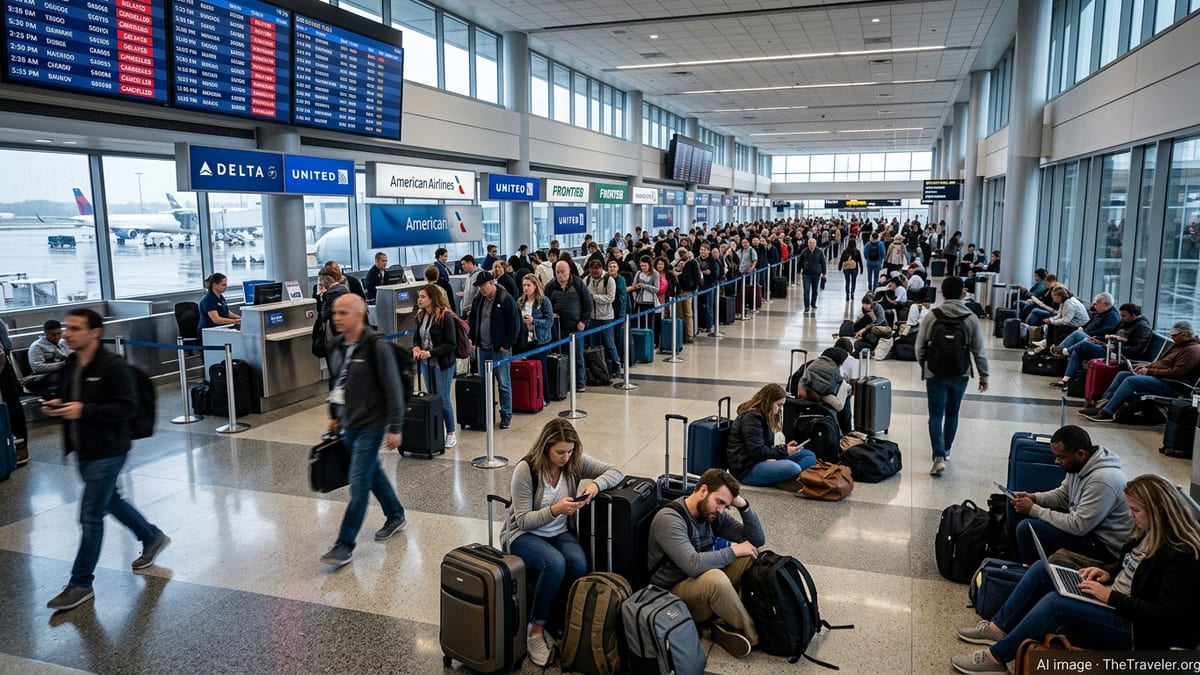
Storm Systems Compound Existing Strain on US Air Network
The latest disruptions unfolded as a volatile early spring weather pattern continued to batter the national aviation system, with thunderstorms, low clouds and strong winds forcing the Federal Aviation Administration to impose a patchwork of ground stops and ground delay programs at key hubs over the weekend of March 7. Those controls sharply reduced the number of takeoffs and landings allowed per hour, leaving aircraft and crews out of position and amplifying knock-on delays around the country.
Chicago O’Hare, which has already endured repeated ground stops tied to severe storms in recent days, once again acted as a pressure point in the system. Even relatively modest schedule changes at such a large hub can quickly ripple to secondary airports, including Raleigh-Durham and mid-sized stations in the Midwest and Southeast, as airlines juggle aircraft rotations and available crew duty time.
At the same time, winter weather lingering over parts of the Northeast and upper Midwest has tightened the margin for on-time operations. Airlines have been working through a backlog of passengers from earlier storms this year, leaving many flights close to full and limiting rebooking options when new delays appear. Saturday’s 88 delays and seven cancellations involving the four major carriers formed part of that broader pattern, rather than a single isolated incident.
Raleigh-Durham and East Coast Hubs See Cascading Knock-On Effects
At Raleigh-Durham International Airport, travelers on Delta, United, American and Frontier faced a mix of rolling departure pushes and late-arriving inbound aircraft. Several departures to Chicago, New York and Florida were held on the ground for weather-related flow control, while others waited for aircraft arriving late from storm-affected hubs in the Midwest and Gulf Coast.
Passengers reported departure boards that shifted repeatedly through the day, with scheduled pushback times moving in small increments as airlines awaited revised clearance from air traffic control. For many travelers, the uncertainty proved more stressful than the delays themselves, as they weighed whether to leave the terminal between updates or stay near the gate in case of sudden boarding announcements.
Further up the East Coast, New York area airports also contributed to the disruption. Capacity constraints at the region’s tightly managed airspace, combined with weather bands moving along the coast, meant that relatively minor schedule adjustments quickly turned into longer ground waits for flights departing for the Southeast and Midwest. For carriers with large connecting operations, such as Delta and United, those bottlenecks placed additional strain on already tight afternoon and evening banks.
Miami and Chicago Disruptions Ripple Across Airline Networks
In Miami, where American and Frontier maintain significant operations, thunderstorms and shifting wind patterns forced temporary adjustments to runway configurations and slowed departure rates. Short-haul flights to nearby domestic destinations saw delays compound as ground crews struggled to turn aircraft quickly between bursts of heavy rain, and ramp operations were periodically halted for lightning in the area.
Chicago, meanwhile, remained one of the most significant choke points in the system. Storm cells sweeping across northern Illinois earlier in the weekend had already led to ground stops and extensive holding patterns for arriving flights. By Saturday, airlines at O’Hare and Midway were still working through displaced aircraft and crews, which left some routes to secondary markets like Raleigh-Durham and New Orleans operating with minimal slack.
United and American, both of which rely heavily on Chicago for connecting traffic, were forced to reprioritize which flights departed first once weather restrictions eased. That triage left certain regional departures and late-evening rotations more vulnerable to cancellation or extended delay, particularly where crew duty limits were approaching and spare aircraft were not readily available.
Delta, United, American and Frontier Respond as Passengers Seek Answers
The four affected carriers issued a mix of waivers and advisories as the disruptions unfolded, encouraging travelers to check their flight status frequently and, where possible, shift to earlier or later departures to avoid the worst of the congestion. Digital tools and mobile apps again played a central role, with many passengers securing same-day changes or standby options on their phones rather than queuing at airport customer service counters.
For Delta, United and American, which operate complex hub-and-spoke networks, the 88 delays and seven cancellations recorded across Raleigh-Durham, New York, Miami, Chicago and other airports represented a small but visible slice of a much larger operational puzzle. Each disrupted flight required reassigning crews, repositioning aircraft and rebooking sometimes hundreds of passengers, all while trying to keep later waves of flights running as close to schedule as possible.
Frontier, with its leaner operation and focus on point-to-point leisure routes, faced a different set of challenges. With fewer daily frequencies on many city pairs, a single cancellation could leave passengers without another nonstop option the same day. That reality pushed some travelers to accept connections through other hubs or to delay their trips entirely, especially in markets where multiple carriers were experiencing simultaneous weather-related issues.
Travelers Brace for a Unsettled Spring as Disruptions Mount
Saturday’s troubles come on the heels of a difficult winter for US air travel, with major storms in January and February already having wiped out thousands of flights nationwide. For frequent flyers, the latest wave of delays and cancellations underscores how quickly operations can unravel when weather, staffing and infrastructure constraints collide at multiple hubs at once.
Analysts note that while airlines have added schedule buffers and invested in technology to improve recovery from irregular operations, the system remains vulnerable to large regional weather events that hit several hubs simultaneously. With spring thunderstorm season still ramping up, aviation experts warn that passengers should expect more days of rolling delays across multiple carriers and cities, even when the number of outright cancellations remains relatively low.
For travelers planning trips in the coming weeks, airlines and airport officials continue to emphasize preparation and flexibility. They recommend allowing extra time at the airport, favoring morning departures where possible, and monitoring developing weather patterns that could affect connections through busy hubs such as Chicago, New York and Miami. With Saturday’s 88 delays and seven cancellations fresh in mind, many passengers appear to be taking that advice to heart as they brace for what could be another bumpy season in the skies.