

More news on this day
Flights across the United States faced another day of disruption on April 11, as data showed 79 cancellations and 1,759 delays affecting major carriers including Delta Air Lines, United Airlines, Spirit Airlines, SkyWest and others, with knock-on impacts at key hubs such as Chicago, Atlanta, New York, Los Angeles and St. Louis.
Get the latest news straight to your inbox!
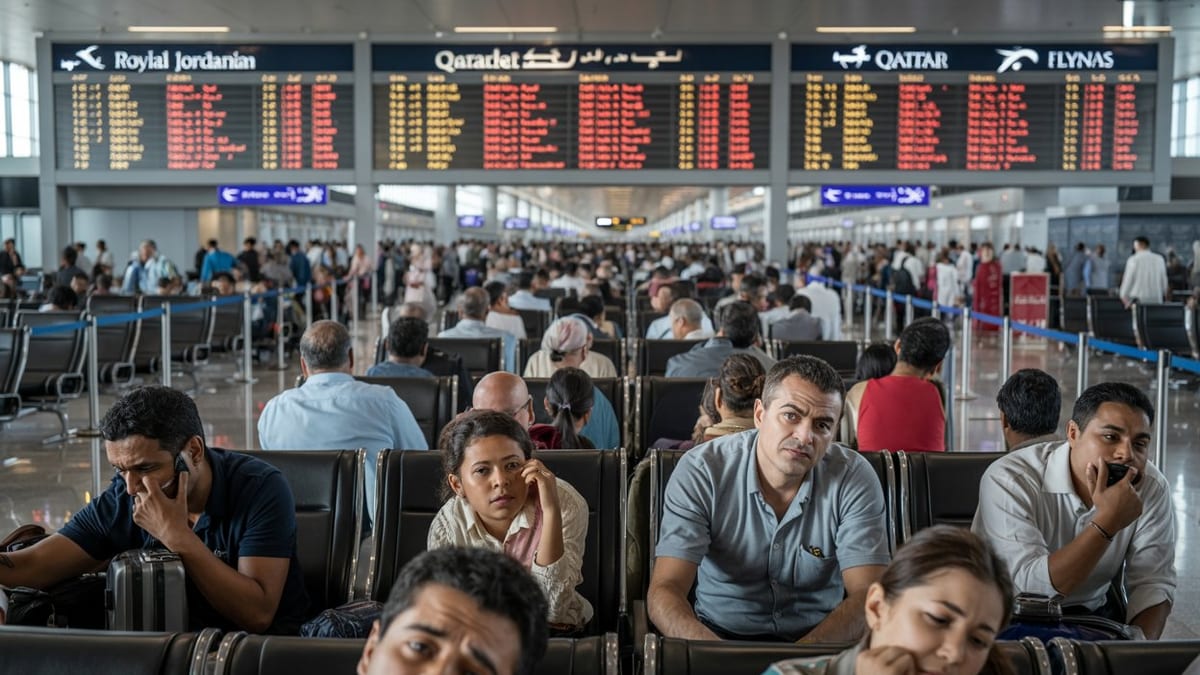
National Disruptions Concentrated at Major Hubs
Publicly available flight-tracking data for April 11 indicated that while outright cancellations remained below peak disruption levels seen earlier in the year, the volume of delays placed heavy pressure on airport operations nationwide. The imbalance between the 79 cancelled flights and more than 1,700 delayed departures and arrivals suggested that many airlines were attempting to operate their schedules despite mounting congestion.
Chicago, Atlanta, New York, Los Angeles and St. Louis emerged among the most affected cities. At these hubs, rolling delays across morning and afternoon departure banks created long queues at security checkpoints, gate areas and customer service desks as passengers sought rebooking options, connections and updated boarding information.
Reports indicate that disruptions were not confined to a single region or weather system but rather spread across multiple time zones. This pattern pointed to a combination of localized weather, high demand and scheduling sensitivities in airline networks that can quickly magnify isolated problems into nationwide operational challenges.
The latest figures follow a broader trend in which delays have increasingly outpaced cancellations. Industry analyses of recent years show that nearly one in four passengers on US departures experienced a disruption of some kind, underscoring how even a moderate spike in same-day delays can affect hundreds of thousands of travelers.
Delta, United, Spirit and SkyWest Among Most Impacted Carriers
According to published coverage of the April 11 disruptions, Delta Air Lines, United Airlines, Spirit Airlines and SkyWest were among the carriers most affected by the wave of delays and cancellations. While these airlines differ in business models and route networks, they share a strong presence at the country’s busiest hubs, which are especially vulnerable when congestion builds.
Delta and United, two of the largest full-service US carriers, have extensive operations in cities such as Atlanta, Chicago, New York and Los Angeles. Any slowdown in aircraft turnaround times or crew rotations at one of these locations can quickly ripple across their national and international schedules, complicating efforts to restore normal operations by the end of the day.
Spirit and SkyWest, which often operate dense schedules with quick aircraft turns or regional feeder services, are particularly sensitive to even minor delays. Industry performance data in recent years has frequently placed some low-cost and regional carriers among those with higher delay rates, especially on busy domestic routes where airspace and runway capacity are tightly constrained.
Operational reports from recent seasons also highlight how staffing levels, crew duty-time limits and aircraft availability can shape an airline’s ability to absorb irregular operations. When several of these constraints align with adverse weather or air traffic control initiatives, the result is typically a spike in rolling delays like those seen on April 11.
Chicago, Atlanta, New York, Los Angeles and St. Louis See Network Ripple Effects
Major hubs including Chicago O’Hare, Hartsfield Jackson Atlanta International, the New York area’s airports, Los Angeles International and Lambert St. Louis International were all cited as key nodes in the latest disruption. Activity at these airports influences not only local travelers but also large numbers of passengers connecting between domestic and international routes.
In Chicago and Atlanta, the combination of high traffic volumes and complex runway configurations often requires precise sequencing of arrivals and departures. When storms pass through, visibility drops or traffic-management programs are activated, aircraft can be held at gates or in holding patterns, compressing the schedule and triggering cascading delays.
New York and Los Angeles, both with historically congested airspace, are similarly prone to network ripple effects. Any interruption around peak travel periods, including evenings and weekends, can leave little room for airlines to re-position crews and aircraft before the next day’s operations, particularly on transcontinental and international flights.
St. Louis, while smaller than the largest coastal hubs, plays an important role as a connecting point for several domestic routes. Disruptions there can strand passengers traveling between the Midwest, South and West Coast, especially when limited alternative nonstop options exist on short notice.
Travelers Confront Missed Connections and Longer Journeys
The imbalance between high delay counts and relatively limited cancellations translated into long and often uncertain travel days for passengers. Many flights eventually departed, but often far later than scheduled, leading to missed connections, extended layovers and overnight stays in intermediate cities.
Publicly available traveler accounts from recent disruption days describe lines stretching across concourses as passengers sought assistance with rebooking and accommodation. Self-service tools on airline apps and kiosks have increasingly become the first option for many travelers, but heavy system usage and evolving schedules can make it difficult to secure preferred alternatives.
For those on tight itineraries, even a delay of 60 to 90 minutes can be enough to jeopardize onward travel. Once a connection is missed at a hub such as Atlanta, Chicago or New York, subsequent flights may already be fully booked, especially during busy spring and summer travel periods, forcing some passengers to accept circuitous routings or next day departures.
Industry data in recent years has also drawn attention to the knock-on impacts for baggage handling and airport services. When flights depart late and arrive outside their planned time windows, ground operations must adjust rapidly, increasing the risk of misdirected luggage and stretching terminal resources such as gate space, ground transport and concessions.
Why US Flight Disruptions Remain Elevated
While the number of cancellations recorded on April 11 was modest compared with large-scale events in recent years, the volume of delays highlights structural pressures that continue to affect US air travel. Analyses by passenger rights groups and transportation agencies have pointed to a mix of factors, including constrained airport capacity, aging infrastructure, variability in airline staffing and the growing sensitivity of tightly scheduled networks to even minor disruptions.
Published government data shows that, despite improvements since the most acute pandemic-era disruptions, delays remain a persistent feature of US aviation. At the same time, several major airlines, including Delta, United and Spirit, have experienced notable disruption episodes in the past few years related to weather, technology outages or operational bottlenecks, reinforcing concerns about resilience.
Industry observers also note that traveler demand has rebounded significantly, especially on domestic leisure routes connecting major hubs with secondary cities such as St. Louis and regional centers across the Midwest and South. This recovery has filled aircraft and left less spare capacity in schedules to accommodate last-minute rebookings when irregular operations occur.
For now, the April 11 figures serve as another reminder that even a day defined more by delays than mass cancellations can still cause widespread inconvenience. With the busy summer season approaching, attention is likely to remain focused on how airlines and airports manage staffing, scheduling flexibility and communication with passengers when the next round of disruptions arises.