

More news on this day
Thousands of airline passengers across the United States faced hours of disruption on March 10 as Southwest, United, American, Delta, Spirit and other carriers reported 122 cancellations and 1,901 delays, snarling operations at major hubs including Chicago, New York, Atlanta and San Francisco.
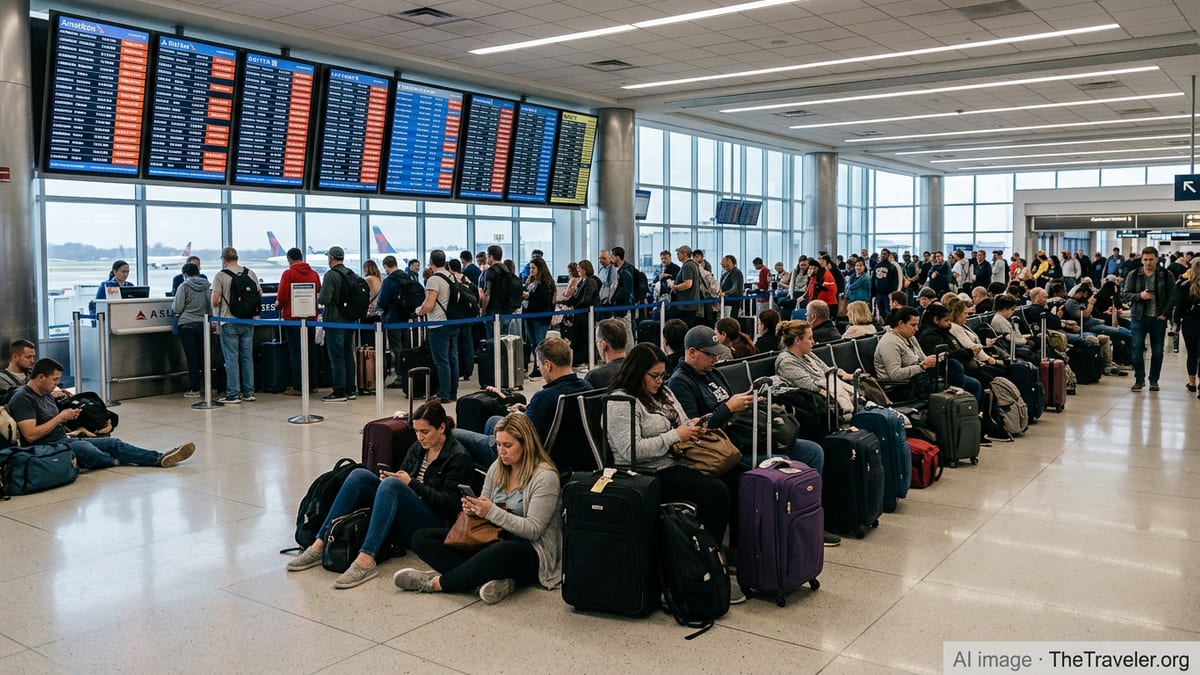
Nationwide Disruptions Hit Major Carriers and Hubs
The latest figures from US airports show a system under strain, with flight boards at some of the country’s busiest hubs dominated by orange and red delay indicators. While the scale of the disruption falls short of a full operational meltdown, the combined effect of 122 cancellations and nearly 2,000 delayed departures and arrivals created a day of uncertainty for leisure and business travelers alike.
Legacy carriers American Airlines, Delta Air Lines and United Airlines were among the hardest hit, alongside low cost operators Southwest Airlines and Spirit Airlines. The knock-on impact extended across domestic networks, with missed connections, crew re-positioning challenges and aircraft out of place amplifying even relatively modest weather and operational issues.
At Chicago O’Hare and Midway, rolling delays affected both inbound and outbound traffic, with travelers reporting crowded gate areas and scarce same-day rebooking options. In New York, operations at John F. Kennedy and Newark were slowed by flow-control measures that stretched turnaround times and left aircraft waiting for gates.
Further south, Atlanta saw particularly intense pressure as one of the nation’s primary transfer hubs, while San Francisco experienced stacking delays on both transcontinental and regional services. Together, the disruptions underscored how quickly stress at a handful of major nodes can ripple across the wider US aviation network.
Weather, Congestion and Technology Strain the System
A patchwork of causes lay behind Monday’s travel turmoil. Early morning weather cells in parts of the Midwest and along the East Coast triggered flow restrictions and required wider spacing between aircraft, reducing airport capacity at precisely the time many business travelers were trying to start the week on the road.
Air traffic congestion compounded the impact, particularly along heavily traveled corridors linking Chicago, New York, Atlanta and the West Coast. Controllers slowed departure rates to maintain safety margins, prompting a cascade of gate holds for flights that were otherwise ready to push back. As aircraft waited on the ground, inbound services sometimes had to hold in the air, further swelling delay statistics.
Operational challenges within the airlines also contributed. Tight crew scheduling left little flexibility when pilots or flight attendants reached duty limits because of earlier delays. In some cases, airlines were forced to cancel lightly booked flights in order to preserve crewing for later peak departures, trading a smaller number of outright cancellations for a broader pattern of delays.
Technology added a final layer of fragility. Even minor system slowdowns in crew-management or flight-planning software increased the time needed to reassign aircraft and staff. While there were no widespread IT collapses reported, the day’s events illustrated how dependent the modern aviation system has become on digital tools functioning flawlessly.
Passengers Face Missed Connections and Overnight Stays
For travelers, the numbers translated into missed family events, disrupted business meetings and unplanned hotel nights. In Chicago and New York, passengers arriving from delayed feeder flights frequently found their onward connections already departed, forcing same-day rebookings onto later services that were themselves running behind schedule.
Lines quickly formed at customer service counters for Southwest, United, American, Delta and Spirit as travelers scrambled to secure alternative itineraries. Those who had booked through online travel agencies or third-party platforms often had to juggle between airline staff and digital chat support, adding to the frustration.
At Atlanta and San Francisco, some long-haul passengers found that even when their flights eventually departed, crew rest requirements and airport curfews at destination airports led to diversions or technical stops. A number of travelers reported being handed hotel and meal vouchers for unexpected overnight stays as airlines worked to reset their schedules.
Families traveling with children and elderly passengers were among the most affected, especially where delays extended late into the evening. Crowded terminals, limited seating near power outlets and heavily used airport Wi-Fi networks added to the strain as people tried to rebook, re-plan and keep in touch with those waiting at the other end of their journeys.
Airlines Adjust Schedules While Advising Flexible Plans
In response to the mounting delays, several major carriers introduced rolling waivers allowing affected passengers to change travel dates or reroute without standard change fees or fare differences, particularly for those traveling through the most disrupted hubs. While fee waivers helped, limited seat availability on alternative flights meant many travelers still faced long waits.
American, Delta, United, Southwest and Spirit all sought to prioritize aircraft and crews on routes with the highest concentrations of stranded passengers, even if that meant trimming frequencies on secondary routes for a short period. In practice, this meant some smaller markets saw last-minute timetable changes as planes and staff were redirected to busier city pairs.
Airline representatives urged travelers with upcoming departures to monitor their flights closely, use mobile apps for rebooking where possible and arrive early at airports to clear security and reach gates in time. They also cautioned that residual delays could continue into the evening as crews and aircraft gradually returned to their planned rotations.
Industry analysts noted that with aircraft utilization at near pre-pandemic levels and limited spare capacity in fleets, the US system has little slack when multiple factors converge. Even a few dozen cancellations, when coupled with nearly two thousand delayed flights, can leave airlines and passengers managing the effects for 24 hours or more.
What Travelers Can Do on High-Disruption Days
The day’s events offered a fresh reminder for travelers of how to navigate periods of widespread disruption. Experts recommend booking the earliest flights of the day, when schedules are typically more resilient and aircraft are already on the ground overnight at their departure points, reducing exposure to late-arriving inbound delays.
Keeping airline apps updated and enabling notifications can provide faster alerts about gate changes, rolling delays and rebooking options than waiting for announcements in the terminal. On a day with more than 1,900 delays in the system, those who reacted quickly to the first schedule changes often secured the remaining seats on alternative flights.
Travelers connecting through major hubs such as Chicago, New York, Atlanta and San Francisco are advised to allow longer connection windows when severe weather or operational strain is forecast. Building in an extra hour between flights can significantly reduce the risk of misconnection when departure times start to slip.
For those yet to travel, flexible tickets and awareness of consumer rights can also help. While US regulations do not mandate compensation in most delay situations, passengers are entitled to refunds when airlines cancel flights and travelers choose not to fly. On days when disruption stretches nationwide, knowing when to ask for a refund rather than a rebooking can be crucial to salvaging a trip.