

More news on this day
Hundreds of passengers were left stranded across the United States on Monday as major airlines including American Airlines, JetBlue, United and Delta canceled at least 129 flights and delayed 97 more, disrupting travel from key hubs such as Los Angeles, New York and Chicago amid a powerful late-winter storm and mounting operational strain.
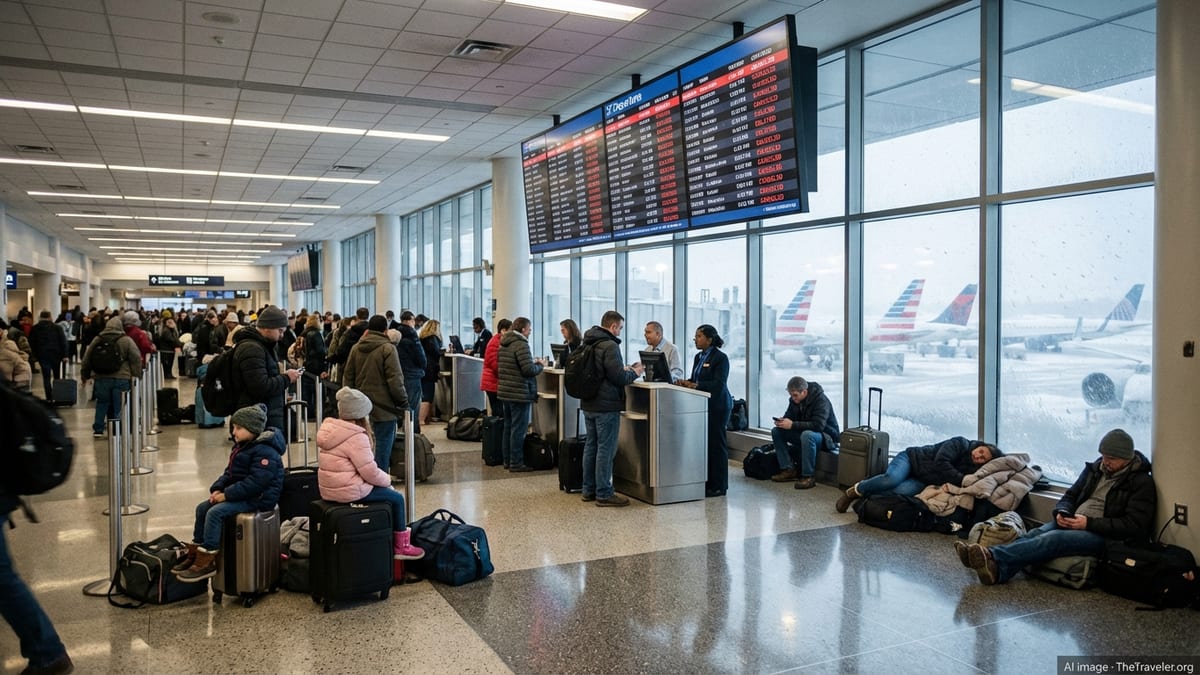
Storm-Fueled Disruptions Hit Major US Hubs
The latest wave of cancellations coincides with a fast-strengthening winter storm sweeping through the Northeast, bringing heavy snow, fierce winds and whiteout conditions to one of the country’s busiest aviation corridors. While the brunt of the weather has been felt from New York to Boston, the ripple effects have disrupted operations nationwide, from West Coast gateways to Midwestern hubs.
Flight-tracking data and airport operations updates show that carriers trimmed schedules aggressively at airports serving the New York metropolitan region, while also cutting and delaying flights that connect through Los Angeles and Chicago. The strategy is designed to keep aircraft, runways and ground crews safe, but it has left many travelers facing abrupt changes to their itineraries and extended waits inside crowded terminals.
At the center of the disruption are the four largest US airlines. American Airlines, Delta Air Lines, United Airlines and JetBlue Airways together operate the majority of flights at key hubs including John F. Kennedy International Airport, LaGuardia Airport, Newark Liberty International Airport, Chicago O’Hare International Airport and Los Angeles International Airport. Their decision to preemptively cancel and delay services has reduced short-term chaos but amplified the scale of the disruption for passengers.
While the current tally of 129 cancellations and 97 delays represents only a fraction of the thousands of flights scheduled nationwide, the concentration of these disruptions at critical hubs has magnified their impact, breaking long chains of domestic and international connections and complicating efforts to rebook stranded travelers.
New York Airports at the Epicenter of Flight Chaos
New York’s airports are once again bearing the brunt of winter-weather disruption, with LaGuardia, JFK and Newark all reporting severe schedule reductions and widespread operational challenges. A powerful nor’easter has turned the region into a no-go zone for many flights, forcing carriers to suspend or sharply curtail operations and grounding aircraft that usually shuttle passengers across the country.
In tandem with the broader storm-related cancellations, LaGuardia has seen hundreds of axed and delayed flights over the past 48 hours, straining capacity and creating cascading delays on routes to and from major cities like Chicago, Atlanta, Miami and Dallas. The tightly choreographed schedule at LaGuardia means that even a few hours of disruption can send aircraft and crews out of position, but a full-day shutdown leaves airlines struggling to rebuild normal operations.
At JFK, where American, Delta and JetBlue all maintain significant operations, mass cancellations have disrupted both domestic and long-haul international flights. Services linking New York with Los Angeles, San Francisco and Chicago have been particularly affected, cutting critical transcontinental corridors that feed connecting traffic. Travelers bound for Europe and Latin America have also seen departures scrubbed or heavily delayed as airlines juggle limited aircraft and crew resources.
Newark Liberty, a key United hub, has faced similar conditions, with high winds and low visibility complicating takeoffs and landings. Ground stops and deicing operations have slowed throughput even for flights that manage to operate, further extending delays. The combined impact has made New York a chokepoint in the national aviation system, with repercussions felt on flights that never come close to the Northeast.
Chicago and Los Angeles Struggle With Knock-On Effects
Far from the storm’s core, Chicago O’Hare and Los Angeles International Airport have experienced their own waves of disruption as carriers adjust networks to cope with conditions in the Northeast. Chicago, one of the country’s busiest hubs and a key connecting point between East and West, has seen a surge in cancellations and delays tied to flights arriving from and departing to New York, Boston and other affected cities.
United and American, which both operate major hubs at Chicago O’Hare, have trimmed schedules and rerouted aircraft as they work to absorb the shock from the East Coast. Flights to Los Angeles, Phoenix, Denver and other western destinations have been delayed as planes and crews fail to arrive on time from the Northeast, in turn affecting downline departures for the rest of the day.
In Los Angeles, passengers have reported unusually long lines at check-in counters and rebooking desks as transcontinental flights linking LAX with New York, Boston, Philadelphia and Washington face cancellations or rolling delays. For many travelers headed to or from Asia and the Pacific, these disruptions have come at the start or end of long-haul journeys, raising the risk of missed connections and overnight stays.
Operators at LAX have emphasized that the bulk of the disruption is linked to conditions elsewhere. Runway visibility and local weather have remained largely manageable, but gate availability and aircraft rotations are constrained when inbound flights from the Northeast do not arrive on schedule. The result is a patchwork of cancellations and late departures that can be difficult for travelers to predict in real time.
Hundreds of Passengers Face Long Waits and Uncertain Plans
Across affected airports, scenes on Monday reflected a now-familiar tableau of winter travel: crowded terminals, families camped out on the floor near power outlets, and departure boards filled with blinking notices of cancellations and delays. For many travelers, the 129 flights canceled and 97 delayed have translated into missed vacations, postponed business meetings and unexpected hotel stays.
At major hubs, passengers have reported waiting hours in line to speak with airline representatives about rebooking options. While many carriers are proactively emailing or texting alternative itineraries when flights are canceled, limited seat availability on remaining services has left some travelers with few near-term options. In heavily affected markets such as New York and Boston, same-day alternatives are scarce, forcing passengers to accept flights several days later or to reroute through multiple intermediate cities.
Families traveling with small children and elderly passengers have been particularly hard hit, as they juggle long waits with limited seating and, in some cases, the prospect of overnight stays in unfamiliar cities. With hotels near major airports filling quickly in the wake of widespread cancellations, securing a room at short notice has become an additional hurdle for those unable to continue their journeys.
For international travelers connecting through US hubs, the disruption has compounded the complexity of entry procedures, baggage transfers and onward connections. Airlines and airports have deployed additional staff to help triage cases and direct passengers to customer-service points, but the sheer volume of affected journeys has slowed assistance to a crawl at peak times.
Airlines Activate Weather Waivers and Recovery Playbooks
Major airlines have activated their standard severe-weather playbooks, offering fee waivers and more flexible rebooking policies in an effort to shift passengers away from the worst of the disruptions. American Airlines, Delta, United and JetBlue all introduced travel waivers for customers booked to fly into or out of storm-affected cities, allowing them to change their travel dates without penalty within specified windows.
By canceling a significant number of flights in advance rather than waiting for conditions to deteriorate, carriers aim to avoid last-minute chaos at the gate and to give customers more time to adjust plans. Proactive cancellations also help airlines preserve aircraft and crew resources for a faster recovery once weather conditions improve, although the short-term impact on travelers can be severe.
Operational leaders at the airlines have pointed to a difficult balance between safety, regulatory requirements and customer expectations. High winds, low visibility and icy runways dramatically reduce airport capacity and can make normal operations impossible, even if aircraft are technically capable of flying. When conditions cross certain thresholds, carriers have little choice but to halt or sharply reduce operations until the storm passes.
As the weather system begins to move away from the core aviation corridor, airlines will turn to the complex task of repositioning aircraft and crews. This recovery phase can take several days, during which travelers may continue to see elevated rates of delays and rolling cancellations as schedules are rebuilt and bottlenecks cleared.
Broader Aviation System Strain in a Busy Winter Season
The latest round of cancellations comes during an already challenging winter for US aviation, with repeated storms and lingering staffing and equipment constraints testing the resilience of airlines and airports. Earlier systems in January and February triggered thousands of cancellations nationwide, exposing vulnerabilities in network planning and crew scheduling that carriers are still working to address.
Industry analysts note that while weather remains the primary driver of the current disruption, the scale of the impact reflects the highly interconnected nature of modern airline networks. A shutdown at a single major hub can ripple through dozens of cities within hours, as aircraft and crews miss their scheduled rotations and knock-on delays accumulate throughout the day.
For travelers, the pattern has underscored the importance of flexibility in winter travel planning. Same-day connections through weather-prone hubs, tight layovers and last flights of the day are all riskier propositions when storms are in the forecast. At the same time, airlines are under increasing pressure from regulators and consumer advocates to provide clearer information about passengers’ rights when flights are delayed or canceled for weather-related reasons.
Despite the difficulties, carriers point out that proactive schedule reductions and more conservative operating thresholds can ultimately reduce safety risks and shorten the time needed for recovery once storms clear. The tradeoff is a near-term spike in cancellations and longer periods of uncertainty for travelers, particularly those who must travel on specific dates.
What Travelers Can Expect in the Coming Days
With the storm expected to gradually move out of the Northeast, aviation officials anticipate a slow improvement in conditions, but warn that the effects of Monday’s cancellations and delays will not disappear overnight. Aircraft and crew imbalances will linger, and some flights later in the week may still be adjusted as airlines rebalance their systems.
Passengers scheduled to travel through major hubs such as New York, Boston, Chicago and Los Angeles over the next several days are being urged to monitor their flight status frequently and to take advantage of any flexible change policies that remain in effect. For those whose trips are not time-sensitive, shifting travel by a day or two may significantly reduce the risk of disruption.
At airports, travelers can expect continued crowds at customer-service counters and call centers as airlines work through the backlog of disrupted itineraries. Officials recommend arriving early, confirming terminal and gate assignments before leaving for the airport, and preparing for the possibility of extended waits at security checkpoints and boarding areas.
Although the tally of 129 cancellations and 97 delays linked to the latest operational update may rise as airlines adjust schedules in real time, there are early signs that the worst of the weather may soon pass. For now, however, hundreds of passengers remain stranded or significantly delayed, a reminder of how quickly winter storms and a tightly wound aviation system can combine to upend travel plans across the United States.