

More news on this day
Carnival Corporation is entering 2026 with record revenue and an unprecedented booking pipeline, as resilient demand from the United States, United Kingdom and Australia turns the cruise giant’s core English-speaking markets into powerful engines of growth.
Get the latest news straight to your inbox!
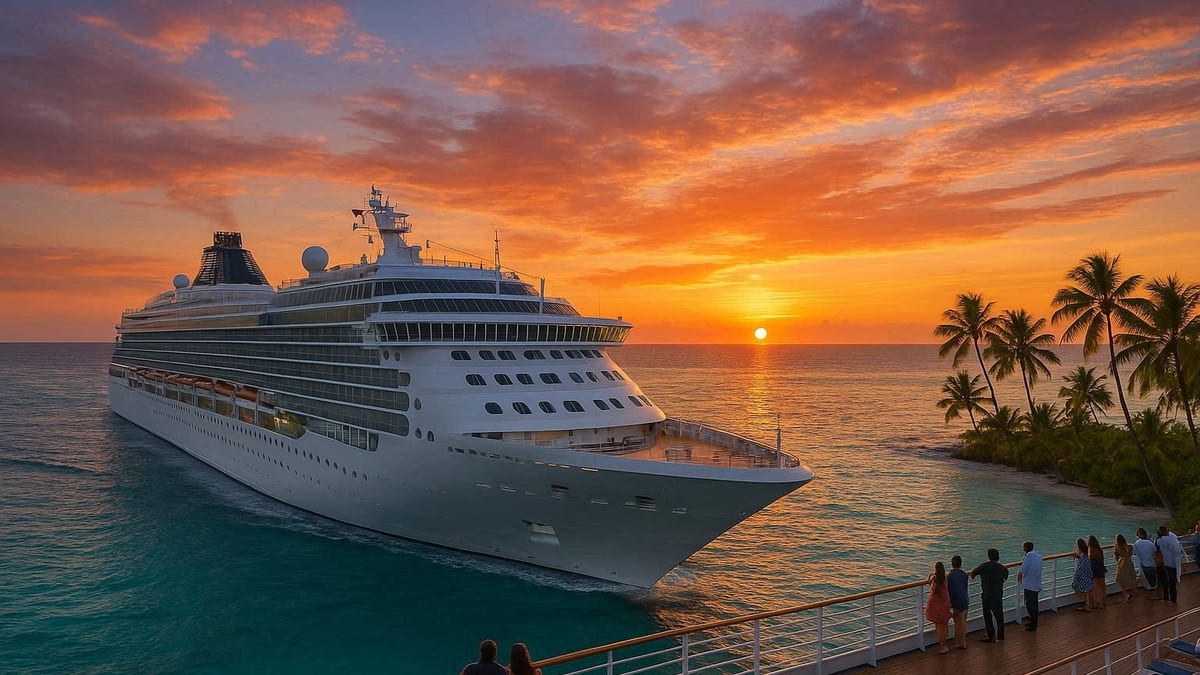
Image by International Cruise News: Latest Cruise Line & Cruise Ship News
Record Results Set Stage for Another Breakout Year
Recent financial updates show Carnival starting 2026 from its strongest position since before the pandemic, with record quarterly revenue and operating income underscoring a decisive turnaround in the global cruise market. Publicly available earnings materials for the first quarter of 2026 describe revenue at all-time highs for the period, supported by higher pricing and fuller ships across the company’s brands.
Reports on the company’s 2025 performance indicate that full-year revenue climbed to a record level while adjusted net income and cash flow improved sharply, allowing Carnival to reduce leverage and regain an investment-grade credit rating. Industry commentary notes that this financial reset has been achieved even as the company continues to retire older vessels and focus on more efficient, higher-yielding ships.
Forward-looking guidance for 2026 points to another year of record or near-record earnings, backed by historically high booking volumes and strong pricing power. Analysts covering the stock highlight that a significant portion of 2026 capacity is already sold at higher average fares than in 2025, giving Carnival unusual visibility into revenue and profit trends well ahead of the peak sailing seasons.
US and UK Travelers Anchor Carnival’s Booking Pipeline
North American and UK guests remain at the heart of Carnival’s resurgence. Commentary in recent equity research and earnings coverage suggests that around 60 percent of the company’s bookings are sourced from North America and Great Britain, reflecting the depth and maturity of these outbound cruise markets.
In the United States, resilient consumer spending on experiences and travel continues to buoy demand for cruises despite lingering inflation pressures. Travel and financial media report that Carnival brands operating from major US homeports are seeing sailings book out further in advance, with limited remaining inventory for key holiday and summer periods in 2026.
The United Kingdom has emerged as an equally powerful driver. Coverage in business and travel outlets notes that UK demand for both close-to-home itineraries in Northern Europe and long-haul voyages to the Caribbean and Mediterranean is running ahead of prior years. Pricing referenced in market discussions shows that UK guests are accepting higher fares, particularly on newer ships offering upgraded entertainment and dining, adding to overall yield growth.
These trends are reflected in company disclosures indicating record advance reservations for 2026 and even 2027 departures. With American and British travelers filling a majority of berths at elevated prices, Carnival’s revenue base for the current year is increasingly locked in before peak selling windows begin.
Australia Emerges as a High-Growth Strategic Market
While the United States and United Kingdom dominate Carnival’s booking mix, Australia is playing a growing role in the company’s 2026 momentum. Public filings and investor presentations highlight Australasia as one of the fastest-growing regions in Carnival’s portfolio, supported by expanding homeport operations and a deepening cruise culture among Australian travelers.
Travel industry coverage points to strong demand for itineraries departing from Sydney, Brisbane and other Australian ports, with interest spanning short coastal cruises, longer South Pacific voyages and repositioning sailings to Asia and North America. Reports indicate that Australians are booking further in advance and increasingly opting for balcony cabins and premium offerings, contributing to higher per-guest revenue.
Carnival has responded by adjusting deployment to keep more capacity in and around Australia during peak southern summer periods, including assigning larger and newer ships to the region. Commentary in regional travel media suggests that the combination of convenient homeport access, bundled onboard value and the appeal of “fly-cruise” links to Asia and Alaska is bringing more first-time Australian cruisers into the market.
As a result, bookings sourced from Australia, while smaller in absolute terms than those from North America and the UK, are growing at a faster clip and providing an important diversification benefit for Carnival’s global network.
Pricing Power, New Ships and Loyalty Programs Support Growth
Behind the headline booking surge lies a shift in Carnival’s strategy toward yield over sheer volume. Recent financial commentary notes that the group is carrying slightly less capacity than before the pandemic yet generating significantly higher revenue, a sign that pricing power has returned across its major brands.
Reports highlight that ticket prices for 2026 sailings are running above already elevated 2025 levels in constant currency, while onboard spending on dining, shore excursions and premium experiences continues to rise. Newer ships with expanded amenities are central to this strategy, giving Carnival more scope to upsell guests and capture a greater share of discretionary vacation spending.
The company is also preparing to lean on enhanced loyalty initiatives to sustain momentum. Investor-focused summaries of recent presentations describe a revamped rewards framework rolling out across brands from 2026, designed to encourage repeat bookings and higher onboard engagement among frequent cruisers in core markets including the United States, United Kingdom and Australia.
At the same time, Carnival’s deleveraging path and improved credit profile are expected to lower interest costs over the medium term, freeing up additional capital for fleet investments and shareholder distributions. Market analysts argue that this financial flexibility, combined with still-rising demand, positions the company to navigate near-term headwinds such as fuel price volatility and regulatory-driven cost increases.
Travel Sector Implications for 2026 and Beyond
Carnival’s record booking performance is being watched closely across the wider travel sector as a bellwether for discretionary leisure demand. Airlines, hotels and destination operators serving major cruise gateways in the United States, United Kingdom and Australia are preparing for heavier passenger flows tied to the cruise season, particularly around peak embarkation weekends.
Travel agencies and online intermediaries report a surge in package demand that combines cruises with pre- and post-stays, suggesting that many travelers are treating 2026 sailings as the centerpiece of longer, more elaborate vacations. This pattern is especially visible among North American and British guests pairing Caribbean and Mediterranean cruises with city breaks, and among Australians using long-haul cruises to anchor trips that also include land-based touring.
Analysts note that if current booking trends hold, Carnival and its peers could face tighter capacity constraints out of key ports, reinforcing higher pricing but also increasing pressure on port infrastructure and local tourism ecosystems. For now, publicly available forecasts indicate that Carnival expects another year of record or near-record revenue in 2026, powered by its strongest customer bases in the United States, United Kingdom and Australia and supported by a global appetite for cruise travel that shows few signs of cooling.