

More news on this day
Uttar Pradesh is fast emerging as one of India’s most closely watched tourism success stories, with new themed circuits from Ayodhya to Varanasi drawing growing numbers of visitors from the United States, United Kingdom and Australia, and airlines from Air India to Emirates racing to cash in on the surge in demand.
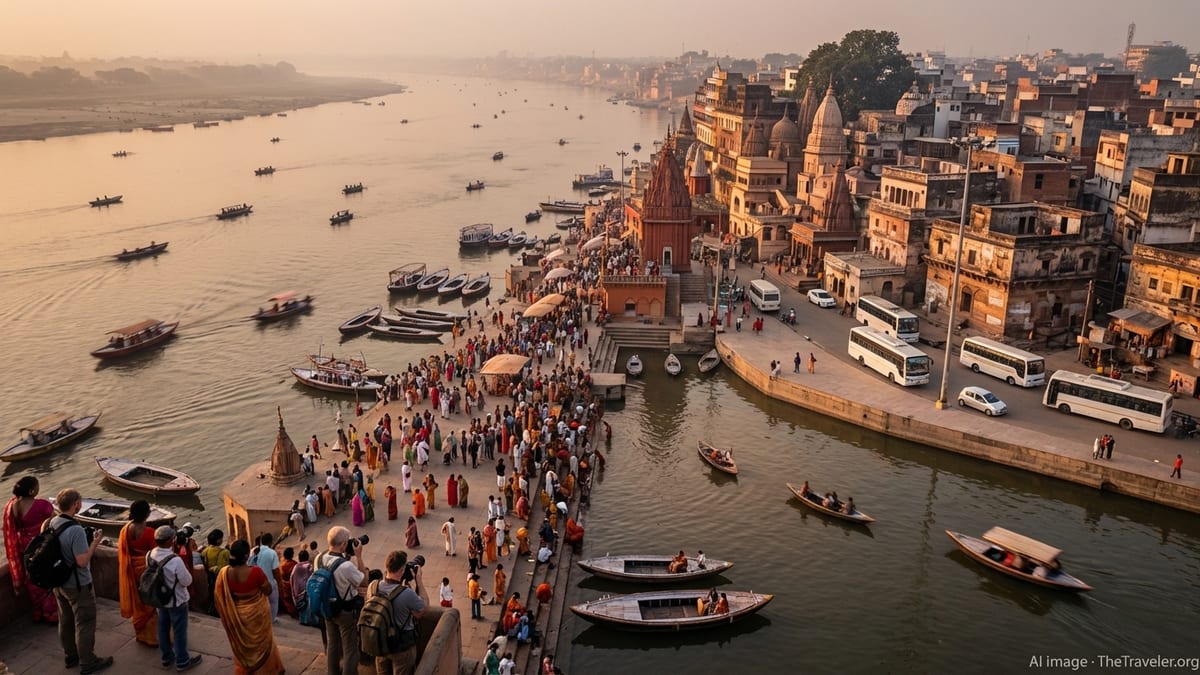
Uttar Pradesh Bets Big on Themed Tourism Circuits
Uttar Pradesh has quietly laid the groundwork for its current tourism surge, carving the state into 12 themed circuits that package religious, cultural and ecological attractions into easy-to-sell routes. Announced in detail by the state’s tourism department in the current financial cycle, the circuits include Ramayana, Krishna-Braj, Buddhist, Mahabharata, Shaktipeeth, Spiritual, Sufi-Kabir, Jain, Bundelkhand, Ecotourism, Wildlife and Environment, and Craft and Freedom Struggle. Together they are designed to disperse visitors beyond a handful of marquee cities and extend average stays.
Officials say the circuits are not framed as religiously exclusive, but as overlapping journeys that tap into global interest in heritage, spirituality and nature. A traveller from New York or London, for instance, can now move from the Ramayana circuit around Ayodhya to the Buddhist trail through Sarnath and Kushinagar, or on to bird sanctuaries and tiger reserves under the ecotourism and wildlife banners, following a clearly mapped route with growing hotel and homestay capacity.
This strategy is backed by significant public spending. In recent budgets, the state has sharply increased allocations for tourism, with funds aimed at upgrading roads, signage, riverfront ghats, sanitation and visitor management systems at key pilgrimage and heritage sites. The push reflects confidence that inbound tourism, particularly from long-haul markets such as the US, UK and Australia, can become a durable pillar of the state’s economy.
Industry executives note that by formalising these circuits and marketing them as distinct products, Uttar Pradesh makes it easier for international tour operators to bundle multi-city itineraries that can justify a long flight from Los Angeles, Manchester or Sydney. The thematic approach also supports the rise of special-interest trips, from spiritual retreats to photography tours and birding holidays.
Global Pilgrims Boost Ayodhya, Varanasi and the Spiritual Heartland
The most visible impact of Uttar Pradesh’s strategy is in its spiritual hubs, where footfall has surged from both domestic and international visitors. Varanasi, one of the world’s oldest continuously inhabited cities, has seen consistent investment in riverfront redevelopment, lighting, security and access roads, while Ayodhya is rapidly being positioned as a flagship destination within the Ramayana circuit after the inauguration of the Ram temple.
Recent budget documents have earmarked dedicated funds for Ayodhya, Varanasi and the Vindhyavasini Devi Dham region, reflecting their role as anchors of the state’s pilgrimage economy. Officials say that between January and June 2025, Uttar Pradesh drew well over a hundred crore visitors in total, with international arrivals counted in the tens of lakhs, a figure that is expected to rise as new air links and marketing campaigns mature.
For long-haul travellers from the US, UK and Australia, these cities have become entry points into a broader spiritual and cultural exploration. Multi-generational family groups from the Indian diaspora, in particular, are booking trips that combine rituals on the Ganga in Varanasi with temple visits in Ayodhya, followed by side journeys to Buddhist and Jain heritage sites. Travel agents report that such itineraries are increasingly being marketed as once-in-a-lifetime “roots and rituals” experiences.
High-profile religious events are amplifying the trend. The Maha Kumbh Mela held in Prayagraj in early 2025, described as one of the largest human gatherings on the planet, prompted a wave of interest from foreign media and niche tour companies. The festival also acted as a stress test for the state’s new infrastructure, from temporary tent cities to expanded rail and road capacity, demonstrating that Uttar Pradesh can handle surges in international demand.
Maha Kumbh 2025 and the Infrastructure Race
The 2025 Maha Kumbh in Prayagraj served as a catalyst for rapid infrastructure upgrades that are now benefiting mainstream tourism circuits. Authorities created a vast temporary city, extended roads, expanded parking and coordinated with Indian Railways to add capacity on key routes. The scale of the operation, spread over more than a month of ritual bathing dates, forced a series of long-term planning decisions that align closely with tourism growth.
Many of the improvements are now feeding directly into Uttar Pradesh’s pitch to foreign travellers. Road corridors upgraded for the festival are helping to shorten drive times between hubs such as Lucknow, Prayagraj and Varanasi. New bridges, widened highways and better wayfinding are particularly important for coach tours popular with seniors from the UK and Australia, who often favour group travel and require predictable, comfortable surface connections.
The under-construction Ganga Expressway, slated to connect western and eastern Uttar Pradesh along a high-speed corridor, is another centrepiece of this strategy. While still being completed, the expressway is being marketed to tour operators as the future backbone of multi-stop journeys that could begin or end in Delhi and loop through religious and cultural hotspots across the state. Once operational, it is expected to cut travel times and enable more complex itineraries that appeal to high-spend visitors with limited vacation days.
Smaller interventions are also reshaping the visitor experience. A ropeway project under development in Varanasi aims to connect the main railway station with the congested old city, reducing transfer times and easing crowding on narrow lanes. New Rahi Tourist Lodges, developed in a public-private partnership model at sites ranging from bird sanctuaries to lesser-known river ghats, are designed to support the ecotourism and wildlife circuits that appeal to younger and more adventurous travellers.
Air India, IndiGo and Emirates Chase Demand into UP’s Gateways
Airlines have moved quickly to align with Uttar Pradesh’s tourism ambitions, deploying capacity into the state’s growing network of airports and aggressively marketing connecting itineraries to overseas customers. State capital Lucknow, spiritual centre Varanasi and the newer airport at Kushinagar currently serve as international gateways, with Ayodhya and the Noida International Airport at Jewar under development to further boost connectivity.
During the Maha Kumbh 2025 window, Air India and Air India Express significantly increased flights to Prayagraj and Varanasi, adding extra daily services from Delhi, Mumbai, Bengaluru and Hyderabad. Executives framed the additions as both a response to short-term festival demand and a test case for more sustained growth into Uttar Pradesh’s religious tourism hubs. Additional frequencies gave foreign visitors more flexibility and smoother same-day connections from long-haul arrivals in Delhi and Mumbai.
Low-cost carriers such as IndiGo have also capitalised on the surge, operating dense domestic networks that funnel passengers from across India into Uttar Pradesh. For foreign tourists, these domestic legs often appear as part of a single booking when purchased through partner airlines or global travel platforms, effectively making Prayagraj, Varanasi or Gorakhpur just one more hop after a long-haul flight from cities such as Chicago, London or Melbourne.
International carriers based in the Gulf, particularly Emirates, are eyeing the opportunity to position their hubs as convenient one-stop gateways to Uttar Pradesh. While point-to-point international services into UP are still developing, the combination of frequent flights to Delhi and other Indian metros, plus fast domestic connections, allows airlines to market tailored itineraries that drop travellers close to the heart of the state’s new circuits within a single travel day.
How Gulf Hubs and One-Stop Itineraries Are Powering Long-Haul Growth
For travellers from the US, UK and Australia, the rise of one-stop itineraries via Gulf hubs has been crucial in making Uttar Pradesh a realistic holiday or pilgrimage choice. Carriers such as Emirates, Qatar Airways and Etihad serve multiple cities in India with high-frequency schedules, allowing foreign visitors to connect onward to Lucknow, Varanasi or other northern gateways with short layovers and through-checked baggage.
Travel consultants say that Emirates in particular has become a preferred option for many visitors from London, Manchester and regional UK cities, as well as from Australian gateways such as Sydney, Melbourne and Brisbane. Competitive fares, generous baggage allowances for passengers carrying gifts or religious items, and the ability to ticket complex return itineraries that combine multiple Indian cities have strengthened its position.
The partnerships these Gulf carriers maintain with Indian airlines further enhance connectivity. Code-share and interline agreements mean that a passenger flying from New York or Birmingham can book a single ticket that includes an Emirates or partner long-haul sector to Dubai and a final domestic leg into Uttar Pradesh on an Indian carrier. For older pilgrims and first-time visitors, this reduces logistical friction, particularly when navigating immigration, baggage transfers and tight connections in unfamiliar airports.
Industry analysts point out that this model also helps Uttar Pradesh tap into secondary and tertiary source markets within the US, UK and Australia. A traveller from a smaller American city can reach the state’s tourism circuits with no more than two connections, even if they begin their journey on a domestic US carrier feeding into a Gulf hub. This connectivity matrix is central to sustaining long-haul growth beyond the initial surge driven by major religious events.
US, UK and Australian Travellers Seek Spirituality, Culture and Wildlife
The profile of visitors flocking to Uttar Pradesh from the US, UK and Australia reflects broader shifts in global travel preferences. Data from tourism researchers shows rising interest in meaningful, experience-driven journeys, with strong growth in spiritual retreats, slow travel and nature-based tourism. Uttar Pradesh’s mix of pilgrimage cities, river landscapes, bird sanctuaries and tiger reserves aligns neatly with these trends.
Tour operators catering to the US market highlight three main segments driving demand. The first is the Indian diaspora, often based in tech and professional hubs such as California, New Jersey and Texas, booking multi-generational trips around key life events, temple ceremonies or major festivals. The second segment includes wellness and yoga enthusiasts who add a few days in Varanasi, Sarnath or Ayodhya to broader India itineraries. The third is culturally curious mainstream tourists, who may combine a classic Golden Triangle route with an extension into Uttar Pradesh’s spiritual heartland.
From the UK, established historical ties and strong air connectivity to India continue to underpin demand. British tour firms report increasing interest in themed small-group trips along the Buddhist circuit, especially among older travellers and academics. Meanwhile Australians, who typically travel long distances and stay longer, are showing particular enthusiasm for wildlife and ecotourism circuits that combine birding at sanctuaries such as Bharatpur’s regional counterparts with visits to riverfront towns and temple sites.
Across these markets, demand is highest during the cooler months from October to March, coinciding with major religious festivals and more comfortable temperatures. Airlines and hoteliers are already experimenting with shoulder-season promotions and offbeat circuits, such as monsoon river journeys and summer wildlife experiences, to smooth out occupancy and encourage repeat visits.
Homestays, Lodges and the Rise of Second-Tier Destinations
As flagship cities like Varanasi and Ayodhya draw global attention, Uttar Pradesh is trying to ensure that smaller towns and rural areas also benefit from the tourism boom. A state-backed programme to develop thousands of new homestays aims to spread income to local communities while offering foreign visitors more intimate experiences, from village walks to farm visits and craft workshops.
New Rahi Tourist Lodges being built in locations such as Patna Bird Sanctuary, Sandi Lake and Narora on the Ganga are part of this effort. These properties, developed via public-private partnerships, are positioned to support the ecotourism and wildlife circuits by providing reliable mid-scale accommodation in areas previously limited to basic guesthouses. For long-haul travellers, the availability of clean rooms, predictable services and online booking is often a prerequisite for venturing beyond major cities.
Travel agencies in the US, UK and Australia are beginning to incorporate these emerging destinations into itineraries, particularly for repeat visitors who have already seen headline sites. Birdwatching tours, rural photography expeditions and river-focused journeys are gaining traction among niche audiences willing to travel further for less crowded, more immersive experiences.
However, infrastructure gaps remain. While expressways and upgraded highways are improving access, last-mile connectivity, public transport options and medical facilities still vary widely outside major urban centres. Industry stakeholders argue that continued investment in roads, digital connectivity and emergency services will be essential if second-tier destinations are to fully tap into international demand.
Pricing Pressures, Sustainability Questions and the Road Ahead
The rapid rise in demand has brought challenges alongside opportunity. During peak periods such as the Maha Kumbh, concerns about soaring airfares to Prayagraj and nearby airports prompted central authorities to urge airlines to keep pricing within reasonable bounds. Carriers responded by adjusting capacity and, in some cases, moderating fares, but industry insiders expect yield management to remain a sensitive issue as more foreign travellers plan trips around fixed festival dates.
There are also growing questions about sustainability. Uttar Pradesh’s marquee events concentrate millions of visitors along fragile riverfronts and in dense old-city quarters. Waste management, water quality and crowd control protocols have improved but continue to be tested during major gatherings. Environmental groups and local stakeholders are pushing for stricter regulations on construction near riverbanks, more robust sewage treatment and stronger enforcement of pollution norms.
For airlines, the challenge lies in balancing seasonal spikes with year-round viability. Air India, IndiGo and Emirates are all under pressure to optimise their networks in the face of volatile fuel prices and shifting global demand patterns. Executives say that deeper cooperation between carriers, tourism boards and local authorities will be key to sustaining routes into Uttar Pradesh outside of festival peaks, perhaps through co-funded marketing campaigns, fare promotions and support for international travel trade events.
Despite the risks, optimism remains high among both policymakers and the private sector. With its network of themed circuits, expanding airport and road infrastructure, and growing visibility in overseas markets, Uttar Pradesh is positioning itself as a cornerstone of India’s tourism story. For airlines from national flag carriers to Gulf super-connectors, the state’s ascent offers a potent combination of high volumes, strong yields and the chance to anchor some of the most compelling spiritual and cultural journeys on the global travel map.