

More news on this day
The United States government has issued an urgent shelter-in-place warning to Americans in parts of Mexico, advising them to stay indoors in Jalisco, Michoacan, Tamaulipas, Guerrero, and Nuevo Leon as military operations against a powerful cartel trigger violent unrest, roadblocks, and growing disruption across major cities and tourist hubs.
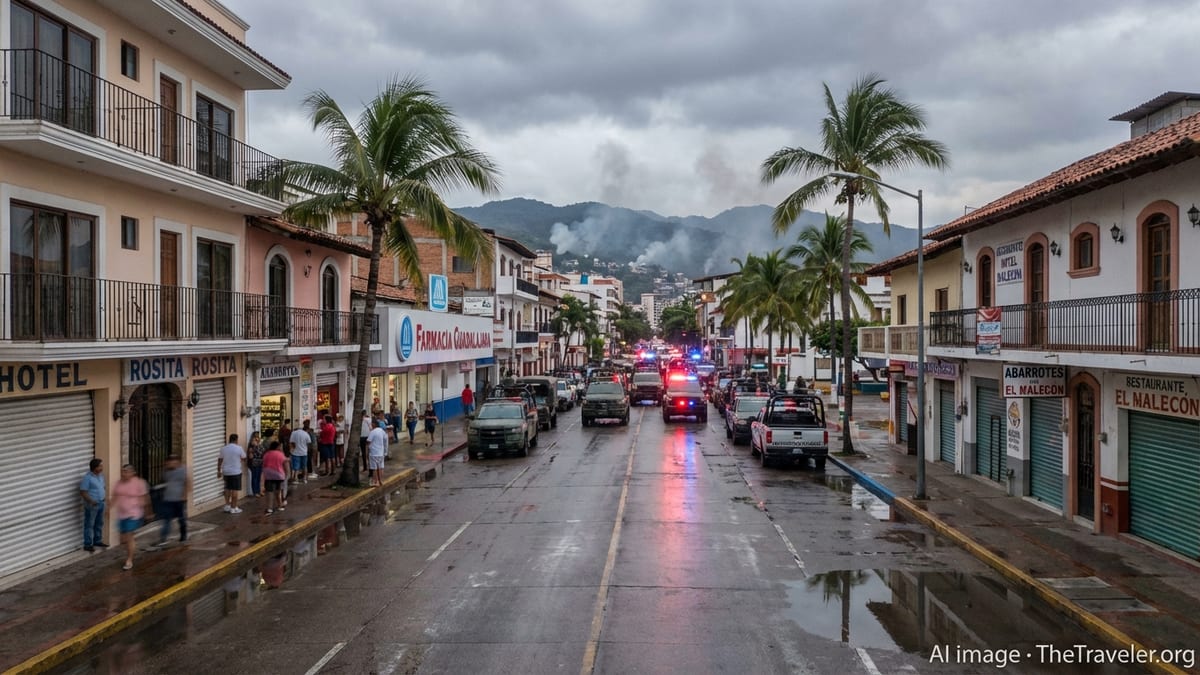
Security Alert Follows Killing of Powerful Cartel Leader
The security alert, issued on February 22 by the U.S. Department of State and amplified by the U.S. Embassy in Mexico City and regional consulates, comes in the immediate aftermath of a high-profile military operation in western Mexico. Mexican army forces killed Nemesio Rubén Oseguera Cervantes, widely known as “El Mencho,” the alleged leader of the Jalisco New Generation Cartel, during an operation in Jalisco state, according to Mexican authorities and multiple international news outlets.
El Mencho had long been considered one of the most wanted drug cartel leaders in the Western Hemisphere, sought by both U.S. and Mexican law enforcement agencies. His organization, the Jalisco New Generation Cartel, is believed to have extensive operations across numerous Mexican states, including Jalisco and neighboring regions, and has been accused of extreme violence, fuel theft, extortion, and trafficking of synthetic drugs.
Following the announcement of his death, authorities reported a rapid escalation of violence in several states. Officials in Mexico and foreign governments alike say the unrest appears to be a direct response by cartel gunmen and allied criminal groups, attempting to challenge or disrupt ongoing security operations and to demonstrate continued strength despite the loss of their top leader.
The U.S. security alert explicitly ties the warning to “ongoing security operations and related road blockages and criminal activity,” emphasizing that the situation remains fluid and unpredictable. American officials stress that the guidance to shelter in place will remain in effect until further notice, with no clear timeline for when conditions might stabilize.
States Under Warning and Why They Matter for Travelers
The advisory specifically highlights Jalisco, Michoacan, Tamaulipas, Guerrero, and Nuevo Leon, a mix of coastal and interior states that include some of Mexico’s most significant industrial, commercial, and tourist centers. Within Jalisco, the alert explicitly mentions Puerto Vallarta, Chapala, and Guadalajara, areas that draw hundreds of thousands of international visitors each year and serve as key air and land gateways for U.S. travelers.
In Tamaulipas, the U.S. government has flagged Reynosa and surrounding municipalities near the U.S. border, where long-standing cartel rivalries have periodically flared into open confrontations and road blockades. Parts of Michoacan and Guerrero, already subject to long-running security advisories due to cartel presence and rural violence, are now again under heightened scrutiny as authorities track possible spillover from the Jalisco operation.
Nuevo Leon, home to Monterrey and a major industrial corridor linking northern Mexico to the United States, is also included in the warning. While the U.S. government has not reported the same level of visible destruction there as in some western states, officials have directed U.S. government staff at Consulate General Monterrey to remain within the metropolitan area and to observe similar precautions to those in harder-hit regions.
Travel analysts note that the inclusion of these five states, some of them core to Mexico’s tourism and manufacturing sectors, underscores the breadth of concern within U.S. security circles. Even where there are no confirmed attacks on tourists, authorities say the risk comes from being caught near a roadblock, confrontation, or law enforcement operation that can erupt without warning.
Roadblocks, Arson, and Disrupted Daily Life
Local and national officials in Mexico have reported vehicle burnings, highway blockades, and sporadic gunfire in the wake of the military operation. In Jalisco in particular, authorities described dozens of roadblocks set up using hijacked trucks and buses, some of which were set alight to obstruct security forces and spread fear among residents and visitors.
Images shared by media outlets show thick columns of smoke rising over parts of Puerto Vallarta and reports of panic at Guadalajara’s international airport as rumors circulated about possible attacks. While many of the incidents have been concentrated on highways and key junctions, authorities acknowledge that some urban neighborhoods have also been affected by blocked streets and the presence of armed men.
State officials in Jalisco have implemented sweeping precautionary measures, including canceling in-person school classes and suspending certain large-scale public events. Governors in other affected states have urged residents to stay tuned to official channels, avoid spreading unverified information and follow directions from civil protection and security authorities.
In some areas, local businesses have closed early or suspended operations altogether, particularly where staff would need to cross potential conflict zones or roadblocks on their way home. For travelers, that means reduced access to services such as restaurants, shops, and attractions, even in areas that may appear calm at a glance.
Official Guidance to Americans: Stay Indoors and Minimize Movement
The U.S. security alert advises American citizens in Jalisco, Michoacan, Tamaulipas, Guerrero, and Nuevo Leon to “shelter in place until further notice,” a phrase that U.S. officials say should be interpreted in the strictest sense. Americans are being told to remain inside residences, hotels, or other secure accommodations, to avoid unnecessary travel, and to stay well away from any areas with visible law enforcement or military activity.
U.S. authorities also emphasize the importance of avoiding crowds, steering clear of demonstrations or gatherings, and monitoring local media for updates, as conditions can change rapidly from one neighborhood to another. Where local authorities have issued additional restrictions or curfews, travelers are expected to comply fully, as failing to do so can increase personal risk and complicate consular assistance.
Officials encourage Americans in these states to keep family and friends in the United States informed of their whereabouts and safety, particularly as communications may be intermittent in areas affected by unrest or infrastructure disruptions. Those who have not already done so are urged to enroll in the State Department’s Smart Traveler Enrollment Program, which provides verified safety updates and allows U.S. embassies and consulates to contact citizens in emergencies.
For U.S. government personnel, the restrictions are even more stringent. Staff in Guerrero, Michoacan, and Quintana Roo have reportedly been directed to shelter in place, while employees at Consulate General Tijuana and others in northern states face movement restrictions of their own. These internal measures often serve as a barometer for the seriousness with which Washington views emerging security situations abroad.
Air Travel and Transport Severely Affected
The unrest has had immediate consequences for air and ground transport across western and northern Mexico. Roadblocks and security operations have disrupted access routes to airports in Guadalajara and Puerto Vallarta, prompting cancellations, delays, and diversions of both domestic and international flights, according to airline statements and local reports.
Several carriers, including major North American airlines, have temporarily suspended or reduced service to Puerto Vallarta, citing uncertainty about the security situation and difficulty guaranteeing safe passage for passengers and crew between airports and hotels. Travelers have reported long waits, crowded terminals, and rapidly shifting flight schedules as airlines attempt to adapt.
Within Puerto Vallarta itself, taxi and ride-hailing services have reportedly been suspended or significantly curtailed, leaving many visitors reliant on hotel shuttles or staying put altogether. Public transportation in some cities has also been scaled back, both as a safety measure and due to the practical challenge of navigating blocked or damaged roads.
Even where airports remain technically open, the U.S. government has warned that overland travel to and from terminals may be unsafe or impossible in specific areas if roadblocks, arson, or clashes intensify. Officials advise Americans not to attempt to push through or circumvent roadblocks, noting that approaching these improvised barricades can place travelers directly in the path of heavily armed groups or active police and military operations.
Mexican and U.S. Authorities Coordinate as Tensions Simmer
Mexican federal and state authorities have deployed additional army and National Guard units to several hotspots, including parts of Jalisco and neighboring states, in an effort to reestablish control of key highways and reassure the public. Officials in Mexico City have described the operation leading to El Mencho’s death as a major blow against organized crime but acknowledge that the immediate aftermath carries acute risks for civilians.
The Security Cabinet of the Mexican government has reported dozens of highway blockades at various points since the operation, though officials say some of these have been cleared as security forces gradually regain control of key routes. Authorities have appealed to residents and visitors alike to avoid panic, comply with safety instructions, and rely only on official information channels.
On the U.S. side, the State Department’s Consular Affairs division, the U.S. Embassy in Mexico City, and consulates in cities such as Guadalajara, Monterrey, and Tijuana are working to track local developments and update travel guidance. State-level authorities in border regions, including Texas, have echoed federal warnings and urged residents to postpone nonessential trips into affected Mexican states until the situation improves.
Analysts say close coordination between U.S. and Mexican officials is crucial to managing both the immediate security response and the broader diplomatic implications of such a high-profile cartel leader’s death. While both governments have long cooperated on anti-cartel efforts, each new surge of violence tests public confidence in security strategies and raises fresh questions about how best to protect civilians, tourists, and cross-border economic ties.
Impact on Tourism and Future Travel Plans
The timing and scope of the security alert are particularly significant for the tourism sector, which relies heavily on visitors from the United States and Canada. Jalisco’s Pacific coastline, including Puerto Vallarta and nearby resort towns, is in the middle of a busy travel season, and many hotels, vacation rentals, and tour operators are now facing a wave of cancellations and rebookings as travelers reassess their plans.
Travel industry observers say the shelter-in-place order is likely to have an immediate chilling effect on new bookings to the affected states, especially among travelers who may already have been wary of security issues in parts of Mexico. Some tour operators have begun offering flexible rebooking or credits for alternative destinations, while airlines evaluate waiver policies for passengers due to fly into impacted airports over the coming days.
Despite the dramatic headlines, both Mexican and foreign officials are keen to note that not all areas within the named states are experiencing the same intensity of unrest. However, the nature of cartel-related violence and the possibility of sudden roadblocks or clashes means that even popular tourist zones, which may appear calm at the moment, cannot be considered fully insulated from risk while security operations remain active.
For travelers considering upcoming trips, experts recommend closely monitoring official travel advisories, staying in close contact with airlines and accommodation providers, and having contingency plans for changes in routing or dates. Those already in-country are urged to prioritize personal safety over fixed itineraries, avoiding nonessential excursions and public gatherings until authorities signal a clear easing of tensions.
What Americans in the Affected States Should Do Now
Security specialists emphasize that the most important step for Americans currently in Jalisco, Michoacan, Tamaulipas, Guerrero, and Nuevo Leon is to adhere strictly to the shelter-in-place guidance. That means remaining indoors in a secure location, limiting movement to essential needs only, and refraining from attempting to travel long distances over land, particularly at night or through rural corridors.
Travelers are advised to keep essential supplies on hand, including water, basic food items, medications, and phone charging options, in case curfews, transport disruptions, or localized power outages complicate access to shops and services. Hotels in some tourist zones have activated emergency communication plans, using internal messaging systems, printed notices, or staff briefings to keep guests informed about any changes in security conditions outside the property.
Americans who feel unsafe or uncertain about their location are urged to contact their nearest U.S. consulate or the U.S. Embassy in Mexico City for guidance. While evacuation flights have not been announced and commercial air travel remains partially available, consular officials can provide updated safety information, help citizens assess local risks, and in some cases liaise with local authorities or transportation providers.
Above all, officials warn against attempting to independently “check out” tense areas, film confrontations, or drive toward visible columns of smoke or heavy security presence. In the current climate, seemingly routine movements, such as driving through an unfamiliar neighborhood or stopping at a roadside store, can carry elevated risk if they intersect with active operations or cartel responses.