

More news on this day
A sprawling late-season winter storm system sweeping from the Midwest to the East Coast has severely disrupted air travel across the United States, with thousands of flights canceled or delayed as snow, ice and high winds hit some of the nation’s busiest airports.
Get the latest news straight to your inbox!
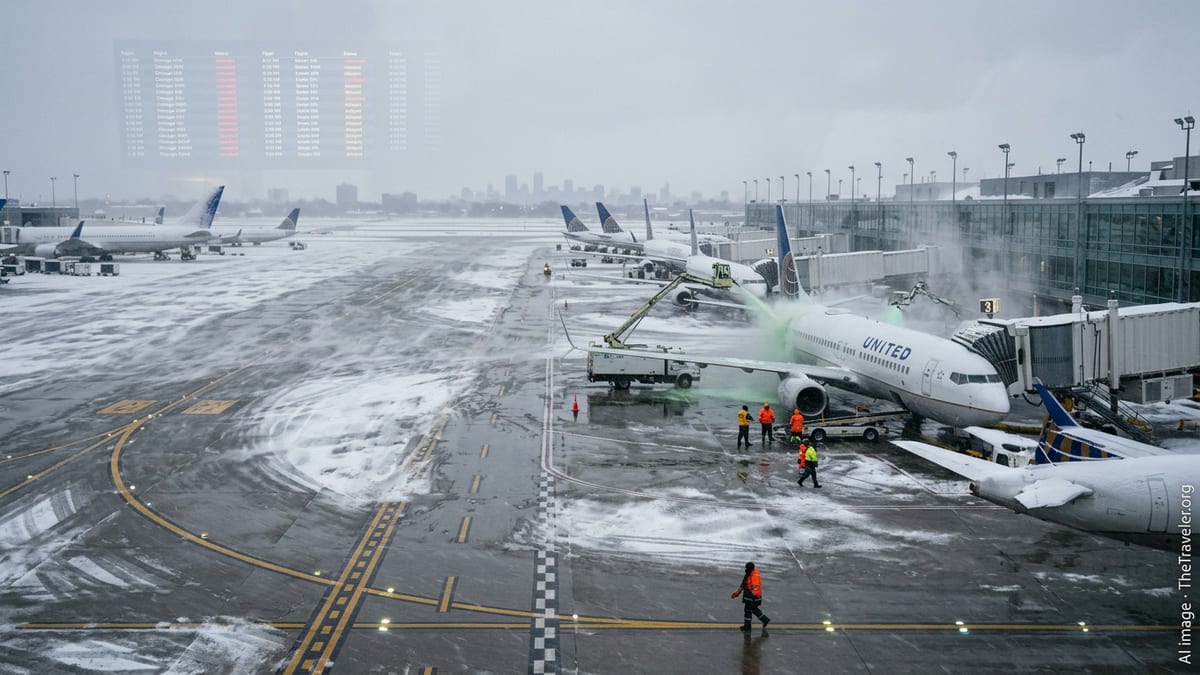
Where Flight Disruptions Are Hitting Hardest
Publicly available flight-tracking data for Monday, March 16, and Tuesday, March 17, show more than ten thousand flights across the United States delayed or canceled as the storm complex moved east. Major hubs in Chicago, New York, Atlanta, Washington, and Charlotte have reported some of the most acute disruptions, compounding knock-on effects throughout airline networks.
Chicago O’Hare International Airport has been among the hardest hit, with strong crosswinds and blowing snow forcing airlines to trim schedules and manage extended ground delays. Reports from the New York area indicate significant disruption at LaGuardia, John F. Kennedy, and Newark Liberty airports as high winds associated with the storm system moved in, prompting traffic-management initiatives that slowed arrivals and departures.
In the Southeast and Mid-Atlantic, operations at Atlanta’s Hartsfield-Jackson and Charlotte Douglas airports have also been affected by the same system as it transitions from snow and ice in the Midwest to heavy rain and powerful gusts farther south and east. According to airline status boards, rolling ground stops and reroutes have created congestion that can ripple across the country, affecting flights with no direct connection to the storm zone.
Additional disruptions have been reported at other key hubs including Houston and Washington-area airports, where wind and low cloud ceilings have reduced capacity on already busy spring break travel days. With the storm stretching over multiple regions, travelers are encountering multi-leg itineraries where a delay on the first segment can quickly escalate into missed connections.
How the Storm System Is Affecting Conditions on the Ground
The current storm is part of a broader March 13 to 17 weather system that forecasters describe as a large extratropical cyclone spinning across the central United States and southern Canada. In the northern sector, heavy snow and blizzard conditions in parts of the Upper Midwest and High Plains have created whiteouts and hazardous road travel, while an area of significant ice has developed over sections of the Great Lakes region.
As the system pushes east, it is dragging bands of snow and mixed precipitation across interior states while funneling strong winds toward major population centers. In and around New York City, published forecasts on Tuesday cited gusts approaching 50 miles per hour, enough to complicate air-traffic flows even where snowfall totals remain modest. In the mid-Atlantic, high wind warnings and advisories have prompted early school closures and altered commuting patterns, with aviation operations also feeling the strain.
The storm’s southern flank is associated with severe thunderstorms, damaging winds and the risk of tornadoes across portions of the Lower Mississippi Valley, the Southeast, and the Carolinas. While these hazards are geographically distant from the blizzard conditions in the Midwest, they belong to the same broad system and collectively reduce the availability of clear weather diversion options for airlines managing already stretched schedules.
For airports, the combination of rapidly changing precipitation types, strong crosswinds and fluctuating visibility is critical. Snow and ice accumulation require repeated plowing and de-icing of runways, taxiways and aircraft, while high winds can temporarily suspend certain runway configurations and reduce the number of arrivals and departures that can be safely handled per hour.
Numbers Behind the Cancellations and Delays
Aggregated data from flight-status services on Monday pointed to more than 4,700 flights canceled across the United States as parts of the Midwest were engulfed in blizzard conditions and the East Coast braced for high winds. By Tuesday, reports indicated that hundreds more flights remained canceled or significantly delayed as airlines and airports worked through backlogs of aircraft and crew stranded in the wrong locations.
Individual hubs have seen significant single-day impacts. In one 24-hour period, Chicago O’Hare logged hundreds of cancellations, while New York’s LaGuardia and JFK each registered several hundred combined cancellations and delays as the storm shifted east. Published coverage also cited widespread delays at Atlanta, the world’s busiest passenger airport, as thunderstorms and strong winds moved into the Southeast.
While the absolute numbers fluctuate by the hour, the scale of disruption places this storm event among the more consequential weather-related aviation episodes of the current winter. Data from earlier in the season, including February’s historic Northeast blizzard that closed runways at New York and Boston and led to thousands of cancellations over several days, highlight how quickly winter weather can cascade into national-scale disruption even when conditions improve locally.
Industry analyses of federal transportation statistics indicate that weather consistently accounts for a large share of U.S. flight cancellations, with winter storms, convective thunderstorms and high winds all playing major roles. Snow and ice events pose a particular challenge, because even moderate accumulations on runways or aircraft surfaces can force airlines to slow or halt operations until safety thresholds are met.
What Travelers Need to Know Right Now
For travelers booked to fly through March 17 and into the middle of the week, airlines are encouraging the use of digital tools to check flight status frequently, as schedules may change multiple times in a single day. Many major U.S. carriers have activated weather-related travel waivers for itineraries touching affected regions, allowing passengers to change flights without standard penalties, subject to fare rules and rebooking windows.
Published advisories from carriers and airport operators stress that passengers should avoid heading to the airport before confirming that their flight is still scheduled to operate. In many cases, the most crowded terminals are those where flights have already been canceled but travelers have arrived anyway, hoping for same-day alternatives that may not exist when entire waves of service have been cut.
Travelers already en route are being urged to build in additional time for security checkpoints and connections, particularly at hubs experiencing rolling ground stops or gate holds. Because aircraft and crews are not always in their planned positions, even flights departing from cities with clear skies can experience knock-on delays if they rely on inbound aircraft from storm-hit regions.
Those facing overnight disruptions should keep boarding passes, receipts and documentation of delays, which can be useful when seeking accommodations, meal vouchers or potential reimbursement under airline policies or third-party travel insurance. While weather-related cancellations generally fall outside most airline compensation frameworks, some carriers provide limited assistance in securing discounted hotel rates or rebooking on later flights when large numbers of passengers are affected.
How This Fits Into a Season of Weather-Driven Travel Turmoil
The latest storm arrives on the heels of several significant winter events that have repeatedly strained U.S. aviation during the 2025–2026 season. In late February, a powerful blizzard known as Winter Storm Hernando buried parts of the Northeast under more than two feet of snow, prompting widespread flight cancellations and temporary shutdowns of runways at key airports in New York and New England.
Earlier in the winter, other named systems brought disruptive snow, ice, and high winds to major hubs across the country, including Dallas–Fort Worth, Charlotte, and Boston. Each episode forced airlines to proactively trim schedules, reposition aircraft, and clear backlogs, often just as demand surged around holidays, long weekends, or peak leisure travel periods.
Separate from snow and ice, severe convective weather has also complicated air travel. A tornado outbreak in early March affected portions of the South and central United States, leading to temporary suspensions of operations at airports in the path of intense storms. When layered on top of ongoing operational and staffing challenges, these episodes have highlighted the vulnerability of modern air travel networks to clusters of weather events arriving in quick succession.
For travelers and the industry alike, this week’s storm underscores the importance of flexibility and contingency planning during the late-winter and early-spring transition period. Even as temperatures begin to climb in many regions, strong contrasts between lingering Arctic air masses and early-season warmth can fuel volatile systems capable of shutting down air corridors within hours.