

More news on this day
Thousands of air travelers across the United States faced major disruptions on February 24 as Republic Airways, JetBlue, Delta, Alaska Airlines, Spirit and other carriers reported 2,140 flight cancellations and 1,752 delays, snarling operations at airports serving New Orleans, Los Angeles, Philadelphia, Atlanta, Miami and numerous other cities.
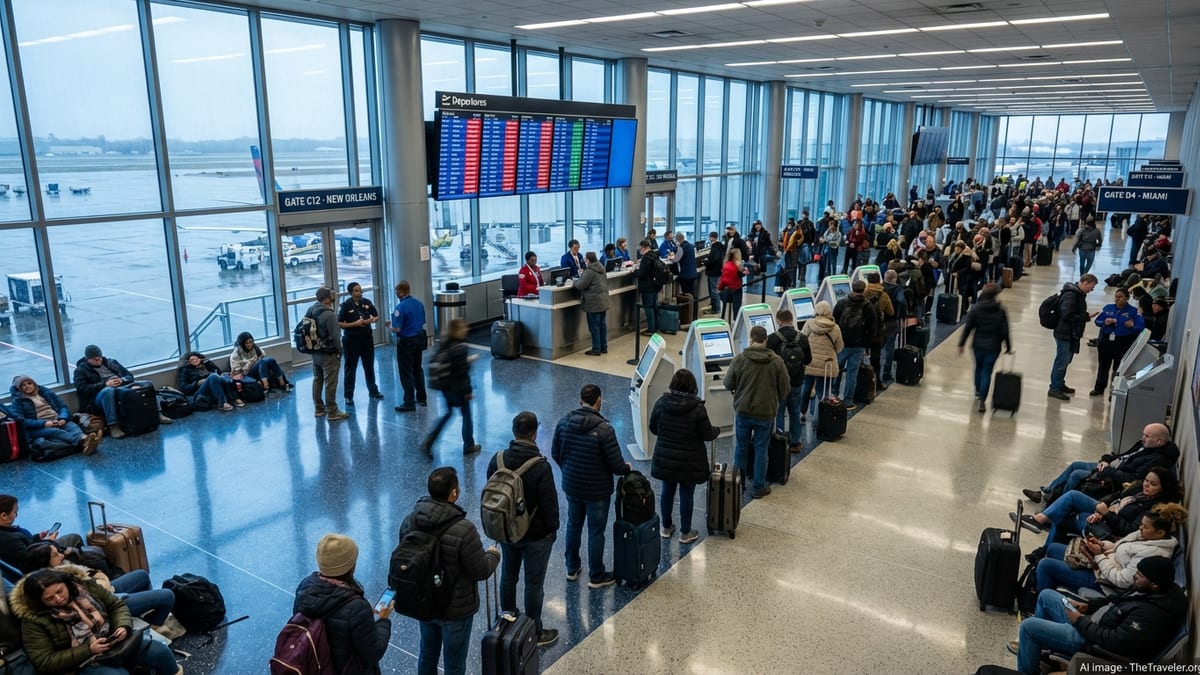
Storm-Driven Turmoil Across the US Air Network
The latest wave of cancellations and delays follows a powerful winter storm system that swept through the Northeast and rippled across the national aviation network. While the heaviest snowfall and strongest winds were centered on the Mid Atlantic and New England, the knock-on effects spread to airports nationwide as airlines preemptively cut schedules and struggled to reposition aircraft and crews.
According to flight tracking data cited by multiple outlets, Tuesday’s disruptions, though lower than the record levels seen a day earlier, still left thousands of passengers stranded or significantly delayed. The 2,140 cancellations and 1,752 delays represent a substantial portion of daily US traffic, and aviation analysts noted that recovery efforts are likely to continue into midweek as carriers work through residual backlogs.
Airport terminals from coastal hubs to interior gateways reported crowded concourses, long lines at customer service desks and growing pressure on available hotel rooms near major airports. Many travelers attempting to rebook were being rerouted through alternative hubs or offered itineraries stretching well into Wednesday and Thursday.
Major Hubs From New Orleans to Los Angeles Feel the Impact
While much attention has focused on the storm’s impact on Northeastern hubs, flight operations in other regions have also been heavily affected. In the South, New Orleans and Atlanta saw waves of cancellations and rolling delays as aircraft scheduled to arrive from the Northeast failed to depart on time, leaving gaps in tightly choreographed flight banks.
In Florida, Miami International Airport reported dozens of cancellations and significant delays, affecting both domestic and international passengers at the height of the winter travel season. Airlines serving Miami faced a dual challenge: weather-related disruptions on inbound routes from the Northeast and limited flexibility to add recovery flights to already busy schedules.
On the West Coast, Los Angeles was not in the path of the storm, but traffic there was nonetheless constrained by the broader network disruption. Flights to and from the East Coast were among the hardest hit, with departure boards showing clusters of cancellations to cities such as New York, Boston and Philadelphia. Travelers arriving in Los Angeles also reported missing connections to onward destinations in the Pacific and Latin America.
Philadelphia, positioned closer to the storm’s core, experienced particularly sharp disruptions earlier in the week and remained a trouble spot for carriers on Tuesday. Even as runways were cleared and visibility improved, airlines were still dealing with aircraft and crews that had been displaced by successive rounds of cancellations.
Republic, JetBlue, Delta, Alaska and Spirit Among Hardest Hit
Regional carrier Republic Airways emerged as one of the airlines most affected by Tuesday’s cancellations, reflecting its extensive role in operating feeder flights under major airline brands. With hundreds of its departures scrapped, the impact rippled outward to larger airlines that depend on regional connections to funnel passengers into their hub-and-spoke networks.
JetBlue continued to report a high share of canceled flights after what airline and industry sources described as one of the most challenging operational periods in recent years. The carrier’s concentration in Northeastern cities amplified the effect of the storm, and passengers traveling through New York and Boston reported widespread disruptions, even as conditions began to improve on the ground.
Delta Air Lines, Alaska Airlines and Spirit also logged significant numbers of cancellations and delays, affecting customers across multiple regions. Delta’s hub operations in Atlanta were tested as the airline worked to restart flights to and from affected Northeastern cities while managing weather-related constraints and crew duty-time limits. Alaska and Spirit faced similar challenges as they attempted to align aircraft rotations with evolving weather forecasts and airport capacity.
Industry observers noted that the cumulative effect of several days of weather disruption can be more difficult to manage than a single day of severe conditions. As aircraft and crew schedules fall out of sync, airlines must make rapid decisions about which flights to prioritize, often favoring routes with the highest passenger loads or limited alternative options.
Passengers Confront Long Lines, Limited Options and Mounting Costs
For travelers caught in the disruption, the experience on Tuesday was a familiar mix of uncertainty and frustration. At airports from New Orleans to Los Angeles, passengers lined up at ticket counters and service kiosks seeking rebooking options, meal vouchers and overnight accommodation. Many reported waiting hours to speak with airline agents as call centers and digital channels also came under heavy strain.
Some travelers were able to secure same-day or next-day seats on alternative flights, but others were told that the earliest available options were several days away, especially on heavily traveled routes between major coastal cities. Families traveling with young children and international visitors unfamiliar with US airports were particularly vulnerable, often facing language barriers and limited information about ground transport or nearby hotels.
Additional costs quickly mounted for many passengers, including last-minute hotel bookings, ride-hailing services to and from airports and extra meals purchased during extended layovers. Travel insurance providers reported increased inquiries from customers seeking to understand coverage for weather-related disruptions, while consumer advocates urged travelers to keep detailed records of expenses that might later be eligible for reimbursement.
Airport staff and airline employees, many of whom had worked extended shifts since the storm began affecting operations, continued efforts to manage crowds, provide updates and direct passengers to less congested areas of terminals where possible. Despite visible frustration in many terminals, there were also reports of travelers informally sharing phone chargers, snacks and information about rebooking success stories.
Recovery Efforts, Weather Outlook and Advice for Upcoming Travelers
Forecasters expected the winter storm system to move away from the Northeast by late Tuesday, with winds gradually diminishing and visibility improving at the region’s busiest airports. That shift should allow airlines to begin restoring more normal operations, though industry experts emphasized that full recovery could take time given the scale of earlier disruptions.
Carriers have already started adding select recovery flights, deploying larger aircraft on key routes and adjusting crew schedules in an effort to clear backlogs. However, the availability of spare aircraft and crew remains finite, and some routes are likely to see limited options for several days. Travelers with flexible itineraries have been encouraged to consider off-peak departure times or alternate airports where feasible.
Passengers scheduled to fly in the coming days are being advised to monitor their flight status frequently, use airline mobile apps for real-time updates and check in as early as possible. Travel experts suggest allowing extra time to reach the airport, especially in regions still affected by wintry conditions or residual congestion on roads and public transport.
With the winter travel season still in full swing, the latest round of cancellations and delays has renewed focus on the vulnerability of the US aviation system to extreme weather. While airlines and airports have invested heavily in deicing capacity, runway maintenance and storm forecasting, this week’s events underscore the challenges of maintaining on-time operations when a single weather system can disrupt interconnected routes from New Orleans and Miami to Los Angeles and beyond.