

More news on this day
A regularly scheduled Delta Air Lines service between Atlanta and Tallahassee diverted mid-flight this week, briefly stranding passengers and underscoring how quickly routine regional hops can turn into complex travel disruptions across the Southeast.
Get the latest news straight to your inbox!
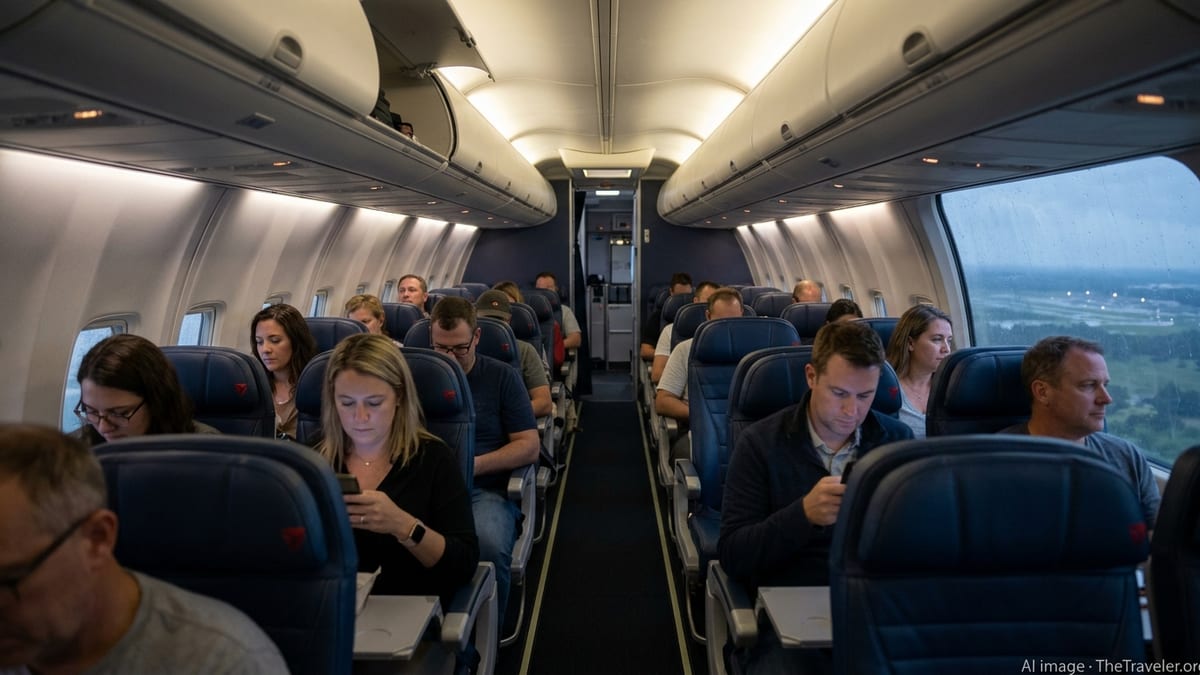
What Happened On The Atlanta To Tallahassee Route
The affected flight was operating on the busy corridor linking Hartsfield-Jackson Atlanta International Airport, the primary Delta hub, with Tallahassee International Airport, a smaller but significant gateway for North Florida. The route typically takes less than an hour, with Delta operating multiple daily frequencies using regional jets and narrowbody aircraft.
Tracking data and publicly available flight information for recent days show that several Atlanta–Tallahassee services have experienced irregular operations, including delays, cancellations, and at least one mid-air diversion. While the precise cause of the latest diversion had not been formally detailed at the time of writing, similar events on nearby routes in recent weeks have been associated with a mix of weather issues in the Southeast, congestion in Atlanta airspace, and operational constraints.
Reports from passengers and aviation tracking platforms typically show a familiar pattern in such events: the aircraft departs as scheduled or slightly delayed, enters a holding pattern near its destination or hub, and then reroutes to an alternate airport to refuel, wait out weather, or resolve a technical or staffing issue before continuing.
For travelers on this particular Atlanta–Tallahassee service, the diversion transformed what is usually a short hop into a multi-hour journey, involving time on the ground at an unexpected airport, revised departure times, and uncertainty about missed connections and overnight arrangements.
Why A Short Regional Flight Might Divert
Even short regional legs like Atlanta to Tallahassee are vulnerable to the same pressures that affect longer domestic and international operations. Aviation data from this winter and early spring highlight how storms tracking across the Southeast, low clouds, and convective weather can quickly slow traffic into and out of Atlanta, creating knock-on delays across Delta’s network.
Air traffic management decisions around Atlanta, the world’s busiest passenger airport by volume, often involve holding arriving flights and temporarily reducing arrival and departure rates. When holds threaten to exceed fuel reserves, or when weather sharpens faster than forecast, flight crews may choose to divert to an alternate airport to refuel and wait for conditions to stabilize.
Operational factors beyond weather can also trigger diversions. Recent coverage of Delta operations has pointed to isolated technical checks, crew availability issues, and cascading delays from earlier legs as contributors to schedule disruptions. Any one of these may prompt a flight crew to abandon an intended arrival sequence and reposition the aircraft elsewhere, prioritizing safety and regulatory requirements.
In the case of the diverted Atlanta–Tallahassee service, passengers experienced a scenario that has become more visible in recent seasons: a short intra-Southeast flight unexpectedly extending into a longer journey because of conditions and constraints far beyond the short flight distance.
Immediate Impact For Delta Passengers
For travelers onboard, a mid-air diversion can be disorienting. Cabin announcements typically advise that the aircraft is rerouting to another airport, but details about timing and next steps may remain uncertain until the crew receives updated information from operations teams on the ground.
Once on the ground at an alternate airport, passengers usually face a period of waiting as the airline determines whether the aircraft will refuel and continue to its original destination or whether travelers will be rebooked onto different services. During active weather or widespread congestion, hotel availability and alternative flights may be limited, particularly for smaller destinations such as Tallahassee that rely heavily on connections through hubs like Atlanta.
Travelers with onward connections are often the most affected. Missed evening links from Atlanta to other U.S. cities, or early-morning departures out of Tallahassee the following day, can ripple into lost workdays, rescheduled meetings, and additional accommodation costs. Those traveling for state government business, university activities, or sports events in Tallahassee may find tight itineraries suddenly compressed.
Families and leisure travelers may also confront practical issues such as rental car pickups, hotel check-in cutoffs, or ground transportation in Tallahassee shifting to very late-night or next-morning arrivals when a diverted flight finally completes its journey.
What Rights And Options Passengers Have
In the United States, compensation rules for flight disruptions differ from some international regimes, but there are still important protections and remedies that passengers can pursue. Publicly available guidance from federal regulators indicates that airlines are responsible for getting travelers to their ticketed destination, rebooking them on later flights when a service is diverted, delayed, or canceled.
When the cause of a diversion is clearly outside an airline’s control, such as severe weather or air traffic control restrictions, financial compensation is not generally mandated. Even so, many carriers, including large network airlines, maintain internal customer-care policies that may include meal vouchers, hotel assistance, or travel credits in certain circumstances, particularly when overnight stays are required and diversion-related delays are extended.
Travelers impacted by the Atlanta–Tallahassee diversion are generally advised to retain all receipts for out-of-pocket expenses such as meals, ground transport, and hotels, and to use the airline’s official customer service channels once home to submit documentation. Travel insurance policies, including coverage bundled with some credit cards, may also provide reimbursements for missed connections and extended delays, depending on policy terms.
Importantly, passengers retain the right to receive updated information about their itinerary, and many recent disruptions have highlighted the value of airline mobile apps, text alerts, and flight-tracking tools that can provide more timely detail than crowded gate areas or busy phone lines during major weather or operational events.
How Travelers On The Route Can Prepare
For future trips between Atlanta and Tallahassee, recent events serve as a reminder that even short regional flights deserve the same level of preparation as longer journeys. Travelers planning time-sensitive arrivals in Tallahassee, such as legislative sessions, university commitments, or major sporting events, may wish to build additional buffer time into their schedules, especially during storm-prone seasons.
Checking weather forecasts not only for Tallahassee but also for Atlanta and the broader Southeast can provide early clues about potential disruption. When significant storms or widespread convective activity are forecast, it may be prudent to schedule earlier departures or consider alternative travel dates where flexibility exists.
Passengers connecting through Atlanta should closely monitor the status of both legs of their trip throughout the day of travel. If significant delays begin to accumulate, contacting the airline early through digital channels can sometimes open options such as rerouting through alternate hubs, waitlisting on earlier flights, or shifting to a different departure time before a diversion or cancellation occurs.
While this week’s diverted Atlanta–Tallahassee service is just one flight among dozens that operate the route each week, its disruption highlights a broader reality for Southeast travelers: even the most familiar short-haul segments can be vulnerable to fast-changing weather and operational pressures, making information, flexibility, and preparation increasingly critical parts of modern air travel.