

Passenger rail is quietly becoming one of the most useful ways to cross Alabama without getting behind the wheel. With daily long-distance service on the Crescent, a revived Gulf Coast connection on the Mardi Gras Service, and a handful of compact but well-located stations, Amtrak offers a relaxed alternative to driving the interstates. This guide explains how Amtrak works in Alabama today, which routes and stations you can actually use, and how to plan a smooth, realistic trip through the state by train.
How Amtrak Works in Alabama Today
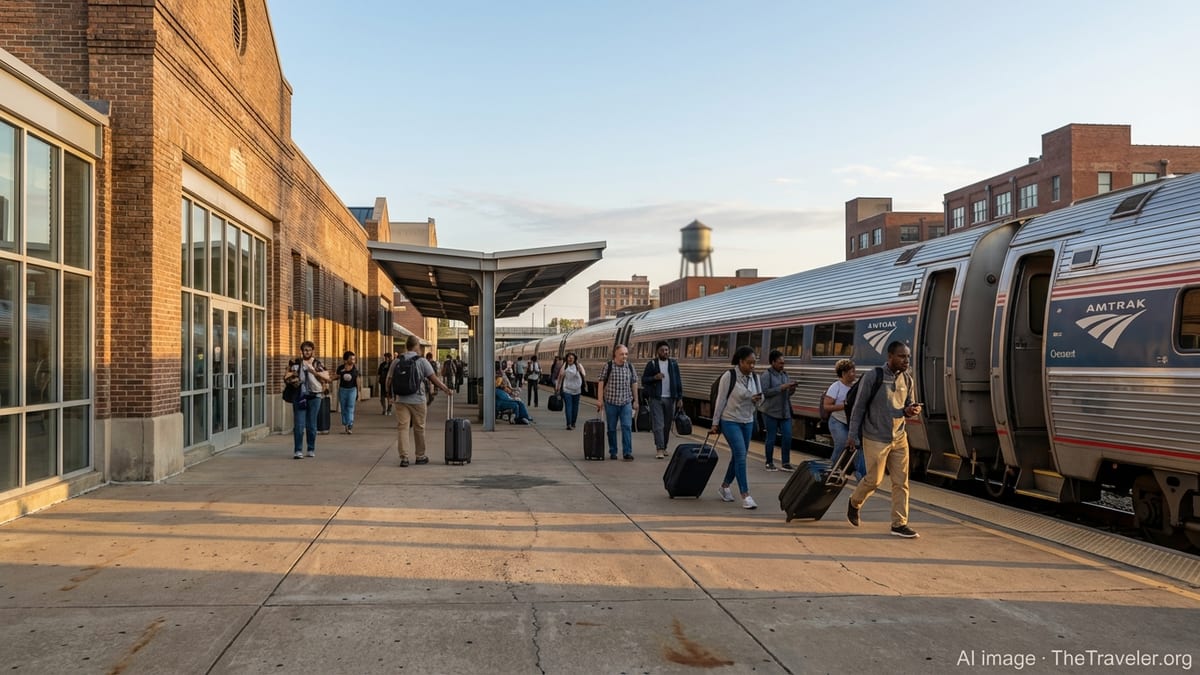
Alabama’s Amtrak network is small but strategically positioned. As of early 2026, the state is served by two primary routes: the long-distance Crescent, which links Alabama with New York and New Orleans, and the Mardi Gras Service, a newer Gulf Coast line that connects Mobile with New Orleans and Mississippi coastal cities. Together they give Alabama residents and visitors a choice between an inland corridor through the central part of the state and a coastal link along the Gulf.
The most important thing to understand is that Alabama’s trains are not commuter lines. They are intercity services that generally run once daily in each direction on the Crescent and twice daily on the Mardi Gras Service. That schedule can feel sparse compared with big-city rail systems, but the trains cover long distances and offer through-service to major hubs like Atlanta, Washington and New York without a change of train.
Because Amtrak runs over freight railroads in Alabama, schedules and arrival times are approximate. Delays are possible, particularly for the Crescent on busy freight segments. For travelers, that means you should build in extra time at the beginning and end of your day and avoid tight same-day connections with flights, cruises or events whenever possible.
Despite these constraints, ridership on Alabama segments has been strong, especially on the Gulf Coast. The Mardi Gras Service between Mobile and New Orleans, launched in August 2025, has already exceeded its first-year projections and continues to carry tens of thousands of passengers along the coast, reinforcing that there is real demand for rail travel in and out of the state.
Key Routes Serving Alabama: Crescent and Mardi Gras Service
The backbone of Amtrak travel in Alabama is the Crescent. This classic overnight train runs between New York City and New Orleans, passing through major southeastern cities including Washington, Charlotte, Atlanta, Birmingham and Tuscaloosa before reaching Louisiana. In Alabama it stops at Anniston, Birmingham and Tuscaloosa, with all three stations positioned close to their respective downtowns.
Northbound, the Crescent takes Alabamians toward Atlanta and then up the eastern seaboard to Washington and New York. Southbound, it heads to New Orleans through Mississippi. Many Alabama travelers ride relatively short segments, such as Birmingham to Atlanta or Tuscaloosa to New Orleans, using the train as a less stressful alternative to driving I‑20 or I‑59. Others use Alabama stations as boarding points for long-distance trips to the Northeast, trading highway or airport time for an overnight train ride with roomy seats and the option to walk around.
On the Gulf Coast, the Mardi Gras Service connects Mobile with New Orleans with intermediate stops in Bay St. Louis, Gulfport, Biloxi and Pascagoula in Mississippi. Regular service began in August 2025 and by early 2026 the route had already carried tens of thousands of riders, bolstered by strong demand during Carnival season. The line currently operates two daily round trips, creating a level of frequency that is rare on Amtrak outside major corridors and allowing realistic day trips in either direction between Mobile and New Orleans.
While there are historic references to other Amtrak routes in Alabama, such as the former Sunset Limited that once ran across the Gulf Coast from Florida to California, the practical reality today is that travelers rely on the Crescent inland and the Mardi Gras Service along the coast. Thruway bus connections can sometimes extend that reach, but those buses, when offered, are scheduled around these two core services.
Understanding Alabama’s Amtrak Stations
Alabama has four active Amtrak stations: Anniston, Birmingham, Tuscaloosa and Mobile. They differ significantly in size, staffing and amenities, so it is worth understanding what each offers before you plan your trip.
Birmingham is the busiest and most fully equipped of the four. The Amtrak facility is part of a larger intermodal terminal on Morris Avenue, integrating train service with local and intercity buses. The modern station, opened in 2017, has an indoor waiting area, restrooms, at least one platform in active use, and more than 100 long-term parking spaces in a nearby city lot. Because it is staffed, Birmingham is the best choice in Alabama if you prefer to buy tickets in person, speak to an agent or wait indoors for a late-night or early-morning train.
Anniston and Tuscaloosa are smaller, unstaffed stations. In Anniston, the restored historic depot sits near downtown and now connects directly to the Chief Ladiga Trail, a rail trail that reaches the Amtrak station. The building is owned by the city and serves as a simple boarding point for the Crescent, with a side platform and a modest amount of parking. Tuscaloosa’s station on Greensboro Avenue is also unstaffed and features a side platform along the Norfolk Southern line. It lies about a mile south of downtown, within a short drive of the University of Alabama, which makes it a convenient option for game day or campus visits if you arrange local transportation in advance.
Mobile’s new role in the Amtrak network comes through the Mardi Gras Service. After years of negotiation and infrastructure work, trains now use a downtown station site close to the waterfront and cruise port, positioning rail travel as a viable complement to cruises and coastal tourism. Facilities and parking are geared to short- to medium-distance travelers heading primarily to and from New Orleans and the Mississippi coast rather than long-distance overnight traffic.
Planning Your Trip: Booking, Schedules and Fares
Because Alabama’s Amtrak services are long-distance lines with limited daily departures, careful planning matters more than it does with frequent urban transit. Schedules can change seasonally, and occasional adjustments are made for track work or major events, so you should always consult live timetables shortly before you travel rather than relying on older printed schedules.
Most travelers book online or through the official mobile app, where you can see current departure times, real-time status updates and the range of available fares. Fares are dynamic and usually depend on demand, how far in advance you purchase, and the time of day or day of the week. For segments such as Birmingham to Atlanta or Birmingham to New Orleans, typical coach fares often span from several dozen to over a hundred dollars one way, while long-distance trips to Washington or New York can cost significantly more, especially close to departure or in peak seasons.
Because trains like the Crescent can depart and arrive at inconvenient hours in Alabama, think through your local transportation carefully. For example, northbound departures from some Alabama stations often occur in the very early morning, while southbound trains may arrive late at night. In unstaffed locations such as Anniston and Tuscaloosa, that means you may be waiting on the platform rather than in an enclosed station, and you should arrange a reliable ride to and from the station rather than counting on casual taxis.
Travelers who want to save money should consider traveling on less popular days, booking at least several weeks in advance and enrolling in Amtrak’s rewards program, which offers points on every ticket that can later be redeemed for free trips. Occasional promotions are available for students, seniors, military personnel and families, and they can bring the effective cost of travel down substantially if your dates are flexible.
What to Expect On Board: Comfort, Amenities and Scenery
On both the Crescent and the Mardi Gras Service, coach class is the most common way to travel. Seats are significantly larger than airline economy seating, with wide cushions, generous legroom, a footrest and a noticeable recline. Overhead racks hold smaller bags, and many cars have individual power outlets at seats so you can charge phones or laptops during the trip. For overnight segments on the Crescent, sleeper accommodations with beds and privacy are available, especially for passengers riding through Alabama on longer trips between New York and New Orleans.
Food and drink are handled through café and dining options that vary by route and class of service. The Crescent typically includes a café car with snacks, simple meals and beverages for all passengers, and a dining car for passengers in sleeping accommodations. The Mardi Gras Service, designed for shorter trips between New Orleans, Mobile and the Mississippi coast, focuses on coach and business class seating with a café service rather than elaborate dining. In both cases, many travelers still choose to bring their own snacks or nonalcoholic drinks to save money and ensure they have their preferred options.
Wi‑Fi and mobile connectivity can be intermittent, especially on rural stretches of track through Alabama and Mississippi. While certain segments may offer reasonable coverage, you should not count on high-bandwidth internet for the entire journey. Downloading entertainment before departure, bringing offline reading material and packing a portable battery pack so you are not reliant on a single outlet all help pass the time more comfortably.
The scenery in Alabama varies with the route. On the Crescent, you see a cross-section of central Alabama, including wooded hills, river crossings and glimpses of small towns, along with urban skylines in Birmingham and, farther afield, Atlanta. On the Mardi Gras Service, the views are dominated by marshlands, coastal communities, bridges over inlets and, as you approach New Orleans, the broad expanse of water and wetlands that define the Gulf Coast. Seating on either side of the train can be rewarding, but travelers who enjoy photography should be prepared for reflections from the glass and the occasional limitation of views in built-up freight yards.
Connections, Local Transport and When Rail Makes Sense
Because Alabama’s Amtrak presence focuses on a handful of cities rather than a dense network, your trip will often involve a mix of rail and other modes. In Birmingham, the intermodal station simplifies this by bringing local buses, intercity coaches and Amtrak together at one site, making it easier to arrive on a bus and transfer to a train or vice versa. That is particularly useful for travelers heading to smaller Alabama towns that currently lack passenger rail service.
In Anniston and Tuscaloosa, there are local transit providers and taxis or rideshare services, but coverage can thin out outside core hours. If you are arriving on a late train or leaving on an early one, pre-booking a taxi, rideshare or hotel shuttle is far safer than assuming a car will be waiting at the curb. Students headed to or from the University of Alabama in Tuscaloosa often organize group rides to align with the Crescent’s schedule, which can help spread the cost and reduce the stress of planning around a single daily train.
Mobile’s Mardi Gras Service opens up new possibilities by linking the city to New Orleans and coastal Mississippi without the strain of driving Interstate 10. For leisure travelers headed to Mardi Gras season events, concerts or weekend getaways, rail avoids parking hassles and traffic backups near major parade routes. The train is also becoming a realistic option for Mobile residents and workers who need to make periodic trips to New Orleans for meetings or cultural events, though the schedule still favors occasional trips rather than daily commuting.
Amtrak can make particular sense for travelers who dislike flying, want more space than a car or coach bus typically offers, or simply prefer the slower rhythm of rail travel. It is also practical for those combining multiple destinations on one trip, such as visiting family in Birmingham, then continuing on to New Orleans without renting a car for the entire journey.
Safety, Accessibility and Practical Tips for Alabama Riders
Safety on board Amtrak trains in Alabama is broadly comparable to other long-distance services elsewhere in the United States. Passenger cars have clearly marked emergency exits, staff are trained in safety procedures, and Federal Railroad Administration standards govern operations. However, as with any rail service, level crossings present risks when motorists or pedestrians ignore signals. Recent coverage has highlighted incidents along the Mardi Gras route where vehicles attempted to cross tracks despite active gates and warning lights, underscoring the importance of respecting rail crossings along the Gulf Coast.
For passengers, the most important safety considerations are routine travel habits: keep an eye on your belongings, be cautious when moving between cars while the train is in motion and use handrails on stairs and in vestibules. Families with children should set clear rules about remaining seated or within arm’s reach in busy areas such as café cars. At smaller Alabama stations, particularly unstaffed ones, visibility and lighting can vary, so waiting in groups, staying aware of your surroundings and arriving shortly before departure rather than extremely early can add to your comfort.
Accessibility has improved in recent years. Stations such as Birmingham have step-free access to platforms via ramps or elevators, and Amtrak trains serving Alabama provide designated spaces for wheelchair users, accessible restrooms and, where needed, mobile lifts at stations without full-length high platforms. Passengers who require assistance should note their needs when booking and plan to arrive early so staff have time to coordinate boarding or alighting.
To make your trip smoother, pack as though you are combining a road trip with air travel: comfortable layers for temperature swings, a small pillow or neck cushion if you will be on board overnight, and a compact bag with medications, documents and valuables that stays with you at your seat. Luggage allowances are generally generous, with several carry-on items allowed per passenger and checked baggage offered at larger stations on select routes, but it is wise to travel light enough that you can move bags up and down a few steps between platform and train without assistance.
The Takeaway
Using Amtrak in Alabama requires a bit more planning than jumping in a car, but the rewards can be substantial. The Crescent links Anniston, Birmingham and Tuscaloosa to Atlanta, New Orleans and the Northeast on a single train, while the Mardi Gras Service restores a vital coastal connection between Mobile and New Orleans with frequent, well-used departures. Together they provide an appealing alternative to interstates and airports for many trips into, out of and across the state.
If you approach Alabama’s trains with realistic expectations about frequency and timing, build in a cushion for possible delays and think through how you will get to and from the station at odd hours, Amtrak can be a relaxed, scenic and surprisingly practical way to travel. For visitors, it is a chance to arrive in the heart of Alabama’s cities without renting a car immediately. For residents, it is a way to rediscover regional travel that feels more spacious and social than a highway drive. With demand strong on both the inland and Gulf Coast routes, rail is likely to remain part of Alabama’s travel story for years to come.
FAQ
Q1. Which Amtrak routes currently serve Alabama?
Alabama is served by two main routes: the Crescent, which stops at Anniston, Birmingham and Tuscaloosa on its way between New York and New Orleans, and the Mardi Gras Service between Mobile and New Orleans along the Gulf Coast.
Q2. How many Amtrak stations are in Alabama and which is the largest?
There are four active Amtrak stations in Alabama: Anniston, Birmingham, Tuscaloosa and Mobile. Birmingham is the largest and only fully staffed station, with an intermodal terminal and extensive parking.
Q3. How often do Amtrak trains run in Alabama?
The Crescent typically operates once daily in each direction through Alabama. The Mardi Gras Service runs two daily round trips between Mobile and New Orleans, providing multiple options per day on the Gulf Coast.
Q4. Can I use Amtrak in Alabama for short trips, or is it only for long-distance travel?
You can use Amtrak for both. Many riders take short trips such as Birmingham to Atlanta or Mobile to New Orleans, while others use Alabama stations as boarding points for long-distance journeys to places like Washington or New York.
Q5. Are Alabama’s Amtrak stations accessible for passengers with disabilities?
Yes, accessibility has improved significantly. Stations such as Birmingham offer step-free routes to platforms, and trains provide designated wheelchair spaces, accessible restrooms and boarding assistance when arranged in advance.
Q6. Is it safe to travel by Amtrak in Alabama, especially at night?
On-board safety standards are comparable to other national Amtrak services, and trains operate day and night. At smaller, unstaffed stations, basic precautions such as staying aware of your surroundings, traveling with others when possible and arranging prompt pickup help ensure a comfortable experience.
Q7. What should I know about luggage when using Amtrak in Alabama?
Amtrak generally allows multiple carry-on items per passenger, with overhead racks and space at the ends of cars. Some stations and routes also offer checked baggage service, but you should confirm availability for your specific train when booking.
Q8. Is there Wi‑Fi on trains running through Alabama?
Some trains offer Wi‑Fi, but coverage can be inconsistent on rural segments, and bandwidth is limited. Downloading entertainment in advance and bringing offline work or reading is the best way to stay occupied.
Q9. How far in advance should I book Amtrak tickets for Alabama routes?
Booking at least a couple of weeks ahead usually provides better fare options, especially around holidays, major events like Mardi Gras and peak travel periods. Last-minute tickets can still be available but are often more expensive.
Q10. Does Amtrak connect Alabama to Gulf beaches like Gulf Shores or Orange Beach?
Amtrak does not go directly to Gulf Shores or Orange Beach. The closest rail access is typically through Mobile or, for inland routes, other Alabama stations, after which travelers connect by car, shuttle or bus to reach the beach communities.