

Portugal is one of Europe’s most card-friendly destinations, but the way you tap, swipe, or withdraw cash can quietly add or save significant money. Understanding how fees, exchange rates, and rewards work on credit cards in Portugal helps you enjoy your trip from Lisbon’s café terraces to the beaches of the Algarve without unpleasant surprises on your statement back home.
How Widely Are Credit Cards Accepted in Portugal?
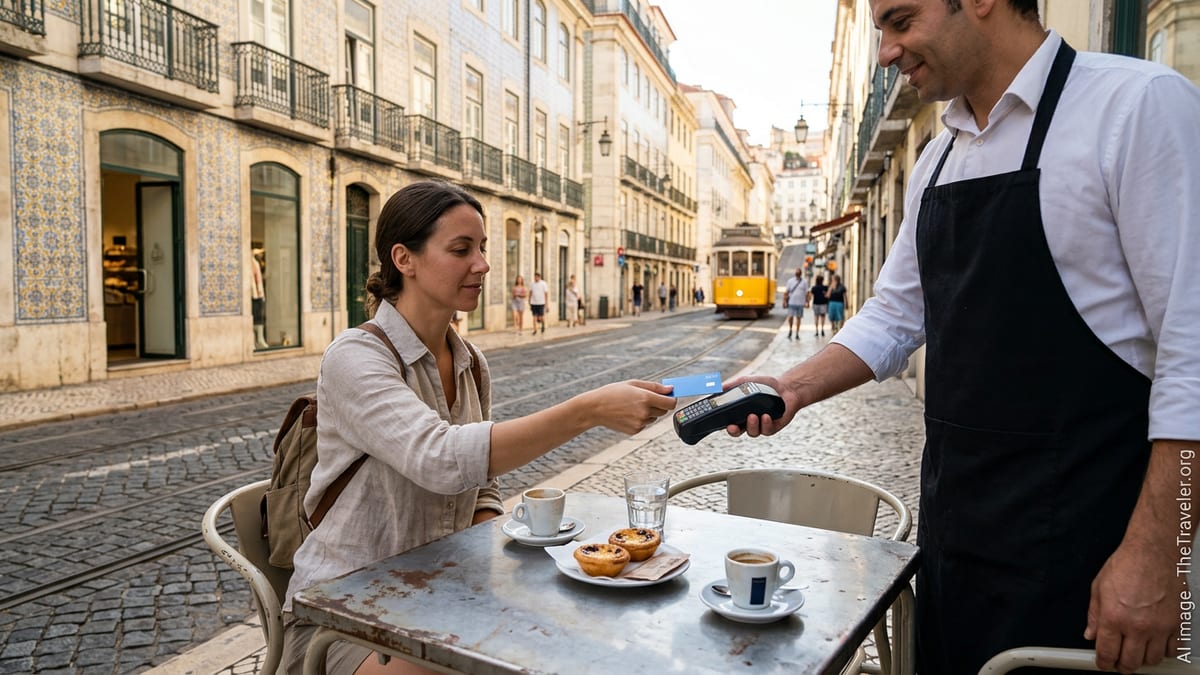
In most Portuguese cities, credit and debit cards are widely accepted at hotels, chain supermarkets, larger restaurants, and major attractions. Visa and Mastercard are the most reliable brands for visitors, with solid acceptance in both tourist hubs and everyday local businesses. Contactless payments are now standard across the country, so tapping a physical card or mobile wallet for small to medium purchases is usually quick and seamless.
American Express is less commonly accepted, especially outside higher-end hotels, upscale restaurants, and some international chains. Travelers who rely heavily on Amex should carry a backup Visa or Mastercard to avoid awkward moments at smaller shops or when paying for fuel, tolls, or public transport tickets. Discover and other niche networks see sporadic acceptance and should never be your only option.
Despite strong card penetration, there are still situations where cash is either preferred or required. Traditional pastelarias, small neighborhood cafés, local markets, independent kiosks, and some village restaurants may impose minimums for card payments or simply choose not to accept cards at all. It is sensible to carry a modest amount of euros for low-value purchases such as coffee, pastries, or bus tickets, particularly outside major urban centers.
Card infrastructure is modern and generally reliable, but technical outages do happen, especially in smaller towns and during busy festival periods. Having at least one backup card, stored separately from your main wallet, plus enough cash for a day or two of essentials, offers a useful safety net if a terminal or specific network temporarily goes down.
Foreign Transaction Fees and Exchange Rates
For many international visitors, the biggest cost when using credit cards in Portugal is not Portuguese fees but the foreign transaction fees charged by their home bank. Many standard credit cards add a fee of around 3 percent to purchases processed outside the home currency. Over a longer trip that can quietly add up to the cost of a hotel night or a domestic flight.
Using a card with no foreign transaction fees is one of the easiest ways to save money while still earning rewards. Banks in the United States, the United Kingdom, and other major markets now issue a range of travel-oriented cards that waive these charges for purchases made in euros abroad. If you travel even occasionally, carrying at least one no-foreign-fee card dedicated to overseas spending is often worth the effort of an application and possible annual fee.
Exchange rates also matter. When you pay in euros and let your card network such as Visa or Mastercard handle conversion, you usually receive a fair market-based rate with only a modest built-in margin. When you allow a merchant or ATM in Portugal to convert the charge into your home currency on the spot, a process known as dynamic currency conversion, the exchange rate can be several percentage points worse.
Because Portugal uses the euro, travelers from other eurozone countries do not face currency conversion when paying by card. They can still encounter certain card-specific fees or charges from their own banks, but they avoid the foreign exchange component entirely. Non-euro visitors, including those from North America and the United Kingdom, should pay particular attention to both their card’s fee structure and the way terminals present currency choices at checkout.
Dynamic Currency Conversion: The Pitfall to Avoid
Dynamic currency conversion, or DCC, is a service where a merchant terminal or ATM offers to charge your card in your home currency instead of in euros. The screen often highlights the familiarity of seeing the amount in dollars, pounds, or another home currency, sometimes suggesting it will protect you from unknown exchange rates. In practice, the conversion rate used is usually worse than the standard network rate, effectively building in an extra fee.
In Portugal, DCC appears on both point-of-sale terminals and some ATMs, especially in tourist-heavy areas. You might see messages asking whether you want to pay in your home currency or in euros, or be shown a “guaranteed rate” with a visible markup compared to a reference rate. While the exact markup varies, paying via DCC can add several percent to the cost of each transaction, on top of any foreign transaction fee your own card issuer may charge.
The most reliable way to avoid this hidden cost is to always choose to pay in euros when asked. If a terminal gives you a choice between your home currency and euros, politely request “in euros” and confirm that selection on the keypad. At ATMs, look carefully for options mentioning conversion or “with conversion” and decline them, even if it means rejecting the prompt more than once before the machine proceeds with a standard euro withdrawal.
Travelers should be prepared for the prompts to appear quickly, sometimes in Portuguese. When in doubt, you can ask the cashier or attendant which option corresponds to paying in local currency without extra conversion. Many staff in tourist areas are familiar with the issue and can guide you, as long as you are explicit that you prefer a normal charge in euros processed by your card network.
Contactless Payments, Mobile Wallets, and PINs
Portugal has enthusiastically adopted contactless payments, and tap-to-pay is routine at supermarkets, metro stations, highway tolls with card lanes, and many cafés. Most terminals accept contactless cards and mobile wallets such as Apple Pay and Google Pay where your card network supports them. Using your digital wallet can add a layer of security because merchants do not see your underlying card number, and it can be convenient if your physical wallet is lost or locked in a hotel safe.
Many small transactions can be completed with a simple tap, though PIN verification may still be required depending on the amount, your card issuer’s security rules, and whether the terminal has seen your card before. Some systems in Portugal request a PIN more frequently for foreign-issued cards as an added anti-fraud measure. Travelers should therefore know and memorize the PIN associated with their primary credit and debit cards before departure.
Chip-and-signature credit cards, common in some markets, generally still work in Portugal but may be slower and occasionally run into issues at unattended terminals such as ticket machines or highway toll booths. When a machine cannot obtain an online authorization or requires a PIN for offline verification, purely signature-based cards may fail. Carrying at least one true chip-and-PIN capable card significantly reduces the risk of being unable to complete a purchase at an unattended kiosk.
While mobile wallets are well supported, they should not entirely replace physical cards. Battery failure, phone loss, or temporary network glitches can interfere with mobile payments at inconvenient times. A layered approach, with at least one physical credit card, one debit card, and a phone-based wallet, gives you multiple paths to complete a transaction if any single method is refused or malfunctions.
Using ATMs and Withdrawing Cash in Portugal
Portugal’s Multibanco network is widely regarded as secure, integrated, and convenient. Bank-operated Multibanco machines are common in cities and towns and typically accessible 24 hours a day. For many travelers, using a debit card or an ATM-enabled credit card to withdraw euros from these machines is the most straightforward way to obtain local cash at a competitive exchange rate.
Privately operated ATMs, including machines in convenience stores, tourist shops, or heavily trafficked sightseeing areas, are more likely to add withdrawal surcharges or offer unfavourable DCC options. While these machines can be convenient when you urgently need cash, they often apply higher fees or poorer rates than mainstream bank ATMs. Whenever possible, prioritize machines physically attached to a bank branch or clearly part of a major Portuguese bank’s network.
Your home bank or card issuer may add its own fees for international ATM withdrawals. These can take the form of a flat charge per transaction, a percentage of the withdrawn amount, an exchange-rate markup, or a combination. Some travel-oriented banks reimburse foreign ATM fees or waive their own foreign withdrawal charges, which can be valuable in a destination like Portugal where cash is still occasionally necessary.
At the machine, slow down and read each screen carefully. If the ATM suggests a fixed conversion into your home currency or presents a “guaranteed rate,” look for an alternate button that keeps the transaction in euros instead. Declining on-screen conversion usually allows your card network to handle the exchange at a more favorable rate, even if your bank separately charges a withdrawal fee.
Managing Rewards: Points, Miles, and Cash Back
Portugal is an attractive playground for rewards enthusiasts because everyday trip expenses can be substantial and varied. Hotels in Lisbon and Porto, apartment rentals along the coast, rental cars, restaurant meals, rail tickets, and museum entries all offer opportunities to earn points, miles, or cash back. Choosing the right card for each type of purchase can effectively rebate a slice of your travel budget.
General travel credit cards often award elevated points on broad travel categories like airfare, accommodations, and car rentals. If your issuer codes major Portuguese hotel chains or regional carriers as “travel,” paying with a premium travel card may earn more rewards than using a generic cash-back card. Similarly, some cards offer bonus earnings on dining worldwide, making them a good fit for restaurant-heavy days sampling petiscos and seafood.
To protect the value of those rewards, it is crucial to minimize fees that erode their benefit. A 3 percent foreign transaction fee can easily outweigh the value of a typical 1 to 3 percent reward return, effectively turning your high-earning card into a poor deal abroad. Whenever possible, align your spending in Portugal with cards that both earn strong rewards on travel or dining and charge no foreign transaction fees.
Redemption strategies also matter. Points that can be used for flexible travel bookings or transferred to airline and hotel partners often deliver higher value than fixed-rate cash back, especially when redeemed for long-haul flights back to Portugal or business-class upgrades. Before your trip, review your rewards programs and sketch a simple plan for how you intend to use the points earned on your Portuguese spending rather than letting them languish unused.
Merchant Practices, Minimums, and Legal Context
Travelers in Portugal are sometimes surprised to encounter handwritten signs at café counters stating that cards are accepted only above a certain minimum purchase, or that only debit cards are allowed for small amounts. While European regulation caps interchange fees at relatively low levels compared to many markets, small Portuguese businesses still face both percentage-based charges and fixed per-transaction costs each time a card is used. For a one-euro coffee, those fixed fees can eat into already slim margins.
These economics explain why some cafés and small shops politely request a minimum spend for card use or prefer domestic debit to foreign credit cards. From a visitor’s perspective, these practices can be mildly inconvenient, but they are part of the local commercial reality rather than an attempt to penalize tourists. Having a few coins or small notes for low-value purchases keeps interactions smooth and avoids putting staff in an awkward position.
Legally, businesses in Portugal must accept cash as a means of payment and may face restrictions on imposing surcharges for card use in certain contexts. In practice, enforcement tends to be light, and norms can vary by region and type of business. Most merchants simply design their payment policies around preserving manageable costs rather than exploiting customers, especially outside the most touristy zones.
Visitors should not be alarmed by occasional refusals of specific foreign cards or networks at small establishments. Instead, treat those moments as reminders to carry at least two different cards from major networks and a modest cash reserve. If a particular café or kiosk cannot process your preferred card, there is usually an alternative nearby that can, or you can pay cash and move on without friction.
The Takeaway
Using credit cards in Portugal is generally straightforward, but the details of fees, currency choices, and merchant practices determine whether your trip is quietly more expensive than it needs to be. Focusing on three pillars choosing at least one primary card with no foreign transaction fees, always paying in euros rather than your home currency, and avoiding high-fee ATMs can dramatically reduce hidden costs without adding much complexity to your travel planning.
A thoughtful mix of payment methods works best. Combine a no-foreign-fee rewards credit card for hotels, dining, and larger purchases with a low-fee debit card for ATM withdrawals, then back them up with a secondary card from a different network plus some cash. Take a few minutes to memorize your PINs, enable mobile wallets, and understand the on-screen language around dynamic currency conversion before you land.
Handled with this mindset, cards become a powerful ally in Portugal rather than a source of stress. You enjoy strong consumer protections, the ability to dispute fraudulent charges, and often valuable travel rewards, all while keeping more euros in your pocket for the experiences that really matter. With a bit of preparation and awareness at the terminal, you can tap and swipe your way across Portugal with confidence.
FAQ
Q1. Are credit cards widely accepted in Portugal?
Credit cards, especially Visa and Mastercard, are widely accepted in cities, hotels, larger restaurants, and supermarkets, though small cafés and markets may still prefer cash.
Q2. Which credit card networks work best in Portugal?
Visa and Mastercard offer the most reliable acceptance. American Express is usable in some hotels and upscale venues but should not be your only card.
Q3. Should I choose to pay in euros or my home currency?
Always choose to pay in euros to avoid costly dynamic currency conversion. Let your card network handle the exchange rate instead of the local terminal or ATM.
Q4. Do I need a PIN for my credit card in Portugal?
Yes, a PIN is frequently required, especially at ATMs and some unattended terminals. Ensure you know the PIN for any card you plan to use before traveling.
Q5. Are ATMs in Portugal safe to use?
Bank-operated Multibanco ATMs are generally safe and reliable. Avoid privately operated machines in tourist areas when possible, and always decline on-screen currency conversion.
Q6. How can I avoid foreign transaction fees?
Use a credit card that explicitly lists no foreign transaction fees and reserve it for purchases in euros abroad. Many travel-focused cards now offer this benefit.
Q7. Do small businesses in Portugal accept cards for tiny purchases?
Some small cafés and shops set minimum amounts for card payments due to fixed processing costs. Carry a bit of cash for low-value items like coffee or bus tickets.
Q8. Is it better to bring cash from home or withdraw in Portugal?
Withdrawing euros from Portuguese bank ATMs using a low-fee debit card usually offers a better rate than exchanging large amounts of cash at home or at airport bureaus.
Q9. Can I rely only on my phone’s mobile wallet?
Mobile wallets work well in many places, but you should still carry at least one physical credit card and some cash in case of battery issues, technical glitches, or limited acceptance.
Q10. What is the best overall card setup for Portugal?
A no-foreign-fee rewards credit card, a backup card on a different network, and a low-fee debit card for ATM withdrawals provide a flexible and cost-effective combination for most travelers.