

Spain’s rail network is one of Europe’s most extensive and increasingly competitive, blending world-class high-speed lines with dense regional and suburban services. Used well, Spanish trains can knit together a whole trip, from art-filled Madrid to Mediterranean beaches and hilltop medieval towns. Used badly, they can mean missed connections, unnecessary surcharges, and long ticket-office queues. This guide explains how to use Spanish trains the right way, with up-to-date information on operators, passes, reservations, and smart strategies for today’s rapidly evolving system.
Understanding Spain’s Rail Landscape Today
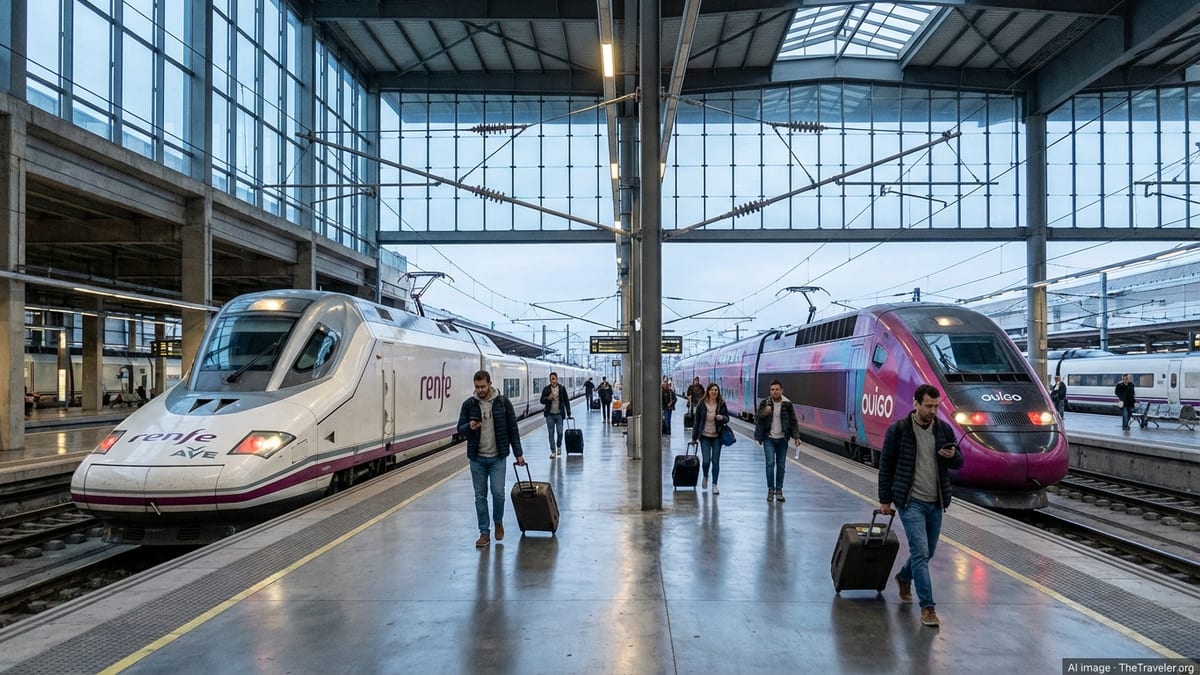
Travelers arriving in Spain often expect a single, unified railway. In reality, the system is now a mix of state-owned and private operators running on a common network, especially on high-speed lines. Renfe, the national operator, remains dominant and runs the flagship AVE high-speed trains, lower-cost services, long-distance and regional routes, and most commuter networks. But on major corridors such as Madrid to Barcelona, Renfe now competes with low-cost high-speed brands like Ouigo España and Iryo, which can offer very attractive advance fares.
This competitive environment has helped push prices down on key routes and increased frequencies between major cities. Travelers can often choose between a premium-style AVE with more space and services, or a stripped-back low-cost option. On top of this, Spain has invested heavily in high-speed infrastructure linking Madrid, Barcelona, Valencia, Seville, Malaga, Alicante, and a growing list of regional hubs. Journey times continue to fall, and the government has signaled plans to allow higher operating speeds on some AVE routes in coming years, which will further compress intercity travel times.
At the same time, the picture is uneven. Some regional lines still rely on older rolling stock, and local disruptions can have big impacts along coastal or mountain stretches. As of early 2026, for example, a landslip near Álora has temporarily cut the last section of high-speed line between Antequera and Malaga, forcing a combined train and bus service and reducing direct high-speed competition on the Madrid to Malaga corridor. Travelers need to be aware of such local issues and check their specific route close to departure.
To use Spanish trains effectively, it helps to think in layers: high-speed and long-distance for cross-country moves, regional services to reach secondary cities and interior provinces, and Cercanías commuter trains for airport links and suburban sightseeing. Once you understand which layer you are using, the rules for tickets, reservations, and flexibility become much easier to manage.
High-Speed Options: AVE, Avlo, Ouigo and Iryo
Spain’s high-speed backbone runs under several brand names, and choosing the right one can dramatically change your experience and budget. AVE is Renfe’s full-service flagship on core routes such as Madrid to Barcelona, Madrid to Seville, and Madrid to Valencia. It typically offers wider seating, multiple classes, quiet cars on some routes, at-seat or lounge-based dining options, and more generous baggage allowances than low-cost rivals. On certain corridors, Renfe is progressively standardizing around AVE for business-heavy traffic, while using lower-cost brands elsewhere.
Alongside AVE, Renfe operates Avlo, a low-cost high-speed brand on routes including Madrid to Barcelona and Madrid to Valencia. Avlo pares back service levels, charges for some extras such as seat selection or additional luggage, and focuses on simple, point-to-point travel. For travelers who book early, Avlo can be excellent value, especially for families or groups comfortable with basic onboard amenities. However, timetables and fleet allocation can change as Renfe reorganizes its offering, so it is wise to confirm which brand is running your chosen train before booking.
Ouigo España, a subsidiary of the French rail operator, and Iryo, backed by Italian and Spanish partners, provide further choice on high-demand routes. Both operate modern high-speed trains with a low-cost or hybrid model. Ouigo often advertises very low headline fares, supplemented by fees for extras such as large suitcases or flexible tickets. Iryo tends to position itself with multiple fare tiers and a somewhat more premium experience while still competing aggressively on price. Because these private operators focus on the busiest high-speed corridors, they are especially relevant if you are planning travel between Madrid, Barcelona, Zaragoza, Valencia, Alicante, or Malaga when the infrastructure is fully available.
With several brands sharing the same tracks, the key for travelers is to compare total trip costs, not just base fares. Add-ons for luggage, seat choice, and changes can quickly erase the advantage of a rock-bottom ticket. It is also worth comparing journey times and intermediate stops. Some high-speed trains run non-stop between major hubs, while others make several calls, which can add half an hour or more. Paying a modest supplement for a faster, more comfortable service can be a better value once you factor in saved time and fewer complications.
Regional, Suburban and Night Trains
Beyond the glamorous high-speed services, Spain’s regional and suburban trains do much of the everyday work of moving people around. Renfe’s Media Distancia and Avant trains link medium-size cities and provincial capitals, sometimes running on high-speed tracks and sometimes on conventional lines. They may not be as fast as AVE or its competitors, but they often offer the most convenient way to reach places like León, Cáceres, Jaén, or smaller coastal towns that sit away from the main high-speed axis. On some routes, modern electric trains provide comfortable seating and air conditioning; on others, equipment can be older but perfectly functional.
In and around the big metropolitan areas, Cercanías (and Rodalies in Catalonia) commuter networks are essential tools for travelers. They connect airports, beach suburbs, and satellite towns with city centers, and they often run very frequently during the day. These trains are typically unreserved, with simple zonal or distance-based fares and tap-in cards available to residents. For visitors, buying a single ticket or short-term pass from vending machines is straightforward once you know the name of your destination station and the relevant line letter or number.
Spain maintains a small but evolving set of night train options, though not on the scale of some Central European countries. Where overnight trains exist, they can help you cover long distances efficiently, but timetables and rolling stock change more frequently than on daytime services. It is important to check current offerings close to your travel date and to book sleeper berths early if comfort matters. Night trains that do run can be popular with budget-conscious travelers wanting to save on accommodation, but they require firm reservations and sometimes have complex fare rules.
Recent years have also seen a wave of policy experiments on commuter and regional fares, including periods of free or heavily subsidized passes for residents, partly in response to energy prices and climate goals. The exact discounts, eligibility rules, and minimum-journey requirements shift over time, so residents should consult the latest information from Renfe and regional governments. Visitors will more often rely on ordinary tickets and tourist-oriented passes, but it is worth keeping an eye on evolving discounts in case a new national scheme becomes accessible to non-residents.
Passes, Tickets and the New Era of Discounts
Choosing between individual tickets and passes in Spain used to be straightforward. Today, with overlapping national and regional discounts and a competitive high-speed market, the calculation is more nuanced. For most short trips or a simple return between two cities, buying advance point-to-point tickets with the operator that offers the best schedule and fare still makes sense. Early-booking promotions on AVE, Avlo, Ouigo, and Iryo can be very attractive, particularly outside peak holiday dates and Friday or Sunday evenings.
For non-resident leisure travelers planning a multi-city itinerary, the Renfe Spain Pass is an important option to consider. Aimed at visitors living outside Spain, it allows you to pre-purchase a fixed number of journeys in either Standard or Comfort class on Renfe’s long-distance and some mid-distance services, including AVE and Avant. You have several months to make your first trip and then around one month of validity after that first use, which suits extended tours. The pass does not cover private operators, and you still need to make seat reservations for each leg, but it removes some of the complexity of buying separate long-distance tickets for every journey.
Residents, meanwhile, have access to an evolving ecosystem of monthly passes and multi-journey tickets on commuter and regional services, which can greatly reduce regular travel costs. In recent years, national policy has shifted from fully free passes on many Cercanías and Media Distancia trains toward heavily discounted monthly products with modest deposits or flat fees, often with better conditions for young travelers and children. Looking ahead, the Spanish government has announced plans for a nationwide public transport pass offering unlimited travel by train and bus for a fixed monthly fee, including a reduced rate for those under 26. Details such as the exact coverage and administrative processes may still be settling, so travelers residing in Spain should check the latest rules before relying on any specific product.
International travelers using Interrail or Eurail passes face a different set of trade-offs. Spain has historically been more restrictive than some neighbors, requiring reservations and surcharges on most long-distance trains and even some regional services. Recent changes have made it easier to obtain these reservations, including improved self-service systems, but capacity is still limited and popular trains can book out. If you plan to rely on a global rail pass across Europe, factor in the need to reserve Spanish legs as early as possible, and consider whether local point-to-point tickets might sometimes be more flexible or cheaper than using a valuable day on your pass.
Seat Reservations, Security Checks and Station Logistics
One of the most distinctive aspects of using Spanish trains is the near-universal requirement for seat reservations on anything beyond local commuter lines. AVE, Avlo, long-distance, and many regional trains require you to hold a specific seat on a specific departure. If you are traveling on a regular ticket bought directly from the operator, this reservation is typically included. If you are traveling with an Interrail, Eurail, or Renfe Spain Pass, you must secure the reservation separately, often for a modest fee but subject to availability. Without this reservation, you may not be allowed to board, even if your pass is valid.
Reservation systems have historically been a point of frustration, especially for international pass holders who had to queue at ticket offices or call hotlines. In the last few years, operators and rail pass providers have gradually introduced better online tools, allowing more high-speed and long-distance reservations to be made digitally. Even so, not every train is available through every channel, and some obscure regional services may still require an in-person transaction. At busy stations in Madrid and Barcelona during summer weekends, ticket office queues can stretch to an hour or more, so advance planning remains essential.
High-speed stations in Spain often blend elements of airport security with traditional rail travel. For AVE and many long-distance services, you will pass through baggage scanners and ticket checks before reaching the platform. These controls are generally smooth and less intrusive than airport screening, but they add a few minutes to the boarding process. It is advisable to arrive 30 to 45 minutes before departure for high-speed trains, particularly if you are unfamiliar with the station layout or need to collect tickets from a machine.
Once you understand station routines, Spanish rail hubs become easier to navigate. Major terminals such as Madrid Puerta de Atocha Almudena Grandes, Madrid Chamartín, Barcelona Sants, Sevilla Santa Justa, and Valencia Joaquín Sorolla have clear signage, large departure boards, and separate zones for regional and high-speed services. Many also feature dedicated lounges for premium-class passengers. Still, you should build in enough time to cross between concourses, especially in Madrid, where long-distance and high-speed tracks are spread out. Platforms usually open around 20 minutes before departure for high-speed trains, and boarding closes shortly before departure time, so being early reduces stress.
Delays, Disruptions and How to Stay Flexible
Spain’s high-speed network has a strong reputation for punctuality, especially on AVE services, but disruptions are an unavoidable part of any rail system. Severe weather events, infrastructure failures, or accidents can close sections of track for days or weeks, as seen in early 2026 with the landslip that severed the high-speed approach to Malaga. In those cases, operators may put in place temporary bus bridges, rerouted services, or reduced timetables that can significantly alter journey times. Local media and operator announcements are the best way to stay informed about such incidents.
For everyday travel, minor delays are usually handled within the timetable’s buffers, but longer delays can trigger compensation policies. Renfe has traditionally offered generous refund conditions for significant delays on AVE and some long-distance trains, and political debate continues over how strict these obligations should be in a liberalized market where private operators compete on the same routes. The precise thresholds and compensation amounts can change through legislation and internal policy revisions, so it is wise to check the current delay compensation scheme close to your travel date and to keep digital copies of your tickets and receipts.
From a traveler’s perspective, the best defense against disruption is flexibility. When planning a long itinerary with multiple train connections, avoid scheduling tightly stacked same-day transfers, especially if a missed connection would jeopardize flights, cruise departures, or expensive events. Build in buffers of at least an hour between separate tickets, and consider booking fully flexible or semi-flexible fares on the most critical segments, even if they cost a little more. For less time-sensitive journeys, you can safely chase the cheapest non-refundable deals, but always weigh the savings against the risk of changes or cancellations.
It also pays to understand your rebooking options. In the event of a significant disruption, staff at station ticket offices and customer service desks can usually rebook you on the next available service, particularly if the problem is on the operator’s side rather than your own. Having your booking reference ready, understanding the alternative routes between major hubs, and keeping a cool head in queues will make the process smoother. If your Spanish skills are limited, keeping key phrases written down or using a translation app can help resolve issues at busy moments.
Onboard Experience, Etiquette and Practical Tips
The onboard experience on Spanish trains varies by brand and route, but certain patterns hold. High-speed AVE services generally offer spacious seating, large windows, quiet air-conditioned cars, and reliable power sockets. Some trains include Wi-Fi, which can be patchy in tunnels or remote stretches. Low-cost brands may have slightly tighter seating and a more functional interior, but still provide a pleasant ride by international standards. Regional and commuter trains range from modern, low-floor units to older stock; in all cases, basic comfort is usually good enough for the distances involved.
Etiquette on Spanish trains is fairly relaxed but not disorderly. People speak at normal conversational volume, and families with children are common on busy corridors, especially at weekends and during holidays. Many travelers bring their own snacks and drinks, even on trains with café-bars. It is courteous to keep phone calls reasonably short and quiet, especially in any designated quiet carriages. Overnight or early-morning departures tend to be calmer, whereas Friday afternoons and Sunday evenings on main routes can feel packed and lively as students and workers move between home and city.
Baggage rules differ across operators and fare classes. AVE tickets often allow several pieces of luggage within generous size and weight limits, while low-cost brands may impose stricter dimensions and charge for larger suitcases. Overhead racks and end-of-car luggage areas are common, but space can fill quickly at peak times. Traveling with one medium-sized suitcase and a small daypack is generally easier than hauling multiple large bags. Keep valuables in a bag you can keep nearby and label your luggage clearly; theft is not widespread but can occur in crowded situations.
A few practical tips will smooth most journeys. Bring a printed or offline copy of your ticket and seat reservation in case of connectivity issues at the station gates. Learn the Spanish terms for basic categories such as ida (one-way), ida y vuelta (return), tarifa flexible (flexible fare), and abono (pass). When moving through the train, be mindful of food and drink, as sudden braking can send unsecured items flying. Lastly, remember that in Spain, rail travel is part of everyday life, not an exotic adventure. Adopting the calm, unhurried attitude of local passengers will make your time on board much more enjoyable.
The Takeaway
Using Spanish trains the right way in 2026 means understanding both the strengths of the system and its current complexities. The country’s extensive high-speed network and multiple operators offer travelers more choice and better prices than ever on flagship routes, while regional and commuter services continue to knit together smaller cities and suburbs. However, those advantages come with conditions: widespread seat reservations, evolving discount schemes, and occasional infrastructure issues that can affect journeys along certain corridors.
For visitors, the key is preparation without overplanning. Compare whole-journey costs across AVE, low-cost competitors, and regional alternatives. Decide early whether a product like the Renfe Spain Pass or a global rail pass fits your itinerary, and secure any necessary seat reservations as soon as your dates are firm. Build generous buffers around critical connections, and treat compensation rules and flexible fares as safety nets rather than afterthoughts. Most importantly, leave space for the spontaneous pleasures that train travel in Spain still delivers: glimpses of olive groves and snow-capped sierras from your window, a quick coffee at the station bar, and the satisfaction of gliding straight into the heart of historic cities without ever setting foot in an airport terminal.
FAQ
Q1. Do I need seat reservations on most Spanish trains?
Yes. High-speed, long-distance and many regional trains require seat reservations, while suburban Cercanías and Rodalies services are usually unreserved.
Q2. Is the Renfe Spain Pass worth it for tourists?
It can be good value if you are a non-resident making several medium or long-distance trips on Renfe within about a month, especially on busy routes.
Q3. Can I use Interrail or Eurail passes easily in Spain?
You can, but expect compulsory reservations and limited passholder quotas on many trains. Book key high-speed legs in advance to avoid disappointment.
Q4. How early should I arrive for an AVE or other high-speed train?
Arrive 30 to 45 minutes before departure to allow for ticket checks, security screening and finding your platform, especially at large stations.
Q5. Are Ouigo and Iryo cheaper than AVE?
They often offer lower advance fares, but you should factor in extras like luggage fees and flexibility when comparing overall value with AVE or Avlo.
Q6. What happens if my train is severely delayed or canceled?
Operators may offer rerouting, refunds or compensation depending on their current policies and the type and length of the delay. Check conditions before you travel.
Q7. Do Spanish trains have good Wi-Fi and power sockets?
Many high-speed and newer regional trains offer power sockets and some form of Wi-Fi, but coverage and reliability can vary by route and operator.
Q8. Can I bring large luggage on Spanish trains?
Yes, but each operator sets its own size and number limits, with stricter rules on low-cost brands. Traveling with moderate-size bags is usually easiest.
Q9. Are there still free or very cheap resident passes in Spain?
Recent policies favor heavily discounted monthly and multi-journey passes over completely free travel, with details and eligibility evolving over time.
Q10. How can I stay informed about disruptions on routes like Madrid to Malaga?
Check operator announcements, Spanish news outlets and station information screens close to travel, especially after major weather events or infrastructure incidents.