

More news on this day
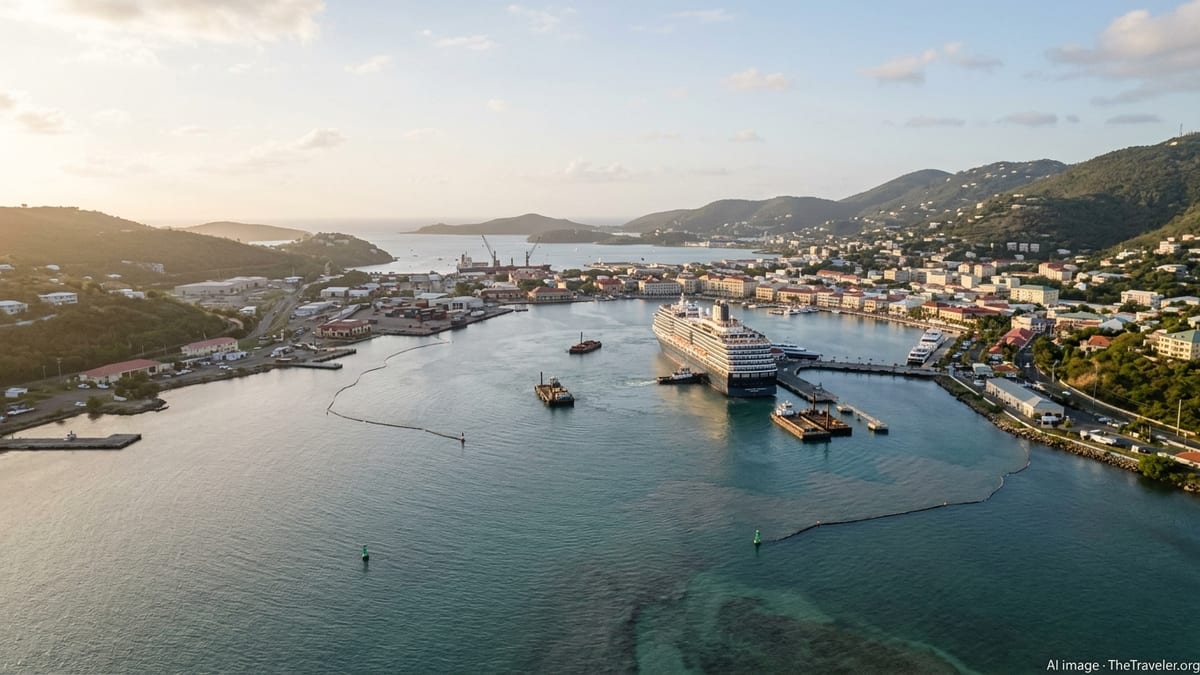
The United States Virgin Islands is moving ahead with a significant expansion of its maritime infrastructure, awarding a dredging contract valued at more than $49 million for Charlotte Amalie Harbor on St. Thomas to increase both cruise and cargo capacity.
Get the latest news straight to your inbox!
Major Investment Targets Cruise and Cargo Growth
Publicly available information from territorial budget documents and port development summaries indicates that more than $49 million in federal and local funding has been committed to the Charlotte Amalie Harbor dredging program, with the Virgin Islands Port Authority, or VIPA, now advancing a primary construction contract intended to execute the core marine works. The award marks one of the largest recent infrastructure commitments in the U.S. Virgin Islands aimed specifically at cruise and cargo competitiveness.
The dredging contract focuses on deepening and widening key navigation areas serving St. Thomas, including the entrance channel, turning basin, and berth approaches used by large cruise vessels calling at Havensight and adjacent facilities. Industry coverage notes that the project has been in planning for more than a decade as cruise lines deploy larger ships that require deeper drafts and more maneuvering room.
Budget testimony and port project listings show that the funding package for Charlotte Amalie Harbor forms part of a broader portfolio of upgrades covering both passenger and freight activity, tying together cruise tourism, marina expansion, and cargo handling improvements at nearby Crown Bay. The new contract is expected to unlock that longer term strategy by moving the long discussed dredging phase into active construction.
Scope of Dredging and Harbor Modifications
According to VIPA project descriptions and commercial tender notices, the Charlotte Amalie Harbor initiative centers on marine dredging designed to improve safe access for large vessels entering the harbor and turning to berth. The work includes removing seabed material along the approach channel, enlarging the turning basin, and increasing depth alongside berths used by the West Indian Company dock at Havensight.
Bid documentation and industry reporting describe an additional component tied to Yacht Haven Grande Marina, where optional dredging can support both maintenance of existing slips and a planned expansion of berthing for large yachts. That additive scope, to be funded by the private marina operator, is structured alongside the main harbor contract to take advantage of mobilized equipment and specialized dredging expertise.
Technical summaries prepared for regulatory review indicate that the overall volume of material to be removed is significant but targeted, aiming to create a consistent navigation depth suitable for the latest generation of large cruise ships while minimizing impacts outside the defined channels and basins. The dredged material is scheduled to be transported to upland sites, including areas being cleared as part of the demolition of the former Adelita Cancryn school property on the St. Thomas waterfront.
Reports on the demolition phase note that once the buildings are removed, the site will serve as a staging and processing area for sediments taken from the harbor, allowing the project team to manage, treat, and transport materials in compliance with environmental conditions attached to federal permits.
Regulatory Approvals and Funding Background
The federal regulatory framework for the project has been in place since mid 2024, when the U.S. Army Corps of Engineers approved VIPA’s permit to dredge Charlotte Amalie Harbor following environmental review. Trade media coverage at the time highlighted the decision as a key milestone that allowed the port authority to proceed with detailed procurement and final design.
Territorial budget documents and public presentations to the Legislature outline a complex funding stack behind the more than $49 million effort. Portions of the financing draw on federal transportation and port infrastructure programs administered through U.S. agencies, combined with local matching funds and VIPA revenue. That structure reflects the territory’s broader approach to upgrading ports, blending federal grants with authority-backed borrowing and user fee revenues.
Finance updates shared in legislative hearings suggest that while VIPA has pursued federal support wherever possible, Charlotte Amalie Harbor remains a nonfederalized port, so the territory carries a greater share of long term dredging and maintenance costs than some mainland counterparts. Project advocates have framed the contract award as a way to leverage available federal dollars now while addressing accumulated needs in navigation safety and capacity.
In parallel, related funding has supported cargo facility improvements at the Crown Bay terminal on St. Thomas, with U.S. Maritime Administration grants helping to modernize storage areas, cargo handling equipment, and terminal surfaces. Taken together, these efforts point to an integrated plan in which dredging, terminal upgrades, and private marina investments are intended to reinforce each other.
Implications for Cruise Tourism and Local Economy
Analyses prepared by port planners and referenced in media coverage emphasize that cruise tourism remains a central pillar of the U.S. Virgin Islands economy, particularly for St. Thomas, where Charlotte Amalie serves as a marquee call in Eastern Caribbean itineraries. Deeper channels and turning basins are expected to allow more frequent visits by the largest ships in major fleets, which typically carry several thousand passengers per call.
Forecasts presented to lawmakers in recent revenue conferences project hundreds of cruise ship calls annually across the territory, with an anticipated increase in arrivals tied partly to improved port infrastructure. For businesses clustered around Havensight, downtown Charlotte Amalie, and the Yacht Haven Grande district, higher passenger throughput could support additional employment in retail, tours, transportation, and hospitality.
Travel industry observers note that competitive pressures within the Caribbean cruise market have grown as ports in neighboring jurisdictions complete their own dredging and terminal expansions. Supporters of the St. Thomas project argue that the new VIPA contract is necessary to ensure that Charlotte Amalie remains on itineraries for the newest and largest vessels, rather than losing traffic to deeper or more recently upgraded ports.
Local commentary has also pointed to potential benefits for small operators, including taxi drivers, excursion providers, and independent retailers who depend on cruise calls for a substantial portion of their income. With the dredging designed to be completed ahead of future peak seasons, the harbor upgrade is widely viewed as an economic measure as much as an engineering one.
Cargo, Resilience, and Long-Term Port Strategy
While cruise tourism dominates headlines, VIPA planning documents describe the Charlotte Amalie Harbor dredging as part of a broader cargo and resilience strategy for St. Thomas. Improved navigation depths and turning capacity can benefit not only passenger ships but also certain cargo and support vessels that supply the territory with consumer goods, construction materials, and fuel.
Coordination with cargo modernization at Crown Bay is expected to provide operational flexibility during adverse weather or busy periods, giving port managers more options for scheduling, berthing, and vessel movements. In a region where hurricanes and severe storms regularly disrupt logistics, expanded port capacity and safer approaches are seen in public reports as a way to strengthen supply chain reliability.
Longer term, VIPA’s published project portfolio suggests that the dredging contract fits into an incremental approach to port development on St. Thomas, including potential expansion of the Crown Bay cruise area and the continued evolution of Yacht Haven Grande as a high end marina and hospitality hub. By first ensuring adequate harbor depth and maneuvering room, the authority is positioning itself to support later phases of landside investment.
As work begins to clear upland staging sites and mobilize marine equipment, the more than $49 million dredging contract for Charlotte Amalie Harbor signals a decisive step toward reshaping St. Thomas’s waterfront for the next generation of cruise and cargo traffic, aligning the territory’s main harbor with trends in global ship design and Caribbean tourism.