

More news on this day
The U.S. Virgin Islands Department of Tourism is using the Routes Americas 2026 air service development forum in Rio de Janeiro, Brazil, to accelerate new and expanded air links into the territory through a focused series of meetings with key airlines and airport partners from across the Americas.
USVI Pivots From Strong 2025 Results to Aggressive Air Growth
Arriving in Rio de Janeiro with fresh momentum, the U.S. Virgin Islands (USVI) delegation is positioning Routes Americas 2026 as a springboard for the next phase of the territory’s air access strategy. After closing 2025 with nearly one million airline passengers through Cyril E. King Airport on St. Thomas and Henry E. Rohlsen Airport on St. Croix, tourism officials say sustained growth now depends on deeper, data-driven partnerships with carriers and hubs across the hemisphere.
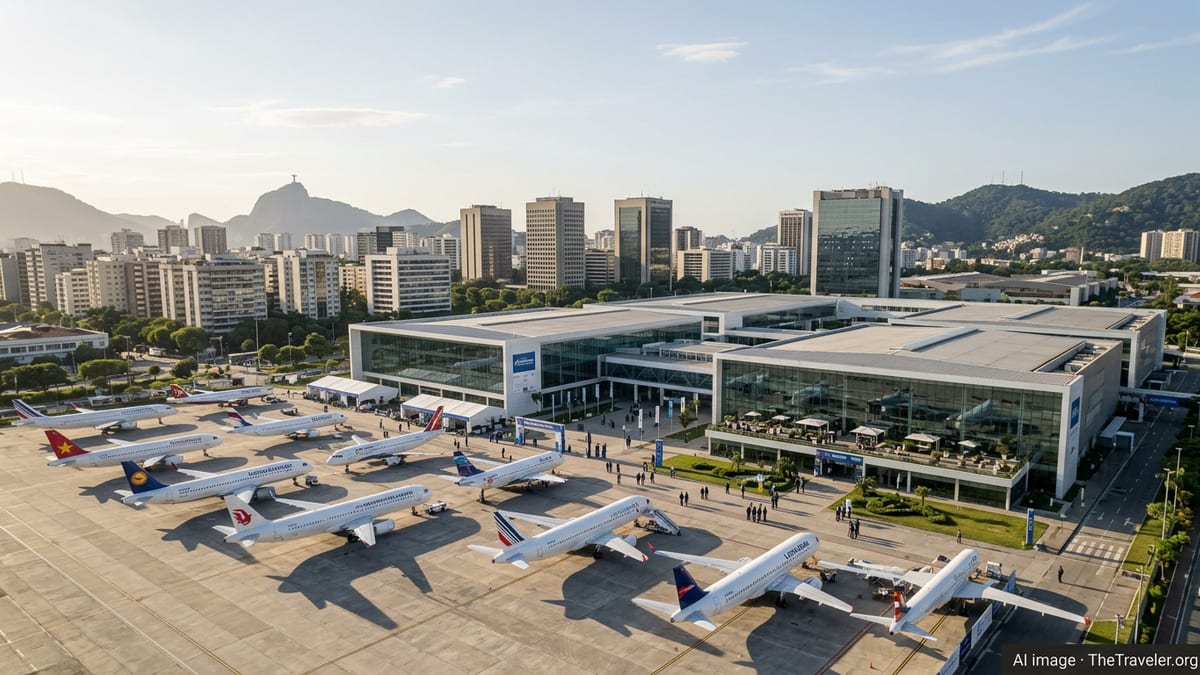
Routes Americas 2026, taking place March 3 to 5 at ExpoRio Cidade Nova, has brought together more than 90 airlines and more than a hundred airports and destinations to negotiate future networks. Within that environment, the USVI team is focused on protecting hard-won capacity gains from core U.S. gateways while also courting new city pairs that can diversify the visitor base and smooth seasonality.
Tourism leaders describe their presence in Brazil as a deliberate shift from short-term, route-by-route negotiations toward a multi-year access plan. That plan links airlift targets with hotel pipeline timelines, cruise schedules and marketing investments, aiming to give carriers greater confidence in the territory’s demand profile.
Strategic Meetings With Legacy, Low-Cost and Regional Carriers
At the heart of the USVI agenda in Rio is a tightly scheduled slate of one-to-one meetings with network planners from U.S. legacy airlines, low-cost carriers and Latin American operators. These closed-door sessions are designed to refine existing schedules into St. Thomas and St. Croix and to explore new nonstop options from secondary U.S. cities that have shown strong outbound Caribbean demand.
Officials are understood to be prioritizing additional shoulder-season frequencies from major East Coast hubs, as well as selective weekend and winter nonstops from the Midwest and Southeast. The objective is to reduce reliance on a handful of gateways and to improve connectivity for travelers who currently face lengthy or costly connections to reach the territory.
Discussions also extend to Latin American and Caribbean carriers that can feed traffic over Brazilian, Panamanian and other regional hubs. While any new services from South America would likely begin as limited, seasonal operations, USVI planners see them as a long-term bet on diversifying source markets and tapping into Brazil’s expanding outbound market.
Airport Partnerships Centered on St. Thomas and St. Croix
The USVI delegation is also using the Rio forum to deepen ties with airport partners that influence route decisions into the territory. Within the U.S., these include large coastal hubs that already host USVI flights, as well as mid-sized airports competing to secure new Caribbean links as part of their own growth strategies.
For Cyril E. King Airport and Henry E. Rohlsen Airport, the message in Rio is that infrastructure and service enhancements are advancing in step with capacity goals. Tourism and airport officials have been highlighting terminal upgrades, apron and runway improvements, and investments in passenger processing and retail, all intended to improve on-time performance and the traveler experience.
By aligning airport development plans with airline expansion timelines, the USVI is aiming to reassure carriers that peak-period congestion and ground handling constraints will not derail growth. At the same time, the territory is looking to airport partners for joint marketing initiatives, co-funded route launches and data-sharing agreements that can strengthen the business case for new services.
Leveraging the Scale of Routes Americas in Brazil
Hosting Routes Americas in Brazil for the first time has concentrated a critical mass of decision makers in Rio, and the USVI team is working to maximize that density. The event has drawn more than a thousand senior executives from airlines, airports and tourism bodies, with organizers expecting around 3,000 pre-scheduled meetings over three days.
For a small island destination, that level of access is difficult to replicate elsewhere. USVI officials are using the conference’s networking sessions, conference program and informal side meetings to reinforce their core messages around reliability of demand, high repeat visitation, and the territory’s position as a U.S. jurisdiction with Caribbean appeal and U.S. regulatory and currency advantages.
Brazil’s own aviation resurgence and infrastructure investments are also part of the context. As Rio de Janeiro positions itself as a connectivity hub for the Americas, the USVI is exploring how partnerships with Brazilian and regional stakeholders might create longer-term opportunities for multi-destination itineraries and shared marketing in South American markets.
Data, Sustainability and Long-Term Route Development
Beyond seat counts and route maps, the USVI delegation is leaning on performance data from 2025 to demonstrate the resilience of its tourism sector. Load factors, average fares and length-of-stay metrics are being used to show airlines that the territory can support additional capacity without undermining yields, particularly in higher-spend visitor segments.
USVI representatives are also engaging with conference sessions that spotlight sustainable aviation fuel, new-generation aircraft and more efficient network planning. They argue that the territory’s relatively short haul from major U.S. gateways, combined with growing interest in responsible travel, can align well with carriers’ efforts to reduce emissions while maintaining profitability.
As Routes Americas 2026 concludes, many of the most important outcomes for the U.S. Virgin Islands will remain under negotiation in the months ahead. However, tourism officials leave Rio emphasizing that the relationships deepened and the commitments signaled in Brazil are already reshaping the trajectory of air access into St. Thomas and St. Croix for 2026 and beyond.