

More news on this day
Utah is preparing for another April dedicated to the stars, with the state’s celebrated Dark Sky Month highlighting a growing network of protected night skies, new conservation initiatives and a packed calendar of events that promise some of the most immersive stargazing experiences on Earth.
Get the latest news straight to your inbox!
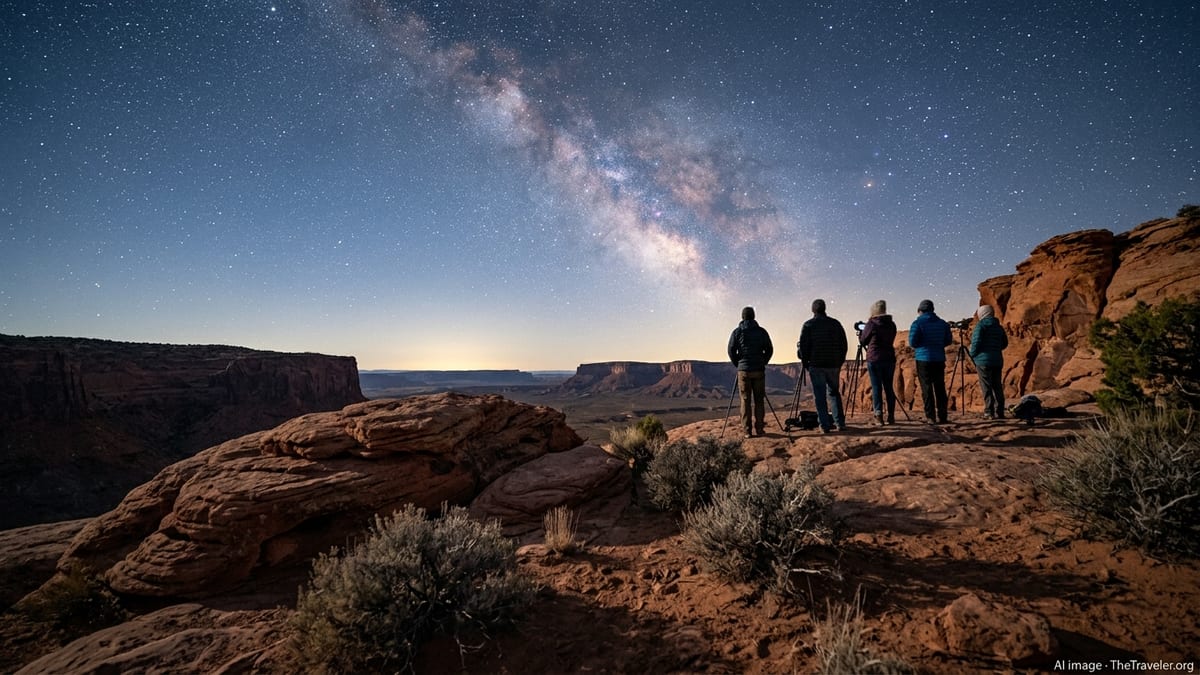
April Is Officially Dark Sky Month in Utah
Publicly available information from the Utah Office of Tourism shows that April has been officially recognized as Dark Sky Month in the state since 2021, turning the heart of spring into a showcase for Utah’s exceptionally clear night skies. The annual designation encourages residents and visitors to focus on light pollution, responsible outdoor lighting and opportunities to view the Milky Way with the naked eye across vast stretches of public land.
Utah’s tourism authorities describe the state as a global hub for night sky experiences, with a high concentration of certified International Dark Sky Places spread from the red rock canyon country of the south to mountain and desert parks in the north. Reports indicate that this cluster of protected dark zones is among the largest such networks anywhere in the world, setting the stage for a particularly compelling travel story each April.
April 2026 is expected to follow the established pattern, with Dark Sky Month overlapping International Dark Sky Week, an astronomy-focused observance that is scheduled each year around the April new moon to maximize natural darkness. The combination of state and international observances is drawing growing attention from astrotourism operators, astronomy clubs and park programs that are aligning special events with the darkest nights of the month.
World-Leading Concentration of Dark Sky Parks
Utah’s claim to stargazing prominence rests on an unusually dense map of officially recognized dark sky sites. Data compiled by tourism and conservation organizations indicates that the state has dozens of accredited International Dark Sky Places, including national parks, national monuments, state parks and rural communities that meet rigorous lighting and sky quality standards. High-profile designations include Natural Bridges National Monument, cited as the world’s first International Dark Sky Park, along with Dead Horse Point State Park and a suite of other locations known for panoramic Milky Way views.
Recent coverage has highlighted how this network continues to expand. In 2025, for example, the town of Bluff in southeastern Utah was recognized as an International Dark Sky Place, joining nearby parks and monuments that already attract travelers for both daytime landscapes and night sky viewing. Reports from regional media and dark sky organizations frame Utah as the center of a growing astrotourism economy, where communities leverage starry skies as a core attraction alongside hiking, biking and cultural tourism.
State parks have become especially important to this story. Utah State Parks documentation notes that many units are now certified or actively pursuing dark sky status, from canyon and desert parks to reservoirs near population centers. These designations require careful changes to lighting, public education and ongoing monitoring to preserve natural darkness, creating conditions where visitors can clearly see the band of the Milky Way, distant constellations and even fainter deep-sky objects on moonless nights.
April Events: Star Parties, Moonlit Paddles and Meteor Showers
For visitors arriving this April, the dark sky focus is more than symbolic. Utah State Parks maintains a calendar of night sky events that features star parties, full moon hikes and other guided programs scheduled through the spring. Recently published listings show April activities such as a full moon paddle tour at Sand Hollow State Park on April 1, 2026, inviting participants to experience reflections of moonlight on desert water while learning about lunar cycles and night sky viewing tips.
Elsewhere in the state, astronomy organizations and nonprofits are preparing their own April programming. Materials from the Bears Ears Partnership, for instance, describe recurring star parties timed with new moons, while regional astronomy societies in northern Utah promote spring star party schedules that often begin in April and continue into the summer. These events typically feature telescopes, informal night sky tours and guidance on how to locate major constellations and planets.
On a broader celestial calendar, April often coincides with the Lyrid meteor shower, which returns annually in the second half of the month. Scientific coverage of the shower notes that the Lyrids can produce dozens of meteors per hour under dark conditions, particularly when the moon phase cooperates. In a place like rural Utah, with minimal artificial light and high desert air, sky watchers can find particularly favorable conditions for spotting these meteors streaking across the sky after midnight or in the early morning hours around the peak.
Travel information also emphasizes practical considerations for April stargazing. Local observers point out that early spring nights can still be cold at higher elevations, and biting gnats are known to emerge in some regions by late April, so visitors are advised to bring layers, insect protection and red-light flashlights to preserve night vision during walks from campgrounds and parking areas.
New Dark Sky License Plate and Growing Conservation Efforts
Beyond individual events, Utah is also advancing policy and funding tools to protect its night skies. In early 2026, documentation shared by dark sky advocates and community forums highlighted the launch of a “Utah’s Dark Skies” specialty license plate, sponsored by Utah State Parks. Revenue from the plate is intended to support night sky conservation, dark sky programming and related outreach across the state park system.
The new license plate reflects a broader trend in which dark skies are treated as a valuable natural resource, similar to wildlife or scenic landscapes. Planning guides circulated in Utah emphasize that dark sky protections can bring significant economic benefits by attracting visitors who plan trips specifically around stargazing. At the same time, these guides stress the environmental and cultural importance of preserving natural darkness for nocturnal wildlife, human health and traditional connections to the stars.
Local and state level planning documents describe practical steps communities are taking, including retrofitting streetlights, revising outdoor lighting ordinances and encouraging businesses to adopt shielded, warmer-colored fixtures. DarkSky International, the nonprofit that oversees many dark sky certifications, outlines criteria that require measurable reductions in skyglow and a clear commitment to ongoing protection, further reinforcing Utah’s long-term investment in its nocturnal environment.
How Travelers Can Experience Utah’s Dark Skies This April
For travelers considering an April visit, publicly available visitor guidance suggests starting with Utah’s roster of dark sky parks and communities, many of which publish up-to-date night sky calendars. Popular options include iconic red rock destinations such as Dead Horse Point and Goblin Valley State Parks, national parks like Bryce Canyon and Capitol Reef, and lesser-known state parks and heritage sites that offer quieter, more intimate observing experiences away from major gateways.
Travel organizations advise planning stargazing sessions around the moon phase, aiming for the week surrounding the April new moon for the darkest conditions, or targeting full moon nights for distinctive moonlit landscapes and special programming. Many parks run ranger-led or partner-led events on weekends closest to these dates, but experienced visitors also recommend unstructured, self-guided viewing from established campgrounds, overlooks and designated night sky viewing areas.
Astrotourism specialists point out that Utah’s dark sky experiences pair naturally with daytime activities, from hiking and cycling to visits to cultural and archaeological sites. This combination allows travelers to structure itineraries that take advantage of cooler daytime temperatures in early spring and crisp nighttime conditions ideal for astronomy. With the state’s official Dark Sky Month focusing attention on conservation and programming, April offers a particularly compelling window for visitors hoping to see the Milky Way arch across the desert or watch a meteor shower far from city lights.