

Understanding utilities and electricity costs in the United Arab Emirates is critical for anyone evaluating a move to the country. Electricity is a major component of household overhead given the need for year-round air conditioning in a hot climate, and charges are structured differently across the emirates. This briefing explains how the system works, what drives bills up or down, and what expatriates should realistically expect to pay under common living arrangements.
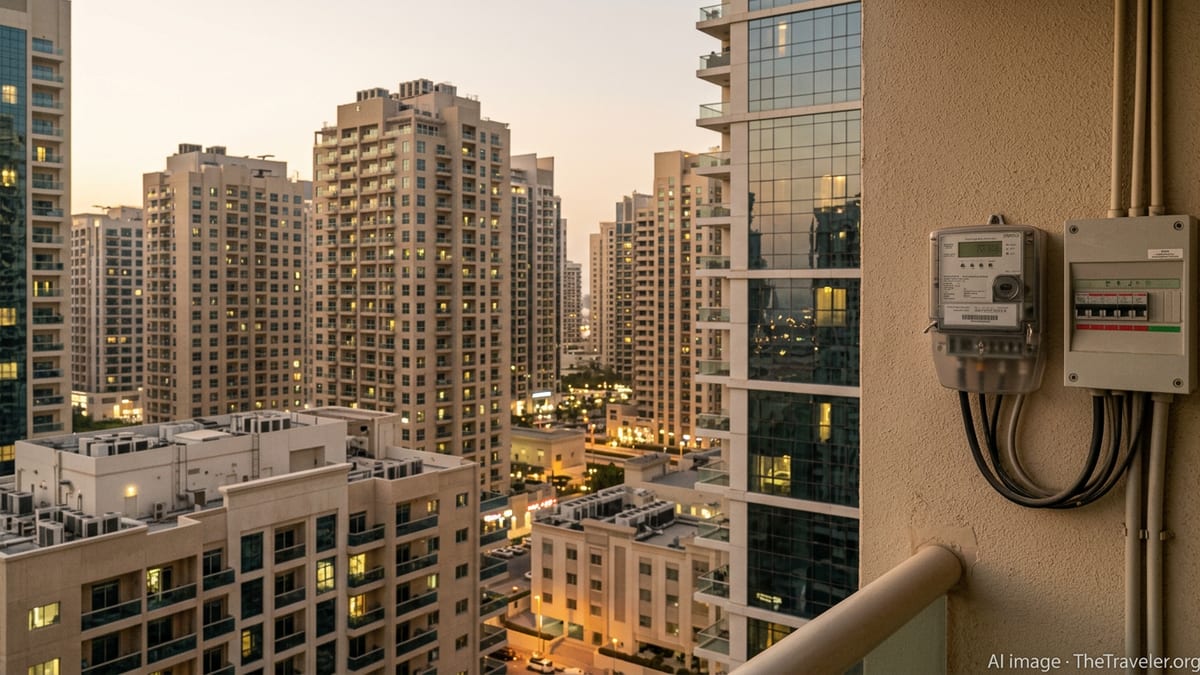
Overview of the UAE Electricity and Utilities Framework
Electricity and water in the UAE are provided by government-owned or government-controlled utilities at the emirate or regional level. Abu Dhabi is served primarily by the Abu Dhabi Distribution Company (ADDC) and Al Ain Distribution Company, Dubai by the Dubai Electricity and Water Authority (DEWA), Sharjah by the Sharjah Electricity, Water and Gas Authority (SEWA), and the northern emirates by the Federal Electricity and Water Authority (often branded Etihad Water and Electricity). Gas for cooking and sometimes for water heating is supplied either through piped networks in newer buildings or via bottled LPG managed by private distributors and building facilities teams.
Tariff structures are not fully unified across the country. Each authority sets its own slabs and fuel surcharges within a broadly similar framework that distinguishes between national and expatriate customers and occasionally between residential, commercial and industrial usage. For relocating professionals, this means the effective cost of electricity can differ meaningfully between, for example, an apartment in Dubai Marina and a villa in suburban Abu Dhabi, even with similar consumption levels.
Electricity consumption per household tends to be high relative to temperate countries. Air conditioning, refrigeration and dehumidification are required for much of the year, and many properties are fitted with multiple split or central AC units. As a result, electricity typically represents the dominant component of the utilities bill for expatriate households, ahead of water, sewerage and gas.
The UAE has historically subsidized energy and water, but reforms have progressively shifted toward more cost-reflective tariffs, particularly for expatriate customers. Foreign residents generally pay higher per-unit rates than citizens, and many slabs are designed to encourage moderate consumption, with prices stepping up above certain kWh thresholds.
Tariff Structures and Key Concepts
Residential electricity tariffs in the UAE are typically structured using tiered blocks, where the unit price per kilowatt hour (kWh) increases after set monthly consumption thresholds. For example, a first block might apply up to a modest usage level suited to a smaller apartment, with subsequent, more expensive blocks designed to capture larger villas or homes with heavy cooling loads. Water often follows a similar block tariff structure measured in cubic meters (m3).
Customers are categorized by nationality and sometimes by housing type. UAE nationals usually receive lower tariffs and higher low-cost blocks, while expatriates are charged at higher rates and may face earlier transitions into upper cost tiers. In practice, most relocating professionals fall into the expatriate residential category, and any online calculators or tariff tables provided by the utilities should be reviewed using that classification.
Several utilities apply fuel surcharges or “fuel adjustment” factors that fluctuate periodically. These adjustments are intended to pass through changes in generation fuel costs and can move overall bills up or down even if headline kWh tariffs appear unchanged. In some emirates there are also fixed monthly service or meter fees that appear on bills regardless of consumption. When benchmarking potential costs, it is important to look at total historical bills rather than only the published per-unit tariffs.
Electricity billing is typically monthly, with digital meters in most urban buildings. Many landlords require tenants to open their own utility account with the relevant authority, which can involve a refundable security deposit and an activation fee. The deposit amount often scales with property type, so larger villas carry higher deposit requirements compared with studio and one-bedroom apartments.
Regional Differences: Dubai, Abu Dhabi and Other Emirates
Dubai and Abu Dhabi, where most expatriate professionals live, have slightly different electricity and water tariff levels and structures. Dubai, via DEWA, generally applies a single expatriate residential tariff ladder across the city, with distinct rates for electricity, water and a sewerage or drainage component that is often linked as a percentage of the water charge. Abu Dhabi, through ADDC and related entities, has its own slab definitions and also differentiates between national and non-national customers.
In broad terms, expatriate electricity tariffs in both emirates result in per-kWh costs that are higher than heavily subsidized rates for citizens, but still moderate by international standards for high-income countries. Lower blocks are priced so that modestly sized apartments with careful AC usage remain reasonably affordable, while higher blocks can become relatively expensive for large villas with extensive cooling, landscaping irrigation and multiple occupants.
Sharjah and the northern emirates operate on yet another set of tariffs under SEWA and the federal provider. Effective rates there can be comparable to or slightly different from those in Dubai and Abu Dhabi, but the key point for relocation planning is that the same household profile could see somewhat different utilities outlays depending on emirate and provider. Prospective movers who are flexible about location often find it useful to model two or three scenarios across emirates for a realistic comparison.
Some free zones and master-planned communities have specific supply arrangements or sub-metered systems where residents pay through a building or community manager rather than directly to a government utility. In those cases, the charges may bundle in cooling from a district cooling provider, service fees and other overheads, which can make line-by-line comparison against standard DEWA or ADDC bills more complex.
Typical Monthly Electricity and Utilities Costs by Dwelling Type
Actual utilities expenditure varies widely with personal comfort preferences, building insulation quality, AC efficiency and occupancy patterns. However, expatriate households considering relocation often need ballpark ranges. For a modern one-bedroom apartment in Dubai or Abu Dhabi occupied by one to two people who use air conditioning sensibly, total monthly electricity and water costs might commonly fall into a moderate range, increasing significantly in the hottest summer months and easing in milder periods.
For a larger three-bedroom apartment or townhouse in a major city populated by a family of three or four, monthly utilities can run substantially higher, especially if AC runs throughout the day and on weekends. A significant portion of the annual utilities budget is typically concentrated in the peak summer period when outside temperatures and humidity demand near-continuous cooling.
Detached villas with private gardens and, in some cases, private pools can see the highest utilities bills. In such properties, electricity consumption is driven not only by internal cooling but also by pumps and equipment, while water use increases with garden irrigation and pool top-ups. Households moving from temperate climates are often surprised by how much climate control dominates utilities for these larger homes, and that monthly bills can exceed informal expectations based on previous countries of residence.
For planning purposes, it is generally prudent for relocating professionals to budget at the upper end of indicative ranges, particularly if they have not yet experienced a full UAE summer. Once settled, consumption habits can be adjusted and real bills used to refine longer-term budget assumptions.
District Cooling, AC and Their Impact on Electricity Bills
Cooling is a defining feature of utilities in the UAE. Many high-rise buildings and newer master-planned communities use district cooling systems, where chilled water is produced centrally and distributed to individual units. In other properties, individual split or central air conditioning units run directly on the apartment or villa’s electricity supply. The way cooling is provided significantly affects how utility costs are structured and billed.
Under district cooling arrangements, residents often receive separate bills: one from the electricity and water authority for standard consumption, and another from the district cooling provider for cooling capacity and consumption. The cooling bill may include a fixed capacity charge based on the size of the unit and a variable energy usage element. This can make the monthly outlay feel high during periods of low usage because the capacity charge still applies, but it may moderate the electricity bill from the main utility, as less direct AC load appears there.
In buildings with individual AC units, the entire cooling load is reflected in the electricity consumption recorded by the meter. Bills can rise sharply in summer when AC runs almost continuously, particularly in poorly insulated or sun-exposed units. Efficient AC equipment, effective shading and disciplined thermostat settings can materially reduce overall electricity consumption, though they may require initial investment or behavioral changes.
Relocating households should therefore investigate how cooling is provided in any shortlisted property, ask for recent full-summer utilities statements from the current tenant or landlord where possible, and factor both the main utility and any district cooling bills into an integrated monthly utilities budget.
Deposits, Billing Practices and Payment Mechanisms
Setting up electricity and water service as an expatriate typically involves providing identification documents, a tenancy contract and a refundable security deposit. Deposit amounts vary by emirate and by property size, and are intended to protect the utility against unpaid bills. These deposits are usually returned, net of any outstanding balances, when the account is closed at move-out.
Utilities are almost always billed monthly, with statements available through online portals and mobile apps as well as email or SMS notifications. Most utilities have modernized their systems to allow for smart-meter readings and automated billing, reducing the need for manual meter checks. Charges on the bill will be broken down by electricity consumption, water consumption, any sewerage or drainage charges, applicable taxes or municipal fees, and fuel surcharges if relevant.
Payment mechanisms are generally straightforward. Residents can pay via online banking, credit or debit card through utility portals, direct debit, and in some cases via kiosk machines, exchange houses or mobile payment apps. Late payment can trigger reminders and, after a defined period, potential disconnection of service, so new arrivals should ensure payment methods are set up promptly once accounts are activated.
Some landlords choose to keep the utilities account in their own name and recharge tenants, particularly in serviced apartments or all-inclusive arrangements. While this can simplify setup for the tenant, it can also make it more difficult to benchmark costs or recover deposits, so lease terms should be reviewed carefully when such arrangements are offered.
Managing and Reducing Electricity and Utilities Costs
Although the climate drives high baseline electricity demand, there is meaningful scope for households to control utilities costs through housing choices and consumption behavior. Property selection is the first decision lever. Well-insulated buildings with modern glazing, shaded facades and efficient central systems can deliver significantly lower kWh usage for the same comfort level compared with older, poorly insulated structures.
Inside the property, thermostat discipline is one of the most impactful levers. Setting AC a few degrees higher than typical default values, using programmable thermostats and switching off cooling in unoccupied rooms can lower both peak and total consumption. Ensuring doors and windows are sealed, blinds or curtains are drawn during the hottest hours, and filters are cleaned regularly can further improve efficiency without reducing comfort excessively.
High-efficiency appliances and lighting also contribute to lower electricity use. Many new refrigerators, washing machines and dishwashers sold locally come with efficiency labeling that allows buyers to compare expected consumption. Replacing halogen or incandescent bulbs with LED lighting, particularly in frequently used rooms, can deliver ongoing savings, though the impact is smaller than optimizing AC usage.
On the water side, installing low-flow showerheads and taps, addressing leaks promptly and moderating garden irrigation can help contain water and associated sewerage charges. For villa residents, automated irrigation timers set to run at optimal times and with appropriate durations can materially reduce excess usage that otherwise goes unnoticed until the monthly bill arrives.
The Takeaway
Utilities and electricity costs in the UAE are a central component of the financial assessment for any potential relocator. The combination of a hot climate, widespread air conditioning and evolving tariff structures targeted differently at citizens and expatriates means that electricity in particular can account for a significant share of monthly living expenses.
Costs vary across emirates, between apartments and villas, and according to whether properties use district cooling or individual AC units. Tariffs are tiered to encourage moderation, and expatriates typically pay higher slabs than nationals, with fuel surcharges and fixed fees adding further complexity to headline rates. Security deposits, billing practices and payment options are broadly standardized and modern, but details differ by provider.
From a relocation planning perspective, the most reliable approach is to obtain recent full-year utilities bills for comparable properties, budget at the upper end of indicative ranges, and then actively manage consumption once on the ground. With informed property selection and disciplined usage, households can achieve comfortable living conditions while keeping electricity and utilities expenditure within planned limits.
FAQ
Q1. Are electricity tariffs the same across all emirates in the UAE?
Electricity tariffs are not fully standardized. Each emirate or regional utility sets its own residential slabs and rates, so effective costs differ between, for example, Dubai, Abu Dhabi and the northern emirates.
Q2. Do expatriates pay more for electricity than UAE nationals?
Yes, most utilities apply lower tariffs and more generous low-cost blocks for UAE nationals, while expatriate residential customers are charged higher per-unit rates, particularly in the upper consumption slabs.
Q3. How significant is air conditioning in a typical UAE electricity bill?
Air conditioning is usually the dominant component of household electricity consumption due to the hot climate, especially in summer, often accounting for the majority of kWh used in apartments and villas.
Q4. What is district cooling and how does it affect my utilities costs?
District cooling provides chilled water from a central plant to multiple buildings. Residents usually receive a separate cooling bill with fixed and variable elements, which reduces direct AC load on the main electricity bill but adds a dedicated cooling charge.
Q5. How much should a single professional budget monthly for utilities in a city apartment?
Budget needs depend on building efficiency and usage, but a single professional in a modern one-bedroom apartment should allow for a moderate monthly range, with higher bills in peak summer months.
Q6. Are there security deposits when setting up electricity and water in the UAE?
Yes, utilities typically require a refundable security deposit when opening an account. The amount varies by emirate and property size and is returned when the account is closed, subject to any outstanding charges.
Q7. How often are electricity and water bills issued, and how can they be paid?
Bills are usually issued monthly and can be paid through online portals, banking channels, cards, mobile apps and sometimes kiosks or payment partners, depending on the utility provider.
Q8. Can utilities be included in my rent instead of billed separately?
Some landlords, especially for serviced or all-inclusive units, bundle utilities into the rent. This can simplify budgeting but may reduce transparency on actual consumption and underlying tariff levels.
Q9. What practical steps can reduce my electricity bill after moving to the UAE?
Key steps include choosing an efficient building, setting AC thermostats moderately, cooling only occupied rooms, maintaining AC units, using efficient appliances and adopting energy-conscious daily habits.
Q10. Do utilities costs change significantly between winter and summer?
Yes, seasonal variation is pronounced. Electricity consumption and bills typically rise sharply in the hottest months due to continuous air conditioning and then moderate during cooler periods.