

Utilities and energy costs are a central component of any relocation budget for Germany. Electricity, heating, water, and basic connectivity can collectively rival or exceed housing ancillary charges, especially in a high-price energy environment. Understanding how German utility markets are structured, how tariffs are calculated, and what cost ranges to expect is essential for assessing the financial feasibility of a move and for negotiating housing arrangements effectively.
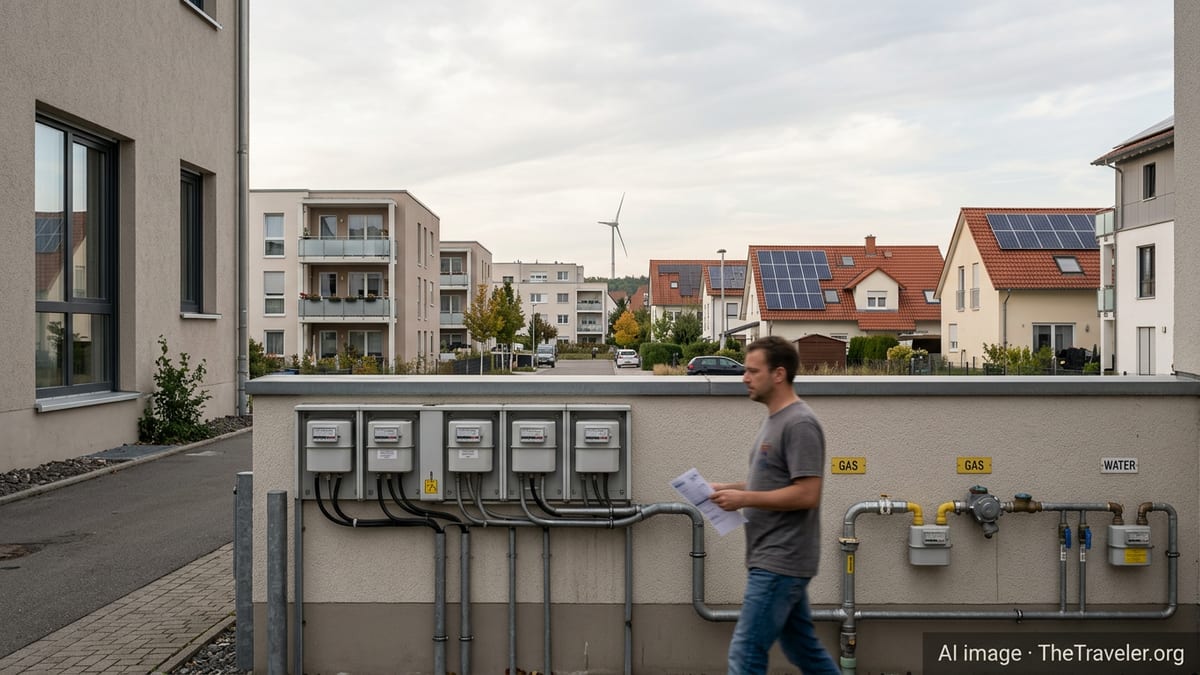
Structure of Utility Markets and Typical Inclusions
Germany operates largely liberalized markets for electricity and gas, combined with regulated local monopolies for grid and pipeline infrastructure. Electricity and gas can usually be purchased from a wide range of retail suppliers, while the local grid operator manages physical delivery and grid fees. By contrast, district heating, water, and waste disposal are typically provided by municipal or regional monopolies with regulated or semi-regulated tariffs.
For relocating households, an initial distinction is whether utilities are billed directly to the tenant or bundled into a monthly service charge (Nebenkosten) collected by the landlord. In many apartment rentals, heating, water, waste disposal, and building services are paid as monthly advances with an annual reconciliation, while electricity and internet are very often contracted and paid directly by the tenant. In single-family homes, it is more common that all energy contracts, including gas or heating oil, are the responsibility of the occupant.
Bundling practices strongly influence cash flow and risk exposure. When heating and water are part of the service charge, sharp price spikes are partially buffered until the next annual settlement. When electricity and gas are contracted independently, the household carries full price risk but may benefit from active supplier changes and fixed-term tariffs. A clear understanding of which utilities are included in the rent and which require separate contracts is therefore a key step before relocation.
New arrivals should also be aware that utility billing cycles in Germany often result in a substantial balancing invoice once per year. Underestimation of monthly prepayments, particularly during periods of elevated energy prices, can lead to significant back payments, while overestimation can result in refunds. Adequate monthly budgeting should factor in the possibility of such adjustments.
Electricity Costs and Tariff Structures
Electricity prices in Germany are among the higher in Europe, driven by network charges, taxes, levies, and the ongoing transformation of the energy mix. Household electricity is typically charged per kilowatt-hour (kWh) with a basic fixed fee per month. As of early 2026, many standard tariffs for new residential customers fall in an approximate band of 0.30 to 0.40 euros per kWh, with modest regional and supplier variation, alongside a basic monthly fee that often ranges around 8 to 15 euros.
Annual household electricity consumption varies significantly with dwelling size, number of occupants, and heating type. A one-person apartment without electric heating might consume in the range of 1,500 to 2,000 kWh per year, while a family of four in a larger home may use 3,500 to 5,000 kWh or more if major appliances and home offices are in constant use. Multiplying expected consumption by current per-kWh prices gives an indicative annual electricity cost which, for a typical household, often lies in a band of roughly 900 to 1,800 euros, excluding exceptional usage patterns.
Tariff design is relatively straightforward compared with some other markets. Dynamic time-of-use or spot-price indexed products exist but remain a niche. Most households choose fixed-price or basic variable tariffs with contract terms between 12 and 24 months. Some suppliers offer discounts for online billing or combined electricity and gas contracts. However, aggressive promotional bonuses that were common in previous years have become less prominent, and contracts should be reviewed carefully for price adjustment clauses and minimum terms.
Relocating professionals should also account for connection or supplier change processes. In most cases, supply is guaranteed by the local basic provider if no contract is actively concluded, but basic tariffs are often more expensive than market offers. It is therefore advisable to transfer or sign a cost-effective contract soon after moving in. Lead times of a few weeks for switching supplier should be considered when planning occupancy dates.
Heating Energy: Gas, District Heating, and Alternative Systems
Heating represents a major component of residential energy costs in Germany due to the climate and typical heating season extending from roughly October to April. The heating system installed in the building heavily influences cost structure. Common systems include individual gas boilers, connection to a district heating network, electric heat pumps, and in older properties, heating oil or night-storage electric heating.
Natural gas prices for households have experienced significant volatility in recent years. At present, many new customer tariffs cluster around an approximate range of 8 to 12 cents per kWh, plus a basic monthly fee. Consumption for space heating and hot water can easily exceed 10,000 kWh per year in a well-insulated apartment and 20,000 kWh or more in a detached house, making annual gas bills for heating alone frequently range from roughly 1,000 to 2,500 euros or higher depending on building efficiency, thermostat settings, and regional climate.
District heating tariffs are generally quoted per kWh of heat delivered with a capacity or basic charge. Price levels vary by network and fuel mix but have tended to be comparable to or somewhat higher than gas on a per-kWh basis in many locations. Unlike gas, district heating customers usually have no alternative supplier, so evaluating the cost profile of a specific network is an important part of assessing a property. Buildings heated by oil or electric systems may face higher or more volatile fuel bills, and such systems may be subject to stricter environmental regulation or replacement timelines as Germany advances its decarbonization policies.
In rented apartments, heating costs are typically part of the monthly service charge, calculated as an estimated prepayment based on historical usage or standardized benchmarks. Actual consumption is measured via heat cost allocators or meter readings, and annual reconciliation allocates costs among tenants, usually according to a mix of consumption-based and area-based components. New arrivals should scrutinize recent service charge statements to understand the real historical heating costs rather than relying solely on estimated advances stated in the rental listing.
Water, Wastewater, and Waste Disposal Charges
Water and wastewater services in Germany are generally provided by municipal utilities or regional associations that operate as local monopolies. Tariffs typically consist of a fixed basic fee linked to meter size and a variable charge per cubic meter of fresh water consumed and wastewater discharged. Effective total prices for combined water and wastewater often fall into an approximate range of 4 to 8 euros per cubic meter, though there is considerable regional variation.
Household water consumption depends on occupancy and behavior, but many utilities estimate typical usage at roughly 30 to 50 cubic meters per person per year. Using these indicative figures, a two-person household could expect annual water and wastewater costs in the rough range of 250 to 600 euros, with higher bills in more expensive municipalities or for higher-than-average usage. Garden irrigation, frequent bath use, or leaks can significantly impact total consumption.
Waste disposal is organized through municipal or regional waste management authorities. Charges are often linked to container size, collection frequency, and household size. In many rental situations, water and waste disposal are included in the service charge rather than billed directly to the tenant. Annual waste charges for a standard household commonly amount to several hundred euros, though specific figures vary according to the local system, separation rules, and bin configurations.
Because water and waste charges are only partially controllable through consumption, particularly in multi-unit buildings, relocation decisions should focus on understanding whether these costs are already incorporated in the quoted rent and on reviewing past annual statements for a realistic picture. Awareness of local recycling and separation requirements is also relevant for avoiding potential penalties or added charges, though these are usually administrative rather than a major budget item.
Internet, Telephony, and Television as Utility-like Services
Although telecommunications are not utilities in the strict legal sense, internet and fixed-line services function as essential infrastructure for most relocating professionals. Broadband access in Germany is provided through a mix of DSL, cable, and increasingly fiber networks. Typical household tariffs for fixed broadband with speeds suitable for remote work often lie in a band of approximately 30 to 60 euros per month, depending on provider, technology, speed, promotional discounts, and contract duration.
Many providers bundle broadband with fixed telephony and optionally television services. Cable television or IPTV packages may add 5 to 20 euros per month to the bill, although streaming-based consumption is increasingly common. In some apartment buildings, cable television fees are embedded in the service charge, although regulatory changes are influencing the extent to which such collective billing is permitted and how tenants can opt out or choose alternatives.
Mobile phone contracts, while outside the strict scope of domestic utilities, should still be factored into connectivity budgets. Typical smartphone contracts with data plans often range from around 15 to 40 euros per month, with premium plans higher. For many international assignees, the combined cost of fixed and mobile connectivity equals or exceeds basic water and waste charges, making telecommunications a meaningful recurring expense alongside energy utilities.
From a relocation planning perspective, the key considerations are service availability at the chosen address, contract terms and cancellation periods, and potential activation or installation fees. Lead times for broadband activation can range from a few days to several weeks, so interim mobile data solutions may be necessary immediately after arrival.
Regional and Building-Specific Variations in Utility Costs
Utility and energy costs in Germany exhibit meaningful regional and property-specific variation. Electricity and gas supplier tariffs are influenced by local network fees, which differ between grid areas, and by competitive conditions. As a result, two households with identical consumption profiles in different regions may face noticeably different energy costs even under similar contract structures. Water and waste tariffs are even more localized, set by municipal utilities and linked to infrastructure and environmental cost factors.
Building characteristics are often more important than regional differences. Older, poorly insulated buildings with outdated heating systems can consume significantly more energy than modern, well-insulated properties that meet recent efficiency standards. For example, a similar-sized apartment in an energy-efficient building may require substantially fewer kilowatt-hours for heating than an older unit with single-glazed windows and limited insulation, producing potentially large differences in annual heating costs even within the same city.
For renters, the German practice of providing an energy performance certificate for most residential properties offers some indication of expected thermal performance. While the certificate does not provide a precise cost forecast, it can help compare properties with respect to expected heating demand. Reviewing historical service charge statements, asking for previous annual gas or district heating bills, and clarifying the age and type of the heating system are all practical steps to avoid unpleasant surprises.
In detached houses, occupants may face additional cost responsibilities such as chimney sweeping, boiler servicing, or filling heating oil tanks, which affect total annual outlays and cash flow. Prospective tenants or buyers of such properties should therefore analyze the full operating cost profile rather than focusing solely on headline energy unit prices.
Managing Risk, Contracts, and Budgeting for Utilities
Given recent volatility in European energy markets, managing utility cost risk is an important component of relocation planning. German households commonly use fixed-price electricity and gas contracts with durations of 12 to 24 months to stabilize costs. While fixed tariffs can be somewhat higher than the most aggressive variable offers, they reduce exposure to sudden price spikes. Prospective residents should consider whether price stability or short-term flexibility is the higher priority, especially if the relocation horizon is uncertain.
Attention to contractual terms is essential. Many suppliers use automatic contract extensions with defined notice periods, often one month or more before the end of the term. Failure to cancel or renegotiate in time may result in continuation under less favorable conditions. New arrivals should maintain a calendar of contract dates and be prepared to review market offers periodically. Consumer comparison portals can assist in benchmarking, although the cheapest tariffs may involve stricter conditions or limited customer service.
From a budgeting standpoint, it is prudent to allocate a margin above calculated average costs to accommodate market fluctuations, colder-than-average winters, or changes in occupancy and teleworking patterns. Households transitioning from milder climates should be particularly conservative when estimating heating demand. For annual planning, a rough combined budget for electricity, heating energy, water, waste, and basic connectivity for a typical family household can easily reach a four-figure euro amount, sometimes rivalling a significant share of annual rent for smaller properties.
Energy efficiency measures can meaningfully reduce consumption over time. While structural improvements depend on the landlord or building owner, occupant behavior such as moderate room temperatures, controlled ventilation, efficient appliance use, and attention to standby losses can limit variable costs. However, behavioral savings have practical limits, and relocation decisions should prioritize intrinsically efficient buildings where possible.
The Takeaway
Germany’s utilities and energy cost landscape is characterized by comparatively high electricity prices, significant heating expenses, and locally determined water and waste tariffs, combined with broad consumer choice in electricity and gas suppliers. For relocating households, the main risks lie not only in elevated unit prices but also in building inefficiency, contract misalignment, and underestimation of annual reconciliations for service charges.
Decision-grade evaluation of a potential relocation should include a systematic review of which utilities are included in rent, likely electricity and heating consumption given building characteristics, prevailing regional tariffs, and the terms of energy and telecommunications contracts. While costs can be managed to some degree through supplier choice and efficiency measures, the structural level of utilities and energy expenses in Germany is materially higher than in many other markets, and relocation budgets should reflect this reality.
Households that proactively analyze property energy performance, obtain recent billing data, and align contract structures with their time horizon are better positioned to control expenditure and avoid unexpected financial pressure. In the context of a well-remunerated assignment or move, utilities and energy costs are manageable but significant, and they warrant the same level of due diligence as base rent and taxation when assessing the overall viability of a relocation to Germany.
FAQ
Q1. How much should a typical household in Germany budget for electricity per year?
For a mid-sized household, indicative annual electricity costs often fall in a rough range of 900 to 1,800 euros, depending on consumption, region, and contract choice.
Q2. Are heating costs usually included in the rent in Germany?
In many apartment rentals, heating is included as an advance payment within the monthly service charge, with actual costs reconciled once per year, but this must be confirmed for each property.
Q3. How volatile are gas and heating costs in Germany?
Gas and district heating prices have shown notable volatility in recent years, so annual costs can vary significantly, making fixed-price contracts and conservative budgeting advisable.
Q4. Do regional differences in Germany strongly affect utility costs?
Yes, regional network fees and municipal tariffs create noticeable differences, but building efficiency and heating system type often have an even greater impact on total costs.
Q5. Are water bills in Germany high compared with other costs?
Water and wastewater are moderate compared with energy, with typical two-person households often paying several hundred euros annually, depending on region and usage.
Q6. What role does the energy performance certificate play for renters?
The energy performance certificate provides an indication of expected heating demand and allows comparison of properties, but it is not a precise forecast of the final bill.
Q7. How long are typical contracts for electricity and gas?
Most household contracts run for 12 to 24 months with automatic extensions and specified notice periods, so monitoring contract dates is important to retain flexibility.
Q8. Is broadband internet generally reliable and widely available?
Fixed broadband coverage is extensive in urban areas and many towns, though connection speeds and technologies vary, and availability should be confirmed for each specific address.
Q9. Can tenants easily change electricity or gas suppliers after moving in?
Yes, tenants can usually change suppliers with limited administrative effort, though switches may take a few weeks, and supply continuity is maintained throughout the process.
Q10. How can new arrivals avoid large surprise back payments for utilities?
Requesting historical bills, setting sufficiently high monthly prepayments, monitoring consumption, and reviewing annual statements closely can help reduce the risk of substantial back payments.