

Utility and energy costs in Italy remain structurally higher than many peer countries in the European Union, even after the sharp price swings following the 2021–2022 energy crisis. For prospective expatriates, understanding how electricity, gas, water and related charges are structured and how they are evolving is critical to building realistic relocation budgets and assessing the long‑term affordability of living in Italy.
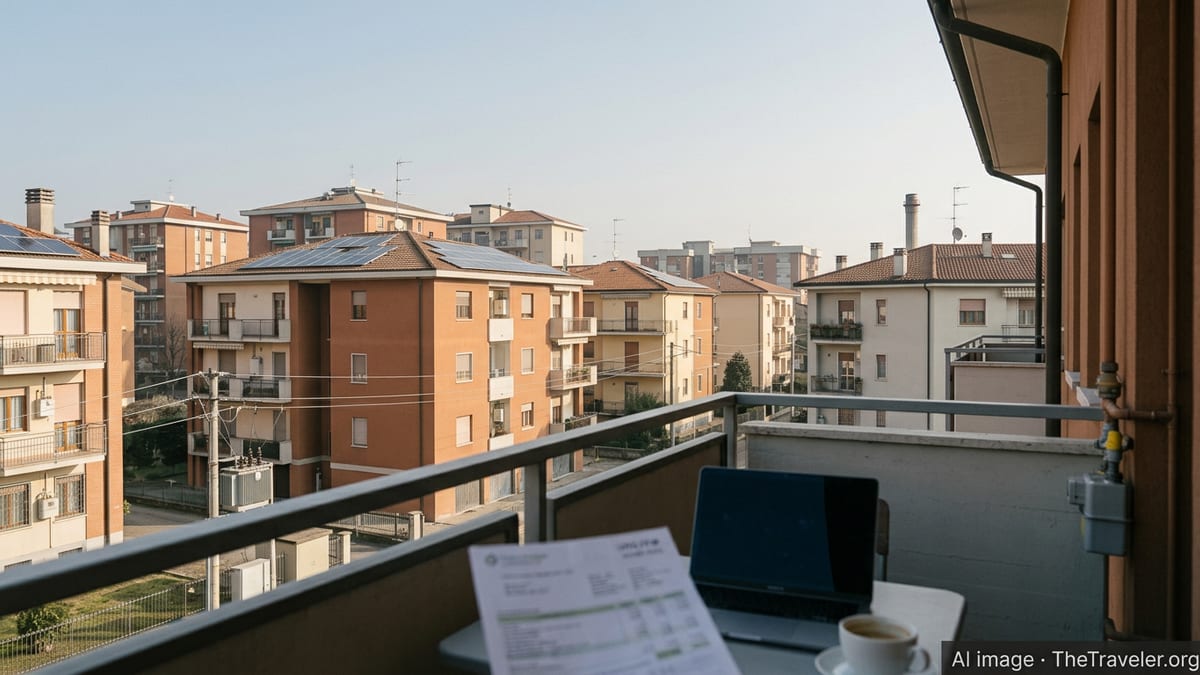
Current Level of Household Energy Prices in Italy
Italy is consistently positioned in the upper tier of EU countries for household energy prices. Recent Eurostat data for the first half of 2025 indicate Italian households paying roughly €0.24–€0.29 per kWh for electricity and around €0.088 per kWh for gas, all taxes and charges included, placing the country above the EU average on both metrics. For a typical medium‑use dual‑fuel household, benchmark comparisons suggest combined annual electricity and gas outlays that are several hundred euros higher than the EU mean, with Italy ranking among the more expensive markets for a standard 60 m² apartment on a like‑for‑like basis.
While headline rates have retreated from the exceptional peaks observed in 2022 and early 2023, they remain elevated in historical terms. Regulatory reports show that average residential electricity prices in Italy decreased modestly in 2024 compared with 2023, narrowing the gap with high‑price countries such as Germany, but they have not reverted to pre‑crisis levels. For gas, Italy experienced one of the stronger increases in household prices between 2023 and 2024 among major Eurozone economies, and by early 2025 Italian residential gas tariffs were among the highest in the EU, partly due to taxation and network cost components layered on wholesale prices.
For relocating households, this means that utilities will typically represent a more material share of monthly outgoings than in lower‑price European markets or in many parts of North America. The precise impact depends on dwelling size, insulation, heating system and consumption behaviour, but prospective expats should assume that Italian energy bills will be toward the higher end of their international reference range.
Structural Drivers Behind Italy’s Energy Cost Profile
Several structural factors help explain why Italy’s household energy prices are relatively high and why they remain sensitive to wholesale market turbulence. Italy imports a substantial share of the primary energy it consumes, with a strong historical reliance on natural gas for power generation and space heating. This import dependence exposes the country to volatility in international gas markets and to geopolitical risk in supplier regions, which can feed quickly into regulated and market‑based tariffs.
Network charges and fiscal components also contribute significantly to Italian end‑user prices. Regulatory breakdowns of gas tariffs for a typical domestic consumer show that the energy component represents only part of the bill; transmission and distribution network fees, system charges and taxes can account for a large share of the final per‑unit cost. A similar pattern is visible on the electricity side, where various system charges and taxes add to the underlying energy and sales component. Even as wholesale prices have moderated since 2023, some of these non‑energy items have remained sticky or even increased, limiting the pass‑through of lower commodity costs to households.
Italy’s generation mix is in transition. Renewable sources, including solar and wind, have grown rapidly and now provide a significant share of electricity output. However, the legacy gas‑heavy system, together with the need to finance grid upgrades and support schemes, continues to influence tariffs. For expats, the key implication is that short‑term relief from lower fuel prices can be offset by structural cost components that keep overall bills high by international standards.
Electricity Supply, Contracts and Household Capacity Constraints
The institutional framework for electricity supply in Italy is in a period of change that affects how households, including expats, pay for power. Historically, many residential customers were served under a regulated “maggior tutela” regime, where the energy regulator set standard conditions and prices. From 1 July 2024, non‑vulnerable residential customers still in this protected regime were automatically migrated to a “Servizio a Tutele Graduali,” a transitional safeguarded service operated by suppliers selected through auctions. This is designed to accompany the full shift to a liberalised retail market while avoiding any interruption in supply for consumers who have not actively chosen a free‑market contract.
As a result, new arrivals will typically encounter three broad contract categories: liberalised market offers, the gradual protection service for certain default customers, and special protected regimes reserved for vulnerable users. In practice, most expats will contract directly on the free market, choosing between fixed, variable or mixed tariffs, with differing structures for time‑of‑use pricing. Market data and consumer association analyses suggest that there can be significant price dispersion between offers and that some liberalised tariffs have, at times, been higher than the regulated or transitional benchmarks for comparable consumption profiles.
An important technical feature in Italy is the standard contracted power capacity for households. Many residential connections, particularly in apartments, are configured around a 3 kW limit. This is sufficient for typical Italian usage patterns but can be constraining for energy‑intensive lifestyles or extensive use of electric heating and cooling. Upgrading to higher capacity is usually possible but often entails a higher fixed charge and, in some cases, different tariff conditions. Expats accustomed to larger electrical loads should factor the potential cost of capacity upgrades into their relocation planning, especially if intending to use electric vehicles, multiple air‑conditioning units or electric water heating.
Gas, Heating and Regional Cost Variations
Natural gas remains the dominant heating fuel in much of Italy, particularly in urban areas of the north and center. Household gas prices in Italy are above the EU average and, as of the first half of 2025, ranked among the highest in the bloc. Regulatory and market data highlight that Italian gas tariffs are heavily influenced by both wholesale benchmarks and by taxes and levies that make up a substantial portion of the final bill. For medium‑size households with standard annual consumption, average prices in late 2024 were notably higher than in many neighbouring countries.
Heating costs, however, vary considerably by region and by building type. Colder northern regions with extended heating seasons will naturally see higher annual gas usage, especially in older buildings with modest insulation. In parts of the south and on the islands, space heating demands are lower, but air‑conditioning electricity use during summer can be significant. Some cities also rely on district heating networks, where users pay for heat delivered rather than individual gas consumption; tariffs for these systems are typically indexed to fuel costs and capital expenditure and can be either competitive or relatively expensive depending on the operator and local regulatory arrangements.
Expats should also be aware that not all properties are connected to the mains gas grid. In certain rural areas and on some islands, heating and cooking may rely on LPG tanks or other fuels, which have their own pricing structures, delivery fees and supplier lock‑in issues. These alternatives can produce energy costs that are less transparent and sometimes higher on a per‑kWh basis than urban mains gas but can also offer more stable budgeting if contracted on longer‑term supply agreements.
Water, Waste and Other Utility Charges
Beyond electricity and gas, water and waste management charges form an important part of the utility picture. Consumer group and regulatory reports indicate that average water tariffs in Italy in recent years have been on the order of a few euros per cubic metre, with considerable regional variation. Some metropolitan areas with heavy infrastructure investment exhibit higher water rates, while other regions remain closer to the national average. Waste collection fees are typically billed separately, often through municipal channels, and are frequently linked to dwelling size, local tax rules and sometimes the number of registered occupants.
In practice, the combined monthly cost of water, sewerage and waste services for a typical apartment is materially lower than electricity and gas outlays but is not negligible. For expatriates arriving from countries where water is heavily subsidised or bundled inconspicuously into rent or local taxes, the explicit billing of these services in Italy may come as a budgeting adjustment. In addition, some municipalities have been progressively revising tariffs to reflect infrastructure renewal needs, which can lead to above‑inflation increases in certain years even when energy prices are stabilising.
Other recurrent utility‑type costs to consider include condominium service charges in multi‑unit buildings, which may incorporate central heating, shared electricity for common areas and routine maintenance. Where heating is centralised, individual apartment occupants may face proportional cost allocations that respond to overall building consumption rather than purely to personal usage, limiting the ability to control bills exclusively through individual behaviour.
Recent Trends, Volatility and Outlook for 2026–2027
Following the acute energy price shock of 2022, Italian authorities introduced temporary interventions such as tax cuts on energy bills and targeted subsidies to cushion households. As wholesale markets cooled through 2023 and 2024, several of these emergency measures were scaled back or redesigned, while the regulator reported an overall decrease in average electricity prices for domestic consumers in 2024 compared with the prior year. For gas, by contrast, Italian household tariffs increased in 2024 relative to 2023, even as the EU average drifted lower, reinforcing Italy’s position as a relatively high‑price market.
By mid‑2025, Eurostat data showed a modest decline in average EU gas prices for households, but Italy remained among the more expensive countries. At the same time, Italian electricity prices, though still above the EU mean, showed some narrowing of the differential with high‑price peers. This divergence reflects the complex interaction of fuel markets, network costs and national tax policies. Looking ahead to 2026 and 2027, most institutional forecasts point to continued price volatility as global gas markets adapt to new supply patterns, combined with ongoing domestic investment in grids and renewables. The net effect for households is likely to be energy bills that are lower and less erratic than at the peak of the crisis but still structurally high by European standards.
Policy developments will also shape the trajectory of utility costs. The gradual phase‑out of legacy regulated regimes and consolidation of the liberalised market may increase competitive pressure on suppliers, but there is no guarantee that this will translate into significantly lower average household tariffs, particularly if taxes and regulated charges remain substantial. At the same time, targeted social bonuses and support for low‑income households are being refined, which can partially shield vulnerable consumers but do not change the underlying cost structure facing middle‑income expatriate families.
Practical Budgeting Benchmarks for Expats
While precise costs depend on many variables, recent benchmarks can help relocating professionals frame realistic expectations for utility spending in Italy. For a modern 60–80 m² apartment occupied by two to three people, combined monthly electricity and gas bills in normal usage conditions typically fall in a broad band from the low hundreds of euros in milder regions to materially higher figures in colder northern cities or where electric heating and heavy air‑conditioning are used. Water and waste charges add a smaller but non‑trivial amount, often equivalent to another few dozen euros per month for an average household, depending on the municipality.
Energy intensity of lifestyle is a critical determinant. Households accustomed to running multiple large appliances simultaneously, maintaining high indoor temperatures in winter and extensive cooling in summer will see higher bills, especially under the standard 3 kW connection capacity, which can trigger higher tariffs or require paid upgrades if regularly exceeded. Conversely, investing in efficient appliances, moderating thermostat settings and taking advantage of time‑of‑use tariffs where available can generate meaningful savings relative to prevailing average bills.
Expats should treat Italian utility costs as a line item requiring careful due diligence during property selection and contract negotiation. Reviewing recent bills for a property, verifying the contracted power capacity, understanding whether heating is individual or central and clarifying what is included in condominium fees are all essential steps to avoid unpleasant surprises. Where possible, comparing alternative electricity and gas offers through neutral comparison tools can help identify tariffs that align with expected consumption profiles, though the savings potential will vary over time with market conditions.
The Takeaway
Italy offers a complex but relatively transparent energy and utilities landscape in which households face structurally higher electricity and gas prices than many European peers, moderated by recent declines from crisis peaks and by targeted support for vulnerable users. The core drivers include import dependence, significant network and system cost components, and evolving retail market structures rather than purely short‑term commodity movements. Regional climate differences, building characteristics and the prevalence of 3 kW residential connections further influence the actual bills expats will face.
For relocation decision‑making, the key message is that utilities in Italy should be treated as a major recurring expense deserving the same level of analytical attention as housing. Prospective expatriates who build conservative assumptions into their budgets, scrutinise property‑specific consumption history and engage actively with the choice of electricity and gas contracts will be best positioned to manage exposure to Italian energy price volatility in the coming years.
FAQ
Q1. Are household electricity prices in Italy higher than the EU average?
Yes. Recent Eurostat data show Italian household electricity prices above the EU average, though the gap narrowed slightly in 2024 compared with earlier crisis years.
Q2. How expensive is residential gas in Italy compared with other EU countries?
Household gas prices in Italy are among the higher levels in the EU, with per‑kWh costs notably above the European mean in 2024 and the first half of 2025.
Q3. How much should an expat budget monthly for electricity and gas?
For a typical apartment and moderate usage, many households should expect combined electricity and gas bills in the low hundreds of euros per month, rising in colder regions or with intensive use.
Q4. Why do many Italian homes have only 3 kW of electrical capacity?
The 3 kW standard reflects traditional consumption patterns and infrastructure design. It is adequate for typical Italian usage but can be limiting for higher‑load lifestyles.
Q5. Can newcomers choose between regulated and free‑market electricity tariffs?
Most new residential customers will contract on the liberalised market, although a transitional safeguarded service exists for certain default users while the legacy protected regime is phased out.
Q6. Are water and waste charges significant compared with energy bills?
Water and waste costs are lower than electricity and gas but still material. They usually add the equivalent of several dozen euros per month for an average household, depending on location.
Q7. Do utility costs vary a lot between northern and southern Italy?
Yes. Colder northern regions have higher heating demand and often larger annual gas bills, while southern areas may spend more on summer cooling but less overall on space heating.
Q8. How volatile are energy bills likely to be over the next few years?
Wholesale markets have stabilised relative to 2022, but Italy’s import dependence and tax structure mean household bills may remain volatile within a generally high price range.
Q9. Is district heating cheaper than individual gas heating?
It depends on the specific network and city. In some areas district heating is competitive, while in others tariffs can be relatively high due to fuel and infrastructure costs.
Q10. What practical steps can expats take to control utility costs in Italy?
Key measures include choosing efficient housing, checking past bills, optimising contracted power capacity, comparing supplier offers and moderating heating and cooling usage.