

Utility and energy expenses are a material component of household budgets in Portugal, particularly for expatriates arriving from markets with different tariff structures and climatic conditions. Understanding how electricity, gas, water and related utility costs are evolving is essential for evaluating the financial practicality of a relocation decision.
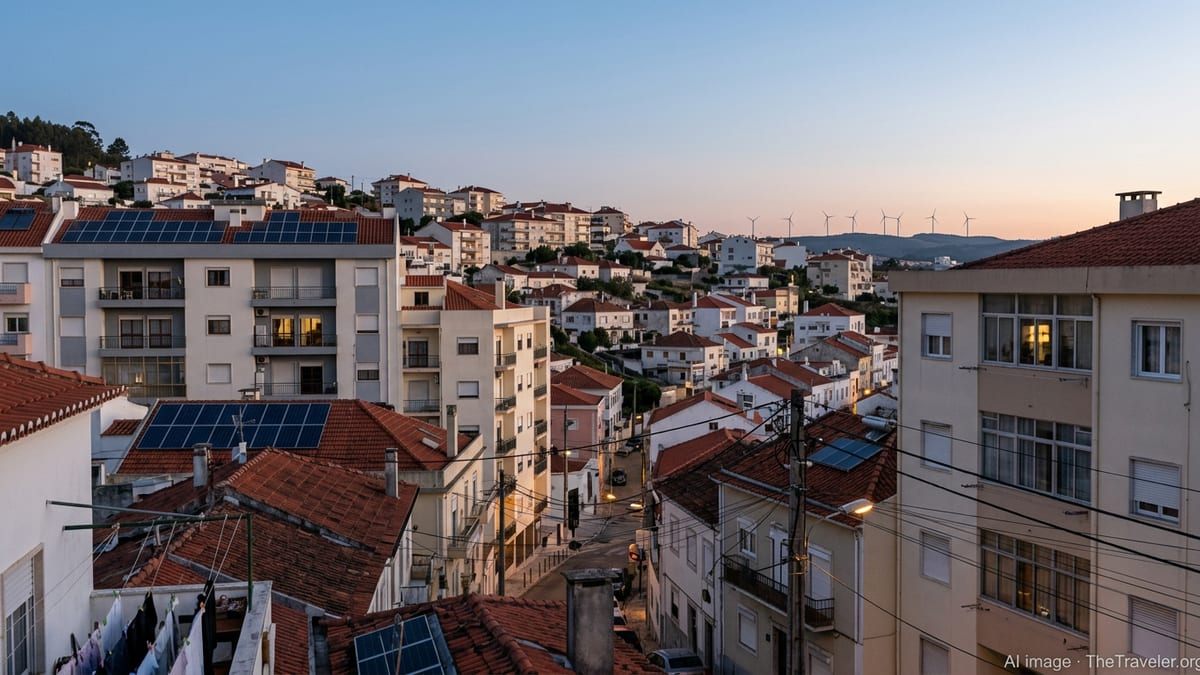
Overview of Utility Cost Levels and Structure in Portugal
Portugal historically ranks among the more expensive European Union countries for household electricity when measured per kilowatt hour, although effective costs vary substantially by tariff type, contracted capacity and provider. Recent estimates for 2024 and early 2025 place typical residential electricity prices in the broad range of approximately €0.18 to €0.30 per kWh on standard fixed tariffs, including network access charges and taxes, with outliers both below and above this band depending on consumption profile and contract. Competitive suppliers, indexed tariffs and promotional offers can reduce the effective kWh rate, but they also increase exposure to wholesale market volatility.
Natural gas is less widely used in Portugal than in many northern European countries, but where network gas is available it is generally priced at mid European levels. Eurostat data indicate household gas prices around the equivalent of €30 to €35 per gigajoule in late 2024, reflecting both commodity costs and system charges. For households without mains gas, bottled liquefied petroleum gas, particularly butane and propane, remains common and can be more expensive on a per unit energy basis than network gas, but with lower fixed charges.
Water, wastewater and waste collection are charged through municipal or concession tariffs, which are highly fragmented by municipality. National overviews suggest an average combined water tariff for domestic consumers around €0.90 per cubic metre, but with very wide variation. Consumer associations have documented annual bill differences of several hundred euros between the cheapest and most expensive municipalities for identical household consumption, driven by local infrastructure costs and tariff policy.
Overall, expatriates should expect utilities to represent a meaningful share of monthly running costs, especially in all electric dwellings with limited insulation. At the same time, recent trends in wholesale electricity prices and the rapid expansion of renewables are creating greater differentiation between tariff types, rewarding informed provider choice and flexible consumption patterns.
Electricity Prices, Tariffs and Recent Trends
Electricity is typically the most significant utility cost for expatriate households in Portugal, particularly in properties that rely on electric space heating, water heating and cooking. The residential market is fully liberalised, so consumers can choose among numerous private suppliers as well as the regulated universal service provider. Bills are composed of three main elements: an energy component per kWh, a daily capacity charge based on contracted power in kVA, and taxes and levies including value added tax.
Standard fixed tariffs, where the price per kWh is constant over the billing period, are the simplest to understand and remain widely used. In 2024 these tariffs often fell in the approximate range of €0.20 to €0.25 per kWh before taxes for average consumption bands, with the final all in cost influenced by the contracted power and applicable VAT rate. Some providers offer time of use tariffs with cheaper off peak "vazio" hours and more expensive peak periods. For households able to shift consumption, such as running appliances overnight, these tariffs can materially reduce the effective kWh cost.
Indexed tariffs, where retail prices track wholesale market prices on the Iberian electricity market, became more prominent as wholesale prices fell from the peaks of the 2022 energy crisis. Reports from 2024 and 2025 indicate that some consumers on indexed tariffs achieved average energy costs close to €0.04 to €0.07 per kWh for the energy component at times of low wholesale prices, although network access charges and taxes still apply. These tariffs can be significantly cheaper on average, but they expose households to potential price spikes in periods of system stress.
Recent policy measures, such as the so called Iberian mechanism that capped gas prices used in electricity generation, along with the growth of wind and solar generation, have helped moderate wholesale electricity prices compared with 2022 levels. At the same time, certain regulated components of bills, notably network access tariffs, have increased, partially offsetting wholesale market gains. For expatriates, the key trend is increasing dispersion between households that actively manage their tariff choice and demand profile, and those that remain on default fixed tariffs with higher unit prices.
Natural Gas, LPG and Heating Energy Costs
Portugal’s climate reduces the need for intensive winter heating relative to northern Europe, but heating energy costs still influence total utility expenditure, especially in older buildings with modest insulation. Network natural gas is available in major urban areas and along key distribution corridors, but coverage is incomplete in smaller towns and rural regions, where bottled gas and all electric heating remain common solutions.
Eurostat and national statistics show household gas prices in Portugal in the first and second halves of 2024 broadly in line with the European Union average in euro per unit of energy terms, after a period of elevated prices in 2022. Values around €30 to €35 per gigajoule, inclusive of taxes, place Portugal in a mid range position within the bloc. Government support measures adopted during the energy crisis, including temporary tariff adjustments and social tariffs for vulnerable consumers, have largely been phased down as wholesale gas prices stabilised.
Where mains gas is not available, bottled LPG is typically purchased in 11 to 45 kilogram cylinders from fuel retailers or supermarkets. Per unit of useful heat delivered, LPG is usually more expensive than network gas but can still be competitive with electric resistance heating when electricity prices are high. Bottled gas has the advantage of no fixed monthly supply charge, which can be relevant for small or infrequently occupied households, but it requires manual ordering and cylinder handling.
Expatriates should note that in Portugal many dwellings rely on electric space heaters and air conditioning units for winter heating rather than central systems powered by gas. This can result in sharp seasonal spikes in electricity bills during colder months if devices are run for extended periods. From a budgeting perspective, it is prudent to treat heating as primarily an electricity cost unless the property clearly specifies mains gas heating or modern high efficiency heat pump systems.
Water, Wastewater and Municipal Service Tariffs
Water and wastewater services in Portugal are provided either directly by municipalities or by municipal companies and private concessions, resulting in a highly decentralised tariff landscape. Studies of the Portuguese water market and consumer association surveys highlight pronounced geographical disparities in tariffs, even for identical consumption patterns. For an illustrative annual consumption of 120 cubic metres, differences of several hundred euros between the lowest and highest cost municipalities have been documented.
Domestic tariffs commonly apply increasing block structures, where the first consumption band is priced relatively low and subsequent bands become progressively more expensive. The intent is to promote conservation by penalising excessive use, but this structure can inadvertently penalise larger households where higher consumption is driven by occupancy rather than waste. Average combined water and wastewater tariffs for moderate domestic consumption are often referenced around €0.90 per cubic metre nationally, though local figures can be significantly lower or higher.
In recent years some municipalities have introduced “family tariffs” or specific large household tariffs, which adjust the block thresholds upward for families with five or more registered residents. In practice this can reduce the effective price per cubic metre for qualifying households by a notable margin compared with standard residential tariffs. However, coverage of such schemes is incomplete, and administrative registration is often required to benefit from them.
Municipal waste collection charges may appear on the same invoice as water services or be billed separately, depending on local arrangements. These charges are usually structured as monthly fixed fees, sometimes scaled by dwelling type or water meter size, and in some cases partially linked to water consumption. For expatriates, the critical trend is that while national averages offer a reference point, local water and waste tariffs can materially influence monthly outgoings, making location specific checks advisable when comparing housing options.
Impact of the Renewable Energy Transition on Household Costs
Portugal is one of Europe’s leaders in renewable electricity. Data from the national grid operator indicate that in 2024 roughly 70 percent of mainland electricity demand was met from renewable sources, predominantly hydro, wind and a rapidly growing share of solar generation. Renewable penetration has continued to increase through 2025, with periods in some months where more than two thirds of generation comes from renewables and occasional intervals of fully renewable supply to the grid.
This structural shift has several implications for household energy costs. First, increased renewable capacity, particularly solar, has contributed to lower wholesale electricity prices in many hours of the day compared with the peak crisis period in 2022. Second, price volatility has risen as the system depends more on variable wind and solar, leading to stronger price differentials between peak and off peak hours. Third, distributed generation through rooftop solar is becoming more accessible, with falling panel prices and growing offers of self consumption packages from utilities and installers.
For expatriates, the renewable transition mainly affects costs through tariff design and potential self generation. Time of use and indexed tariffs can align household consumption with periods of abundant renewable generation, reducing effective energy costs. In properties equipped with rooftop solar, daytime electricity use can be supplied at effectively zero marginal cost once the system is installed, significantly lowering bills for high consumption households that are present at home during daylight hours.
Policy objectives foresee renewable electricity reaching around 80 percent of consumption in the next few years, with expanded solar and offshore wind capacity in development. While exact impacts on retail prices are uncertain and influenced by regulated charges, the medium term trend suggests continuing opportunities for households that adopt flexible tariffs, smart metering and self consumption to reduce their utility expenditure relative to static fixed tariff users.
Seasonality, Building Characteristics and Consumption Patterns
Beyond nominal tariff levels, actual utility costs for expatriates in Portugal are strongly conditioned by property characteristics and household behaviour. Many residential buildings, particularly older ones, have modest insulation, single glazing and limited central heating. This means that winter comfort often relies on portable electric heaters or reverse cycle air conditioning units, which can significantly increase electricity consumption during cold spells even in a relatively mild climate.
Seasonal patterns in electricity bills can therefore be pronounced. Households that maintain high indoor temperatures with resistance heaters can encounter winter electricity bills several times higher than their summer bills, especially in larger dwellings. Conversely, those who accept lower indoor temperatures or rely on zoned heating can keep increases more moderate. Air conditioning use in summer, while relevant, generally contributes less to annual consumption than winter heating in many interior and northern regions.
Water consumption also shows seasonal variation, though usually less extreme than electricity. Outdoor water use for gardens, terraces or pools, where present, can materially raise summer bills, especially in municipalities with steeply rising block tariffs. Wastewater charges linked to water consumption will follow the same pattern, magnifying the effect of higher summer water use.
From an analytical standpoint, expatriates considering relocation should factor in that headline tariff figures understate the dispersion in real household utility expenditure. Properties with good energy performance, modern glazing and efficient heating and cooling systems can substantially mitigate the impact of relatively high per unit energy prices. Conversely, poorly insulated properties combined with intensive device use can produce unexpectedly high bills even at moderate headline tariffs.
The Takeaway
Utility and energy costs in Portugal are a significant, though manageable, component of expatriate household budgets. Electricity prices per kilowatt hour are relatively high in European terms, particularly on standard fixed tariffs, and capacity charges and taxes add materially to final bills. Natural gas, where available, is priced around the European average, while bottled gas can be cost effective for specific usage patterns but requires more active management. Water and municipal service tariffs display strong regional disparities, meaning that location within Portugal can influence monthly utility costs as much as national pricing trends.
At the same time, Portugal’s rapid renewable energy expansion, the availability of indexed and time of use tariffs, and the growing feasibility of rooftop solar create new avenues for cost optimisation. Households that adapt consumption to tariff structures, invest in basic efficiency measures and understand local water and waste tariffs can moderate their overall utility exposure. For relocation decision making, the key consideration is not only the level of tariffs but also the flexibility to influence the actual bill through property choice, contract selection and usage behaviour.
Prospective expatriates evaluating Portugal should therefore treat utility and energy costs as a variable factor that depends on micro level choices as much as macro level trends. Detailed due diligence on the energy performance of potential properties, the availability of mains gas, the structure of local water tariffs and the range of electricity offers in the chosen municipality will provide decision grade clarity on expected monthly utility outlays after relocation.
FAQ
Q1. Are electricity prices in Portugal higher than in most other EU countries?
Electricity prices for households in Portugal are generally on the higher side of the EU range when measured per kilowatt hour, although the exact ranking shifts over time and depends on taxes and network charges. Effective costs can be reduced by choosing competitive tariffs and optimising contracted power.
Q2. How much should an average expatriate household budget monthly for electricity?
For a typical apartment using electricity for lighting, appliances and some heating or cooling, many households see bills in the approximate range of €40 to €90 per month, with larger or all electric homes potentially higher, especially in winter. Actual amounts depend heavily on usage and tariff choice.
Q3. Is mains natural gas widely available in Portugal?
Mains natural gas is available in major cities and many larger towns but does not cover the entire country. In smaller centres and rural areas, properties often rely on bottled gas or all electric systems, so availability must be checked for each specific location.
Q4. Are bottled gas solutions significantly more expensive than mains gas?
Bottled LPG typically has a higher unit energy cost than network gas but no fixed monthly supply charge. For high heating demand properties, mains gas is usually more economical, while for low or intermittent use, bottled gas can be competitive.
Q5. How variable are water and wastewater bills across Portugal?
Water and wastewater tariffs are set locally and can vary substantially between municipalities. For the same consumption, annual bills can differ by several hundred euros, so local tariff structures should be reviewed when comparing locations.
Q6. Do larger families benefit from special water tariffs?
In many, but not all, municipalities there are “family” or large household tariffs that adjust consumption blocks to the number of residents, reducing the penalty from progressive tariffs. Registration and proof of household size are usually required to access these schemes.
Q7. How does the renewable energy transition affect household utility bills?
Higher shares of wind and solar have contributed to generally lower wholesale electricity prices compared with the 2022 crisis period and created greater price variation by hour. Households using indexed or time of use tariffs can benefit by shifting consumption to cheaper, more renewable intensive periods.
Q8. Are rooftop solar installations common and cost effective for households?
Rooftop solar is becoming more common in Portugal as panel costs decline and self consumption offers expand. For properties with adequate roof exposure and daytime usage, self generated solar can significantly reduce electricity bills over the medium term.
Q9. How strong is seasonality in energy bills in Portugal?
Seasonality can be marked, particularly in properties that rely on electric space heating in winter. Winter months can show electricity bills several times higher than summer, while water bills usually vary less unless there is extensive outdoor use in warmer months.
Q10. What is the most important step for an expat to manage utility costs effectively?
The most critical steps are to verify the energy performance and heating system of the chosen property, compare electricity suppliers and tariff types before signing a contract, and understand local water and waste tariff structures. These decisions have more impact on annual costs than minor day to day usage changes.