

More news on this day
Uttarakhand is stepping up efforts to position itself as an “ultimate” travel destination, combining ancient Himalayan pilgrimage routes, high-octane adventure tourism and a fast-expanding network of roads, ropeways and heli-services designed to handle record visitor numbers.
Get the latest news straight to your inbox!
Spiritual Heartland Targets Global Pilgrims
Long known as the “Land of the Gods,” Uttarakhand is sharpening its spiritual tourism pitch around marquee circuits such as the Char Dham, Haridwar, Rishikesh and a growing network of temple and astro-spiritual routes. Recent public messaging has highlighted the state’s potential to emerge as a spiritual capital for international visitors, drawing not only Hindu pilgrims but also wellness and yoga travelers seeking immersive Himalayan experiences.
According to published coverage, official statistics in recent years have counted tens of millions of visitors annually, underscoring the scale of faith-based travel into the hill state. Haridwar’s ghats, Rishikesh’s ashrams and meditation centers, and the high-altitude shrines of Kedarnath, Badrinath, Gangotri and Yamunotri continue to anchor this appeal, with hospitality operators reporting strong demand for longer spiritual retreats rather than short stays.
New thematic offerings are being promoted alongside the classic pilgrimage trails. Public documents and tourism reports reference initiatives such as a Navagraha Circuit and Shiva-centric routes in different regions, aimed at packaging smaller shrines and local traditions into coherent journeys. Cultural festivals, folk performances and local cuisine experiences are being positioned as essential parts of the spiritual itinerary, rather than add-ons.
At the same time, debates around overtourism and ecological stress in pilgrimage hubs are prompting authorities and civil society groups to call for tighter visitor management. Discussions in policy papers and public forums have included ideas such as timed entry, capacity caps and dedicated spiritual zones with stricter construction controls to preserve the character of sacred sites.
Ropeways and Expressways Redraw the Pilgrimage Map
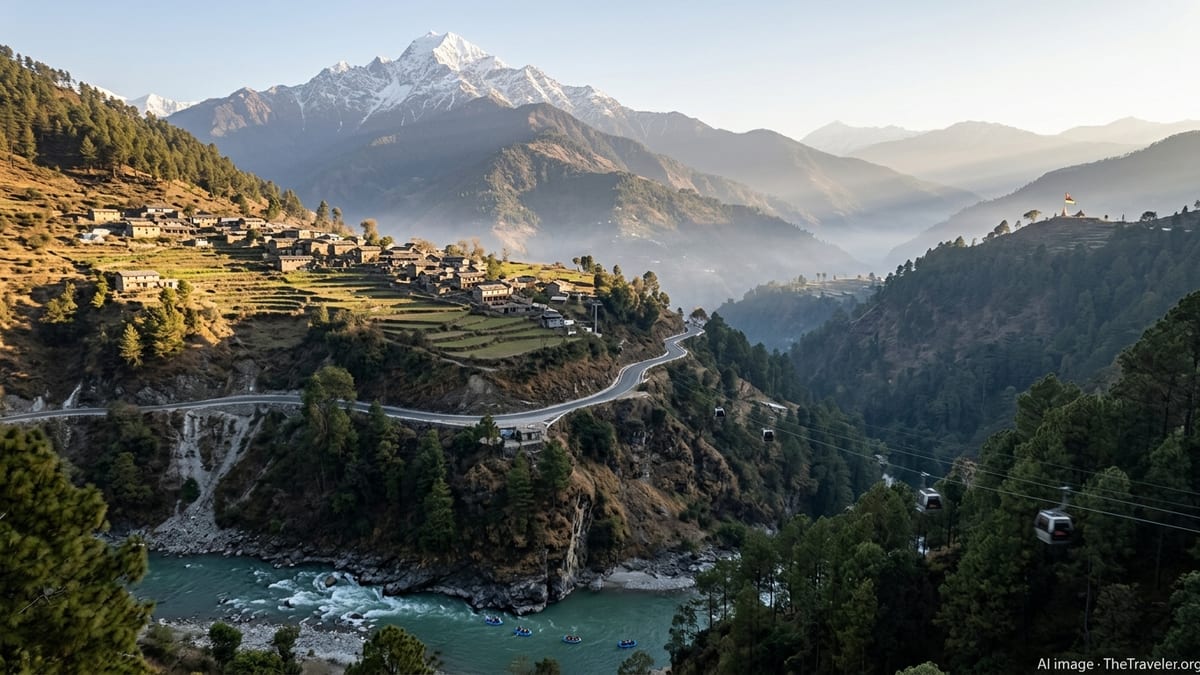
Infrastructure upgrades are rapidly changing how travelers move through Uttarakhand’s steep valleys and fragile mountain roads. Under the central Parvatmala ropeway program, two flagship projects from Sonprayag to Kedarnath and from Govindghat to Hemkund Sahib have been cleared with multi-thousand-crore investment, using advanced tricable gondola technology to cut arduous treks of eight to nine hours down to under an hour, according to recent infrastructure reports.
Industry analyses indicate that the Hemkund Sahib ropeway is being designed to handle up to 11,000 passengers per day, while the Kedarnath alignment is planned to carry thousands of pilgrims in each direction. State-level reviews in late 2025 placed these among a group of six priority ropeway schemes, with instructions to sequence construction in phases and synchronize ancillary facilities such as parking, power and rescue services.
On the ground, this ropeway push is unfolding alongside improvements to the Char Dham Highway project and the partially opened Delhi–Dehradun expressway, which now offers faster access from the National Capital Region into the foothills. Publicly available information shows that sections of the expressway were opened to traffic with dedicated wildlife corridors and tunnels, marketed as examples of “green” highway design intended to balance connectivity with conservation.
Transport planners and environmental researchers continue to flag trade-offs. While shorter travel times and safer all-weather routes are expected to boost economic activity in remote districts, scientific assessments and investigative reports have raised concerns over landslides, habitat loss and pressure on townships such as Joshimath. The state’s evolving regulatory framework for slope stabilization, muck disposal and building controls is increasingly central to the future of its “ultimate travel experience” promise.
Adventure Capital With a High-Altitude Edge
Beyond pilgrimage, Uttarakhand is actively marketing its rivers, glaciers and forests as an adventure playground for domestic and international visitors. Rishikesh has grown into a rafting and bungee-jumping hub, while Auli’s ski slopes, Pithoragarh’s trekking routes and the alpine meadows of the Valley of Flowers attract hikers and mountaineers during the summer and monsoon windows. Travel trade publications describe the state’s ambition to be counted among South Asia’s leading adventure destinations.
Tourism policy documents emphasize global marketing of adventure products, including guided treks, rock climbing, paragliding, mountain biking and winter sports. Regional conventions of tour operators in 2025 focused on safety standards, guide training and standard operating procedures, reflecting a push to make adventure offerings more professional and internationally competitive.
Helicopter access is emerging as a key component of this adventure ecosystem. Agreements between the state tourism board and security agencies, as well as new action plans released by the civil aviation development authority, outline expanded heli-services to connect Char Dham shrines, Munsiyari and other remote valleys. Reports indicate that additional helipads and small heliports are under development to shorten evacuation times and open up lesser-known trekking bases to time-pressed travelers.
These developments have also prompted conversations about carrying capacity on river stretches and mountain trails. Environmental commentaries point to episodes of temporary heli-service suspensions and rafting regulations as signs that the state is experimenting with ways to reconcile high demand for adventure with river health, noise concerns and local community interests.
Air, Rail and Border Tourism Initiatives Gain Pace
Improved regional connectivity is another pillar of Uttarakhand’s tourism strategy. Dehradun’s Jolly Grant Airport has seen expanded domestic services, and publicly available plans highlight interest in additional airstrips and upgraded terminals to handle rising tourist footfall. Combined with the Delhi–Dehradun expressway and feeder highways, these air links effectively bring major pilgrimage and adventure hubs within a day’s travel for large segments of the Indian population.
Rail upgrades tied to national programs are also changing access patterns. Enhanced links to Haridwar and Rishikesh have already shortened journeys for northern and western India, and long-term discussions around rail extensions deeper into the hills remain part of broader connectivity debates. While timelines can shift, tourism stakeholders often cite rail accessibility as a decisive factor in attracting budget-conscious travelers.
Border tourism is receiving fresh attention. In early 2025, a memorandum of understanding between the Uttarakhand Tourism Development Board and Indo-Tibetan Border Police outlined cooperation in promoting tourism in frontier villages, according to national newspaper reports. The initiative aims to create homestay-based income opportunities, support reverse migration from the plains and give visitors a closer look at Himalayan border cultures and landscapes.
Such efforts dovetail with the central government’s Vibrant Villages scheme, which encourages tourism and cultural experiences in remote settlements near international borders. In Uttarakhand, these programs are being framed as a way to blend strategic presence, livelihood support and experiential travel in areas that were historically overlooked by mainstream tourism.
Sustainability and Community at the Core of Future Growth
As Uttarakhand courts larger numbers of spiritual seekers and thrill enthusiasts, sustainability questions are moving to the center of policy conversations. Investigative features and academic work have documented groundwater stress, disappearing natural springs and biodiversity threats in parts of the Himalayas, linking some of these trends to rapid hotel construction, road widening and unmanaged waste from mass tourism.
In response, recent planning documents from the state highlight commitments to augment infrastructure at tourism centers with a stronger focus on environmental safeguards. Proposals mentioned in public records include better solid-waste systems along pilgrimage corridors, stricter norms for riverbank construction, dedicated eco-parking zones and expanded use of ropeways to cut road traffic on sensitive stretches.
Community participation is emerging as another critical dimension. Travel industry conventions and local forums have stressed the need to involve residents, small businesses and traditional service providers in decision-making so that economic gains from tourism are more evenly shared. Homestays, village-led trekking cooperatives and cultural experiences rooted in local food, music and art are increasingly being promoted as core products rather than peripheral activities.
Analysts observe that Uttarakhand’s attempt to offer an “ultimate” travel experience will be tested on its ability to balance access with restraint. With ambitious ropeway corridors, expressways and aviation networks on one side, and fragile glaciers, forests and sacred rivers on the other, the state’s long-term success may hinge on how effectively it manages growth while preserving the spiritual and natural heritage that draws visitors in the first place.