

More news on this day
Escalating instability and airspace disruptions across parts of the Middle East are prompting many travelers from Kazakhstan to rethink their usual winter-sun and city-break plans, with nearby Uzbekistan emerging as one of the most attractive alternatives.
Get the latest news straight to your inbox!
Middle East Tensions Redirect Regional Travel Demand
Travel across key Middle Eastern tourism hubs has been affected by recent flare-ups in regional tensions and temporary airspace closures, complicating routes that many Kazakhstanis once relied on for holidays in destinations such as the Gulf and Egypt. Alerts from multiple governments and airlines have highlighted higher operational risks and potential last-minute schedule changes, prompting travelers to seek more predictable options closer to home.
In early March 2026, publicly available information from Kazakhstan’s Foreign Ministry urged citizens to avoid non-essential trips to several Middle Eastern states until hostilities cease and the situation stabilizes. The advisory reflects a wider pattern of government notices and airline adjustments that have made traditional winter favorites less attractive, particularly for family travelers and package-tour buyers.
As a result, regional tourism analysts report a visible rebalancing of outbound demand. While some Kazakhstanis are diverting to Southeast Asia, South Asia and the Caucasus, Central Asian destinations that are reachable without transiting volatile airspace are gaining ground. Among them, Uzbekistan stands out for its combination of cultural appeal, new infrastructure and relatively simple cross-border access.
Industry commentary suggests that this shift is likely to persist as long as uncertainty lingers over flight reliability and insurance conditions for parts of the Middle East, creating an opportunity window for Uzbekistan to consolidate its position as a primary short-haul destination for Kazakhstan’s growing middle class.
Uzbekistan’s Tourist Numbers from Kazakhstan Surge
Uzbekistan’s tourism authorities have reported a sharp rise in arrivals from neighboring Central Asian states over the last two years, with Kazakhstan consistently ranking among the leading source markets. National statistics for January to November 2025 indicate that more than 2.4 million Kazakhstanis visited Uzbekistan for tourism purposes in that period alone, representing year-on-year growth of more than 70 percent.
Broader inbound figures underline the scale of the boom. Uzbekistan welcomed over 10 million foreign tourists in the first eleven months of 2025, a nearly 50 percent increase compared with the same period a year earlier. Regional neighbors dominate these flows, and published data place Kazakhstan alongside Kyrgyzstan and Tajikistan as one of the top three contributors to Uzbekistan’s visitor totals.
These numbers build on an already-strong base. Earlier statistics showed that more than 7 million Kazakhstanis traveled to Uzbekistan between 2018 and 2022, with around 1.4 million arrivals registered in 2023. The latest growth therefore reflects both pent-up post-pandemic demand and a fresh redirection of trips that might previously have gone to Middle Eastern resorts or city-break destinations.
Uzbekistan’s position as a familiar yet distinct neighbor plays an important role. With shared Soviet-era infrastructure, cross-border family links and widespread Russian-language usage, Kazakh tourists face relatively few cultural or linguistic barriers. At the same time, Uzbekistan’s historic cities and newly promoted regions offer a sense of novelty that can rival more distant destinations.
Why Uzbekistan Appeals: Culture, Value and Accessibility
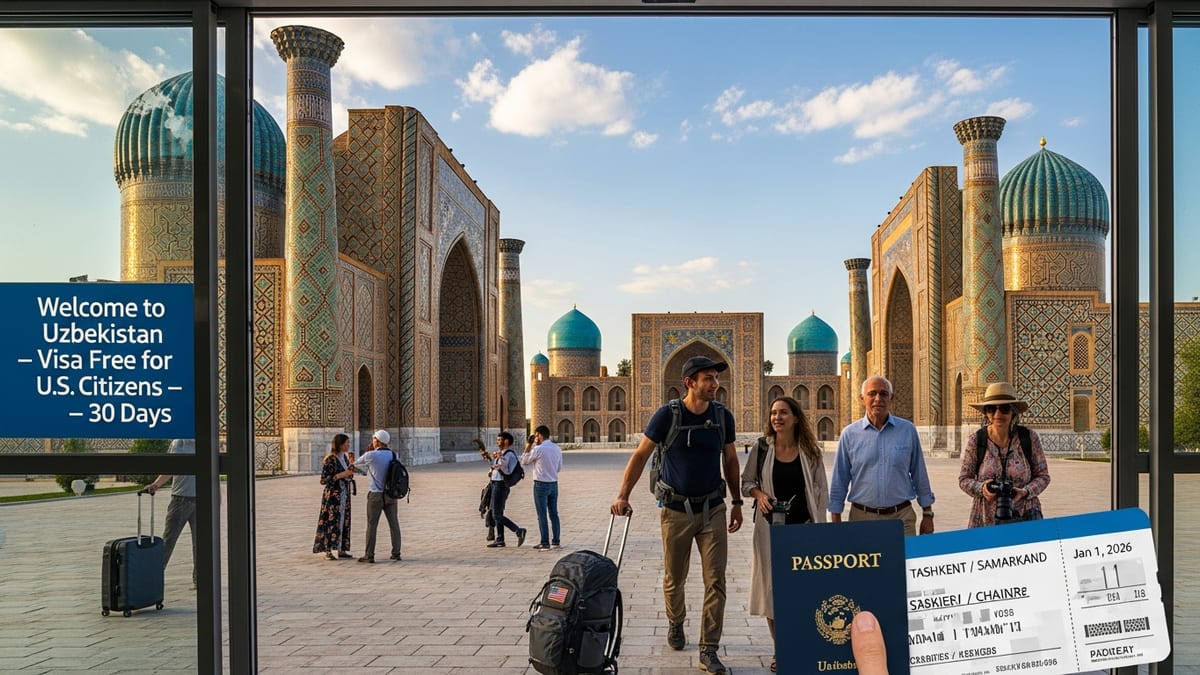
Uzbekistan’s pull for Kazakh tourists rests on several pillars: globally recognized heritage cities, value-for-money pricing, and easier access compared with long-haul alternatives. Samarkand, Bukhara and Khiva remain the core of most itineraries, with their Islamic architecture, restored madrasas and bazaars frequently highlighted in international travel coverage as some of the most evocative Silk Road sites.
At the same time, Uzbekistan has invested heavily in aviation and ground infrastructure. Samarkand International Airport has adopted an open-skies regime designed to attract more carriers and routes, and passenger traffic there surpassed previous records in 2024. New services linking Samarkand with cities in Kazakhstan, alongside existing connections between Tashkent, Almaty and Astana, shorten journey times and reduce the need for complex transits.
For cost-conscious travelers from Kazakhstan, price remains a decisive advantage. Regional hotel industry briefings indicate that, despite rapid growth in visitor numbers, average room rates in many Uzbek cities still undercut those in mainstream Middle Eastern destinations and some Black Sea resorts. Food, local transport and excursion prices are likewise perceived as competitive, especially for travelers earning in tenge who may be sensitive to currency movements.
Crucially, Uzbekistan is also positioning itself as a year-round destination. Large-scale cultural festivals, international music events and sports tournaments, combined with winter trips to mountainous areas and desert experiences, provide alternatives to the classic “sun-and-sea” model. For Kazakh visitors who might once have associated their main holidays with Gulf beaches or Red Sea resorts, this broader product mix offers new reasons to look south across the border.
Practicalities for Kazakh Tourists Considering Uzbekistan
Travel between Kazakhstan and Uzbekistan is comparatively straightforward. The two countries share multiple border crossings and are connected by rail, road and air, giving travelers a choice between budget-friendly overland trips and faster flights. Published official information indicates that bilateral agreements have simplified entry rules over recent years, though travelers are advised to check the latest requirements, including passport validity and any registration obligations, before departure.
For those flying, the main gateways are Tashkent and Samarkand, with additional services to cities such as Fergana and Urgench during peak seasons. From Kazakhstan, frequent flights operate from Almaty, Astana and other major urban centers, and there are also bus and train routes for travelers who prefer not to fly while regional airspace remains unsettled.
On the ground, hotel supply has expanded rapidly in both the budget and upscale segments. Internationally branded properties have opened in key cities, while family-run guesthouses remain widely available in historic centers. Advance booking is increasingly recommended during major holidays, school breaks and festival periods, as occupancy rates have climbed alongside visitor numbers.
Travelers should also consider seasonal conditions. Summers in much of Uzbekistan are hot, favoring early-morning and late-evening sightseeing, whereas spring and autumn are milder and popular with cultural tourists. Winter can bring colder temperatures but also lower prices and fewer crowds, which may appeal to Kazakhstanis used to harsher climates and looking for quieter trips.
Risk, Safety and Outlook for 2026 Travel
Compared with parts of the Middle East currently affected by heightened geopolitical tensions, Uzbekistan is widely perceived as offering a stable environment for tourism. Publicly accessible security assessments from international organizations and travel industry briefings generally classify the main Uzbek cities and tourist regions as low to moderate risk, with standard urban precautions advised rather than special measures.
The key uncertainties for Kazakh travelers in 2026 relate less to conditions inside Uzbekistan and more to the broader regional situation, particularly the trajectory of the Middle East crisis and its effect on global aviation. Should airspace closures or reroutings persist, demand for overland and short-haul air connections within Central Asia is likely to remain elevated, reinforcing Uzbekistan’s role as a convenient alternative.
Looking ahead, both Uzbekistan and Kazakhstan are promoting regional tourism as part of wider economic diversification strategies. Joint marketing campaigns, simplified visa regimes for third-country visitors and cross-border tour products that combine cities such as Almaty, Tashkent and Samarkand in a single itinerary are already appearing in travel agency offerings and industry presentations.
For now, the combination of shifting risk perceptions, improved infrastructure and a strong cultural brand is positioning Uzbekistan as a prime choice for Kazakhstanis recalibrating their travel plans. If current trends continue, the country is likely to cement its status as one of the main winners from the ongoing reshaping of regional holiday patterns.