

More news on this day
Kyrgyzstan is moving to capture a record 1.098 billion dollars in tourism revenue as fresh momentum from Uzbekistan and other regional markets converges with a sharp increase in international flight capacity from carriers such as Turkish Airlines, Aeroflot, Emirates, and Air Astana.
Get the latest news straight to your inbox!
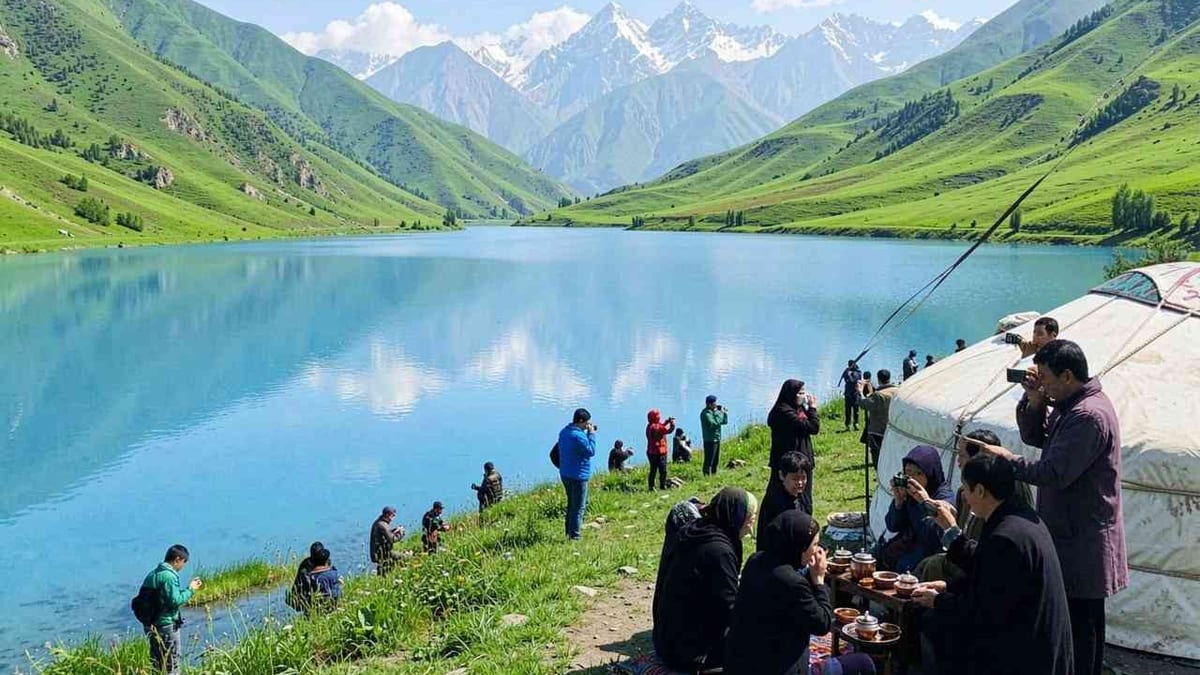
Image by Travel And Tour World
Central Asian Neighbors Drive a New Wave of Arrivals
Recent data and analytical reports on Central Asia indicate that Kyrgyzstan has emerged as one of the region’s most dynamic tourism markets, with international arrivals rebounding strongly over 2023 and 2024 and forecast to keep rising through 2025. Studies tracking cross-border mobility in the region highlight that total visitor numbers to Kyrgyzstan more than tripled from pre‑pandemic lows, with tourism now positioned as a key driver of services exports and job creation.
Within this surge, Uzbekistan has joined Kazakhstan and Russia as one of the core source markets feeding Kyrgyzstan’s visitor base. Regional tourism assessments describe Uzbekistan as the single largest origin country for international visits to Kyrgyzstan, supported by relaxed visa regimes, short‑haul travel times, and growing middle‑class demand for nature and adventure holidays in the Tien Shan mountains. Analysts note that Uzbekistan’s own outbound tourism has accelerated in parallel with a broader economic opening, which has translated into larger flows of Uzbek travelers across Central Asia.
Alongside Uzbekistan, neighboring Kazakhstan and Russia continue to generate substantial volumes of visitors, particularly during the summer peak and winter holiday seasons. Reports on regional tourism patterns show that these three countries together account for the majority of Kyrgyzstan’s international movements, providing a relatively stable base of demand even when long‑haul markets fluctuate. This concentration has encouraged Kyrgyz authorities and private operators to tailor products, signage, and payment systems to Russian‑ and Uzbek‑speaking travelers.
China, India, South Korea, Germany, and Turkey are emerging as important complementary markets. Sector studies point to rapidly growing Chinese and Indian middle classes who are increasingly seeking affordable, visa‑friendly destinations, while South Korean and German travelers are drawn by trekking, high‑altitude landscapes, and cultural tourism along historic Silk Road corridors. Turkish visitors are supported by cultural ties and strong air connectivity via Istanbul, which also functions as a hub for third‑country travelers heading into Bishkek and Osh.
Tourism Revenue Targeted at 1.098 Billion Dollars
Against this backdrop of rising arrivals, recent economic outlooks and national statistics place Kyrgyzstan’s tourism revenue on a steep upward trajectory. Studies on the country’s service sector estimate that tourism earnings surpassed the pre‑pandemic baseline and moved toward the upper hundreds of millions of dollars by 2024, supported by both higher visitor volumes and modest growth in per‑capita spending on accommodation, transport, and organized tours.
On the strength of this recovery, policy and market forecasts now point to an aspirational tourism revenue figure of 1.098 billion dollars within the current planning horizon. This target reflects not only expected volume growth but also a push to capture more value from each visitor, especially from higher‑spending segments originating in markets such as Germany, South Korea, India, and the Gulf states. It also assumes ongoing expansion in domestic tourism, which has become more prominent as incomes rise inside Kyrgyzstan and Uzbekistan.
Analysts caution that achieving this 1.098 billion dollar threshold will depend on continued investment in infrastructure, including airports, roads, digital connectivity, and hospitality capacity in secondary destinations beyond Bishkek and Issyk‑Kul. Recent government reports already highlight several hundred registered accommodation facilities nationwide, ranging from guesthouses and yurt camps to mid‑scale hotels, with additional projects in the pipeline backed by regional and international investors.
At the same time, sector observers stress the importance of managing rapid growth in a way that protects fragile mountain ecosystems and supports local communities. There is increasing emphasis on eco‑tourism standards, waste management in popular trekking areas, and community‑based tourism cooperatives that allow rural households to benefit directly from visitor spending. These themes feature prominently in recent international assessments of tourism in Central Asia.
Airlines Add Capacity as Bishkek Becomes a Regional Hub
The rapid growth in arrivals has been reinforced by a marked increase in air connectivity. Publicly available flight schedules and aviation analyses show that international airlines have expanded routes and frequencies to Bishkek’s Manas International Airport and to Osh, enhancing Kyrgyzstan’s accessibility from both regional and long‑haul markets. This capacity growth has underpinned the current tourism boom and is central to revenue projections.
Turkish Airlines has consolidated its role as a key connector between Kyrgyzstan and global markets. The carrier’s network strategy positions Istanbul as a primary gateway for travelers from Europe, North America, and the Middle East heading to Central Asia. Industry reporting notes that Turkish Airlines has progressively added flights and optimized schedules on its Kyrgyzstan routes, contributing to record passenger volumes and making it easier for higher‑spending long‑haul tourists to include Kyrgyzstan in multi‑country itineraries.
Russian carrier Aeroflot similarly supports large flows from Russia and transfer passengers from other parts of Europe and the Commonwealth of Independent States. Aviation data highlight strong load factors on flights linking Moscow to Bishkek, reflecting demand not only from leisure travelers but also from visiting friends and relatives and business passengers. These flows are particularly important given Russia’s role as both a labor destination for Kyrgyz citizens and a sizable source of inbound tourists.
Gulf carrier Emirates, meanwhile, has increased Central Asia capacity via its Dubai hub, which functions as a major transfer point for travelers from South Asia, East Asia, Europe, and Africa. The growth of services linking Dubai to nearby Central Asian airports, combined with code‑share arrangements and interline partners, has indirectly boosted access to Kyrgyzstan by shortening total travel times and offering more one‑stop options for long‑haul visitors.
In the regional context, Kazakhstan’s Air Astana group has expanded service patterns that facilitate combined Kazakhstan–Kyrgyzstan itineraries. Industry reports show that the airline and its low‑cost affiliates operate dense schedules across Central Asia, with strong connectivity through Almaty and Astana. As these hubs add flights to Europe, the Middle East, and East Asia, they create additional feeder traffic into Kyrgyzstan and support the broader narrative of record regional air traffic.
Record Flows Put Focus on Infrastructure and Seasonality
The convergence of rising arrivals from Uzbekistan and other regional markets with surging air capacity has pushed Kyrgyzstan’s tourism sector toward record levels, but it has also exposed infrastructure bottlenecks. Sectoral reviews point to congestion at key land border crossings during peak holiday periods, limited airport terminal capacity at times of high demand, and pressure on popular lake and mountain resorts during the short summer season.
To accommodate projected growth and reach the 1.098 billion dollar revenue goal, planning documents and expert analyses emphasize the need to lengthen the tourism season and diversify products. Winter sports, cultural festivals, and wellness tourism are being promoted to distribute visitor flows more evenly throughout the year and reduce pressure on Issyk‑Kul in July and August. Operators are also experimenting with new routes that link Kyrgyzstan more closely with Uzbekistan’s historic cities, offering combined cultural and adventure packages.
Investment strategies increasingly prioritize transport links that allow visitors to move efficiently between countries in the region. Proposals and early‑stage projects include improved highways, cross‑border bus services, and, in the longer term, rail connections that could integrate Kyrgyzstan more deeply into Central Asia’s transport grid. These steps are viewed as critical for sustaining record visitor numbers while keeping travel times and costs competitive.
At the destination level, there is growing attention to upgrading basic services such as signage, digital payments, multilingual information centers, and safety standards for trekking and mountaineering. Analysts argue that improving these “soft” infrastructure elements will be essential to attract and retain higher‑spending visitors from Europe and East Asia, particularly from markets such as Germany and South Korea that are already showing promising growth.
Regional Integration Shapes the Next Phase of Growth
The latest wave of tourism growth in Kyrgyzstan is closely intertwined with broader regional integration across Central Asia. Reports on cross‑border cooperation describe joint tourism promotion efforts, shared branding around the Silk Road, and discussions on harmonizing visa regimes to encourage multi‑country travel. Uzbekistan’s expanding outbound market plays a central role within this context, as its travelers increasingly look to neighboring mountain and lake destinations.
Regional think‑tank analyses suggest that if current trends continue, Central Asia could consolidate its position as a single, multi‑stop destination for international visitors, with Kyrgyzstan offering the bulk of high‑altitude and adventure experiences and Uzbekistan, Kazakhstan, and others providing cultural, urban, and desert products. In such a scenario, air and land connectivity, rather than national borders, would determine how tourists move through the region.
For Kyrgyzstan, the challenge will be to convert record traffic levels and strong feeder markets from Uzbekistan, Kazakhstan, Russia, China, India, South Korea, Germany, and Turkey into sustainable, broad‑based prosperity. Achieving the targeted 1.098 billion dollars in tourism revenue will depend on continued coordination among transport providers, tourism businesses, and public agencies, as well as careful stewardship of the natural and cultural assets that underpin the country’s appeal.
With major airlines scaling up capacity and regional travelers showing a growing appetite for cross‑border trips, current indicators suggest that Kyrgyzstan’s tourism sector is entering a critical expansion phase. How effectively the country manages this moment will help determine whether the present record‑breaking surge becomes a long‑term success story for Central Asian tourism.