

More news on this day
V.Group is extending the reach of its Marcas procurement platform deeper into the cruise sector, focusing on popular regions such as the Caribbean, Europe and Asia as operators ramp up capacity and refresh onboard offerings in key global markets.
Get the latest news straight to your inbox!
Strategic Expansion Taps Surging Cruise Demand
Publicly available information shows that V.Group, a major provider of ship management and marine support services, is sharpening its focus on cruise procurement through Marcas, the group’s centralized purchasing arm. The move aligns with a broader rebound in global cruising, as fleets redeploy to high-demand destinations and operators seek tighter control of operating costs.
Marcas has traditionally concentrated on negotiated supplier agreements for vessels managed within the wider V.Group network, providing members with aggregated buying power across technical goods and consumables. Reports indicate that this model is now being more actively directed toward cruise ships, where consistent service standards and tight turnaround times at busy ports are critical to guest satisfaction.
Cruise deployments in the Caribbean, Mediterranean, Northern Europe and key Asian gateways continue to grow, with major brands adding capacity and extending seasons. According to published coverage and recent market commentary, the combination of larger ships, longer itineraries and rising onboard expectations is driving renewed interest in scalable, data-driven procurement solutions that can operate seamlessly across regions.
By using Marcas to consolidate demand from cruise clients alongside other vessel segments, V.Group appears positioned to offer sharper pricing and more predictable supply in port-intensive itineraries. Industry observers note that such consolidation is increasingly viewed as a way to balance cost efficiency with the need for resilient logistics in a market still adapting to post-disruption realities.
Focus on Caribbean Ports and Turnaround Efficiency
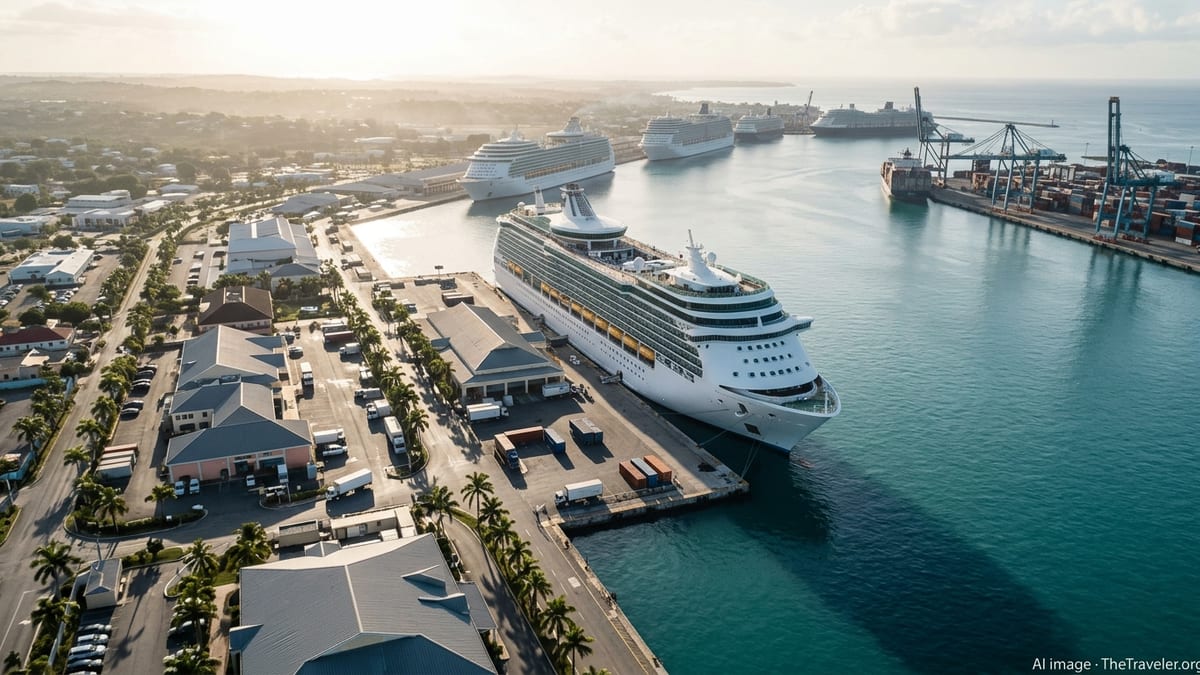
The Caribbean remains one of the world’s busiest cruise regions, with major homeports and island destinations handling high volumes of weekly calls during peak seasons. Public information from cruise and port organizations highlights persistent operational pressure around provisioning windows, pier capacity and last-mile logistics that must be completed within tight schedules between disembarkation and embarkation.
Within this environment, Marcas is expected to emphasize supplier relationships that can support rapid, high-volume deliveries of food, beverages, hotel consumables and marine stores directly to ships across multiple islands and gateway ports. Centralized purchasing, combined with standardized product specifications, can help cruise operators achieve consistent quality while simplifying inventory management on board.
Industry commentary stresses that cruise lines are also scrutinizing total landed cost, not just unit price. Procurement arrangements that can factor in port handling, storage, and short-notice changes to delivery schedules are increasingly valuable. By integrating information from suppliers and V.Group’s broader operational network, Marcas aims to provide data that allows cruise procurement teams to compare options across ports and adjust purchasing strategies in real time.
Observers point out that Caribbean ports are also evolving their infrastructure, with new terminals and logistics zones designed to support larger ships and heavier provisioning needs. In this context, a coordinated procurement platform can help connect cruise lines with port-based distributors capable of meeting higher volume and quality requirements as demand continues to rise.
European Market Offers Complex but Mature Supply Networks
Europe remains a core theater for global cruising, covering the Mediterranean, Northern Europe, the Baltic and the Atlantic coasts. Publicly available information underscores that the region combines a mature supplier base with diverse regulatory frameworks and seasonal deployment patterns, creating both opportunities and challenges for procurement specialists.
Marcas has long maintained relationships with European maritime suppliers across technical, hotel and catering categories. Reports indicate that extending this framework more deeply into cruise procurement allows operators to use a single set of negotiated agreements across multiple countries and itineraries, from large Mediterranean hubs to smaller Northern European ports of call.
European cruising also often involves frequent port calls on longer itineraries, which can fragment ordering and delivery processes if handled locally at each stop. A centralized platform such as Marcas aims to streamline this by aggregating orders, coordinating cross-border logistics and ensuring that ships receive standardized products regardless of where they are provisioned.
According to industry analyses, environmental and regulatory requirements in European waters are pushing cruise lines to adopt cleaner technologies and more sustainable sourcing practices. Procurement arrangements that prioritize energy-efficient equipment, lower-impact consumables and traceable supply chains are becoming more important. Marcas has highlighted sustainability as a key theme in its broader supplier engagement, a stance that aligns with emerging expectations in major European cruise markets.
Growing Asian Cruise Hubs Drive New Procurement Needs
Asia has been gradually rebuilding its cruise presence, with established hubs and emerging ports looking to attract more sailings. Published coverage indicates that as itineraries expand in East and Southeast Asia, cruise lines are reassessing procurement strategies to ensure consistent standards across a more dispersed port network.
V.Group maintains a significant operational footprint in Asia, including technical, crewing and support services. Integrating Marcas procurement into this network for cruise clients allows the group to leverage existing supplier relationships while adapting product ranges to regional preferences and regulatory requirements.
Industry observers emphasize that Asian cruise guests often expect a blend of international and regional products, from cuisine to amenities. A centralized purchasing framework can support this by coordinating global brand standards with locally sourced items, all under a unified quality and compliance regime. This is particularly relevant as cruise lines tailor itineraries and onboard programs to attract a growing base of Asian and international travelers.
As port infrastructure across Asia continues to develop, access to reliable logistics partners and cold-chain services becomes critical, especially for fresh and specialty items. Procurement platforms like Marcas can help cruise operators evaluate supplier capabilities across multiple destinations, supporting decisions about where to load key provisions and how to safeguard continuity throughout a voyage.
Digital Procurement, Sustainability and Future Growth
Across all three regions, the expansion of Marcas into cruise procurement is closely linked to a wider shift toward digital tools and data-led decision making. Public information from V.Group highlights investments in technology platforms designed to capture transactional data, monitor supplier performance and support predictive planning for fleet operations.
For cruise lines, this can translate into more accurate demand forecasting, better alignment between shore-based procurement teams and onboard staff, and quicker responses when itineraries change. Centralized data allows for benchmarking of costs and service levels across ports, which in turn can guide long-term decisions about preferred suppliers and strategic stocking points.
Sustainability is another driver shaping procurement strategies. Reports describe increasing expectations for reduced food waste, lower-emission logistics and environmentally responsible products on board. By negotiating framework agreements that factor in environmental performance, Marcas can influence the types of goods and services made available to cruise clients in key regions.
As V.Group continues to refine its role as a global marine services provider, the extension of its Marcas procurement platform into high-profile cruise destinations in the Caribbean, Europe and Asia illustrates how centralized purchasing and logistics expertise are becoming integral to the sector’s ongoing expansion and modernization.