

More news on this day
Valletta Cruise Port has marked a new milestone in Malta’s cruise story by presenting a retrospective publication to Prime Minister Robert Abela, underscoring the Grand Harbour’s transformation into a leading Mediterranean hub for sustainable cruise tourism.
Get the latest news straight to your inbox!
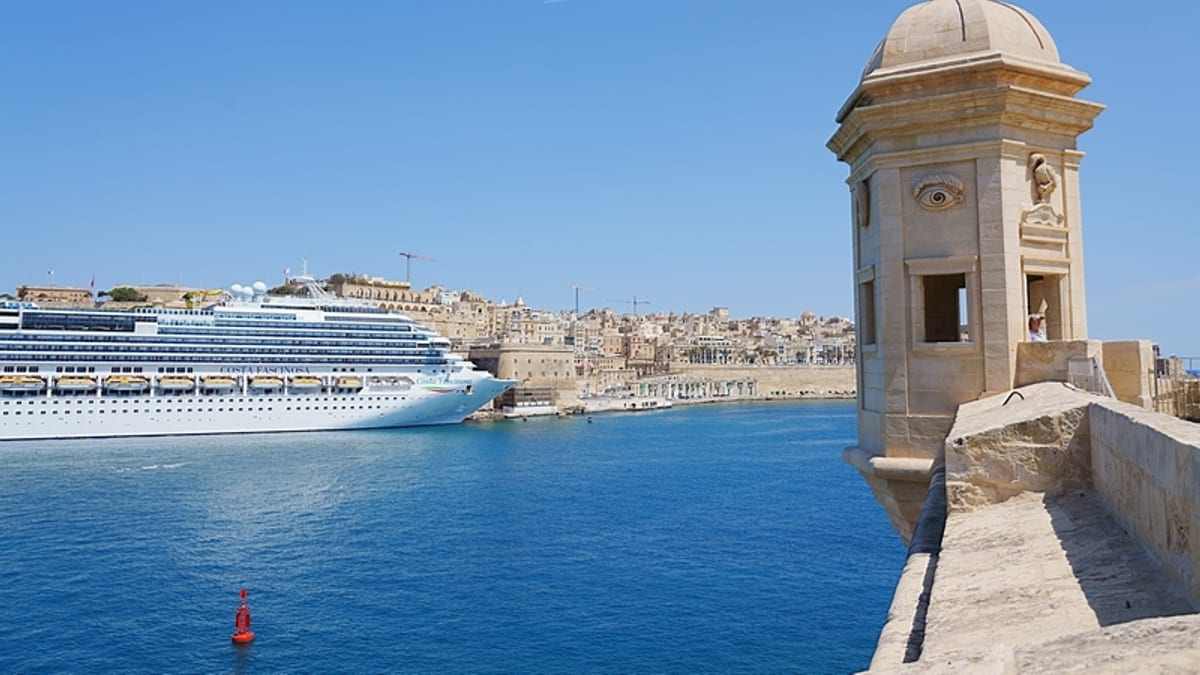
Image by Cruise Industry News | Cruise News
Commemorative Publication Marks High Point for Valletta Cruise Port
The presentation of the retrospective publication to the prime minister brought together government representatives and industry figures in Valletta, reflecting a period in which the port has registered record traffic and expanded its role within the broader Maltese economy. Publicly available information indicates that Valletta Cruise Port handled close to one million passenger movements in 2025, a record year that has reinforced Malta’s status as a high-performing turnaround and transit destination in the central Mediterranean.
The volume of arrivals in recent seasons has also coincided with a growing recognition of the port at international level. Reports from cruise industry and port management bodies show that Valletta Cruise Port has continued to receive awards as a global port of call, with 2026 marking at least a fourth consecutive year of such recognition. The retrospective publication presented to the head of government is understood to trace this trajectory, combining operational highlights with visual documentation of visiting vessels and major events in the Grand Harbour.
According to published coverage, the document places particular emphasis on how Valletta has balanced rapid cruise growth with initiatives intended to safeguard the urban fabric of Malta’s capital and surrounding communities. The port has promoted shore excursions that disperse visitors beyond the historic walled city, while also encouraging longer shoulder-season deployments that help smooth out peak summer crowds. These themes, together with the strengthening of the homeport segment, appear prominently in the material showcased to the prime minister.
Observers note that the gesture of presenting a retrospective to Malta’s political leadership serves both as a symbolic acknowledgment of state support for maritime infrastructure and as a platform to outline future objectives. The publication reportedly closes with forward-looking sections on sustainability, digitalisation and customer experience, which are expected to shape investment decisions in the coming years.
Growth in Passenger Numbers Highlights Strategic Role of the Grand Harbour
Recent traffic figures provide the statistical backdrop to the commemorative gesture. Valletta Cruise Port reported nearly 1 million passenger movements in 2025, carried on close to 400 cruise calls, according to data shared by the terminal operator and local media. A large share of these passengers were in transit for daytime visits, while almost 200,000 used Malta as a starting or ending point for their cruise, illustrating the island’s dual role as both port of call and homeport.
Economic analysis from Maltese authorities and port stakeholders indicates that cruise tourism contributes tens of millions of euros annually to the national economy, with passenger spending in shops, restaurants, transport and cultural attractions forming a significant share. The retrospective publication is reported to highlight this contribution through case studies and statistical snapshots, positioning the Grand Harbour as a key interface between global cruise brands and local businesses.
The document also appears to contextualise Valletta’s results within wider regional competition. With nearby Mediterranean ports upgrading terminals and marketing their historic centres, Valletta has sought to distinguish itself through the visual impact of its UNESCO-listed skyline and relatively short transfer distances to other attractions across Malta and Gozo. Cruise line itineraries released for 2024 through 2026 show the port featuring prominently on central Mediterranean routes, a trend that the publication portrays as both an achievement and a responsibility.
Industry commentary suggests that maintaining this momentum will require continued coordination between the port operator, tourism authorities and the city of Valletta. Topics such as passenger flow management, transport links from the quay to the city, and the protection of heritage quarters from congestion pressures are referenced in public statements that echo themes touched upon in the retrospective.
Sustainability and Shore Power Investments Take Center Stage
A significant section of the Valletta Cruise Port retrospective reportedly focuses on environmental performance, particularly the introduction of shore-side electricity infrastructure in the Grand Harbour. In recent years, Valletta has hosted high-profile events where large vessels connected to the national grid while alongside, including operations by LNG-powered ships that have been widely covered in international cruise industry reports. The port has been cited as one of the first in the Mediterranean to commission a fully operational shore power facility dedicated to cruise operations.
According to publicly available information from the Maltese government and industry partners, the country has concluded long-term arrangements with major cruise groups covering the use of shore power for future calls. These agreements are framed as part of Malta’s energy transition and align with wider European efforts to cut emissions at berth. The retrospective publication presented to the prime minister appears to document these steps as a central pillar of Valletta’s evolution from a traditional cruise stop to a testbed for clean port technologies.
Environmental advocacy groups and maritime analysts have frequently pointed to shore power as one of the most immediate tools available to reduce local air pollutants in densely populated port cities. In this context, Valletta’s initiatives, coupled with the deployment of more efficient ships on Maltese routes, are presented in the publication as integral to ensuring that cruise growth remains compatible with urban liveability and climate objectives.
Media coverage indicates that the document also touches on related projects, including energy-efficient terminal buildings and efforts to digitise port operations for better planning of berthing windows and auxiliary services. These measures are framed as part of a wider vision that links customer satisfaction, environmental responsibility and operational resilience.
Recognition, Partnerships and the Future of Malta’s Cruise Offering
Beyond infrastructure statistics, the retrospective publication is understood to underline a series of awards and partnerships that have shaped Valletta’s profile. Industry association rankings and operator surveys have named the Maltese capital as a preferred port of call on multiple occasions, crediting both the visual appeal of arrivals through the Grand Harbour and the professionalism of local services. The port’s management has used such recognition to deepen collaboration with cruise brands and tour operators, encouraging them to design itineraries that showcase more of the archipelago.
Over the past two years, a number of cruise companies have announced expanded deployments in Malta, with some lines using Valletta as a seasonal base for fly cruise programmes linking the island to Spain, Italy and other Mediterranean destinations. Publicly accessible schedules suggest that these deployments are set to continue into 2026, bringing a further mix of transit and turnaround traffic. The retrospective, by placing these commercial developments alongside civic events and cultural programming on the waterfront, aims to show how cruise operations intersect with wider national strategies for tourism and investment.
The presentation to the prime minister has also drawn attention to the governance framework around Valletta Cruise Port. As part of a wider international network of terminals operated under a global brand, the port benefits from shared commercial intelligence and operational standards, while retaining a strong Maltese identity shaped by local employees and service providers. This dual structure, described in corporate documentation and trade coverage, is portrayed as one of the drivers behind the port’s ability to respond quickly to market shifts and regulatory changes.
Industry observers note that the retrospective arrives at a moment when Mediterranean cruise routes are adapting to new environmental rules and changing traveller expectations. The narrative reportedly closes with an emphasis on innovation, from digital passenger information tools to co-created shore excursion concepts with local communities. In presenting the publication at the highest political level, Valletta Cruise Port signals that it views the next phase of growth as dependent on close alignment between policy, infrastructure and visitor experience.
Implications for Travelers Considering Malta Cruises
For travelers following developments in Malta, the retrospective publication and its formal presentation highlight why Valletta frequently features on new-season itinerary announcements. Cruise guides and travel features commonly describe the approach into the Grand Harbour as one of the most scenic in Europe, with the fortified skyline, narrow creeks and limestone bastions forming a distinctive backdrop during arrivals and departures. The port’s recent investments, as captured in the publication, are designed to preserve this sense of place while upgrading services behind the scenes.
Prospective passengers reviewing cruise options for 2026 and beyond are likely to encounter an increasing number of sailings that either start, end or pass through Valletta. The presence of shore power and the emphasis on sustainability may appeal to travelers who are conscious of the environmental impact of their holidays, while Malta’s compact size makes it possible to combine a call in Valletta with visits to beaches, prehistoric sites and smaller towns within a single day.
Travel media coverage suggests that the experience at Valletta Cruise Port now extends well beyond the terminal building itself. Elevator connections to the city’s upper streets, improvements in signage and a broader range of guided and independent touring options have been highlighted as changes that make disembarkation smoother. The retrospective’s focus on such passenger-facing enhancements reinforces a message that Malta is seeking to compete not only on scenery and heritage, but also on the practicality of its cruise offering.
As cruise lines finalise deployment plans in the central Mediterranean, the gesture of placing a carefully curated record of recent achievements in the hands of the prime minister underscores the prominence of cruise tourism in Malta’s economic and diplomatic narrative. For travelers, it is another signal that Valletta intends to remain a fixture on the region’s cruise map, backed by infrastructure and policies aimed at sustaining both visitor appeal and local quality of life.