

More news on this day
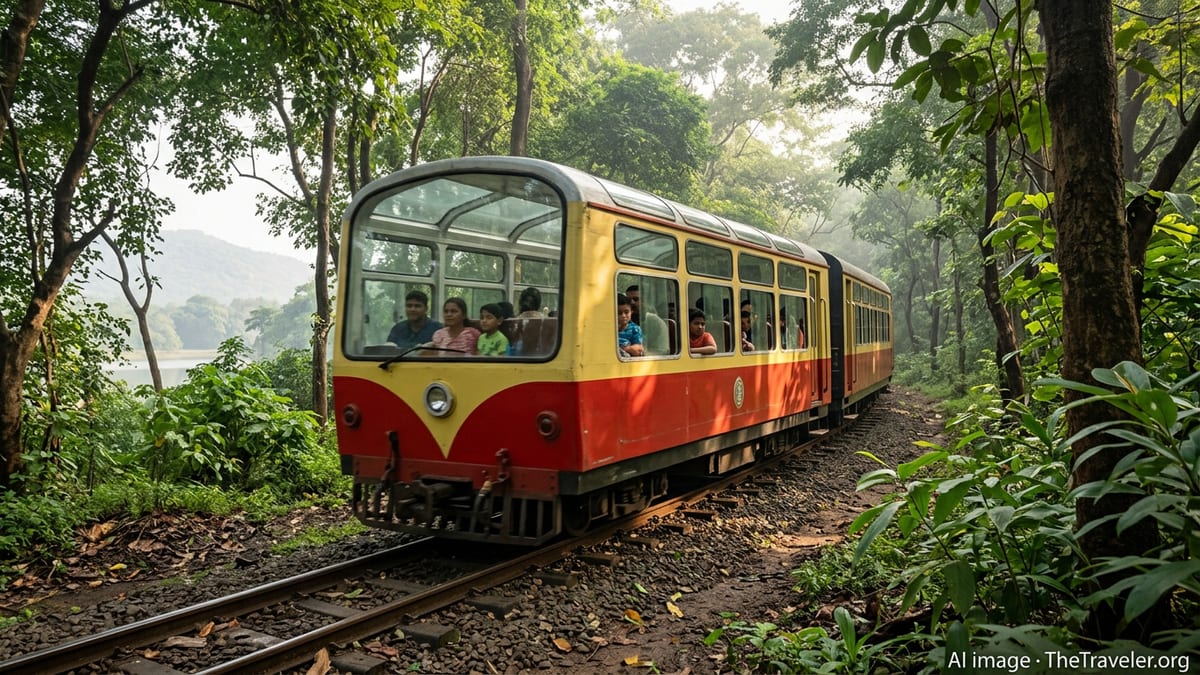
Mumbai’s Sanjay Gandhi National Park is preparing for a landmark tourism upgrade as the beloved Van Rani toy train readies to return to the tracks with modern coaches and a redesigned visitor experience, positioning the park at the center of Maharashtra’s latest eco-tourism push.
Get the latest news straight to your inbox!
A Heritage Attraction Set for a Contemporary Comeback
The Van Rani toy train, a narrow-gauge miniature railway that first began operating in the 1970s, has long been one of Sanjay Gandhi National Park’s most recognisable attractions. After a prolonged suspension of services following infrastructure wear and cyclone-related damage, reports indicate that the train is now on course for a phased relaunch from mid-2025 on its original alignment inside the forested park.
Publicly available information shows that the revived service will retain the spirit of the original 2.5 to 2.7 kilometre loop while adding significantly upgraded rolling stock and station facilities. The project is being implemented with engineering and operations support from specialist railway agencies, with recent tender documents outlining supply, commissioning and multi-year maintenance of a new train set tailored to the park’s terrain and visitor volumes.
The restart of Van Rani is being framed as more than the return of a nostalgic ride. Coverage in Indian media describes it as part of a wider effort to leverage Mumbai’s only national park as a flagship urban nature destination, complementing the state’s focus on rail-led tourism products elsewhere in Maharashtra.
Vistadome Coaches and A Reimagined Ride Experience
One of the most notable upgrades is the introduction of a Vistadome-style coach, featuring large glass windows and partially glazed roofing to provide panoramic views of the surrounding hills, lakes and dense greenery. Reports indicate that the refurbished train will combine enclosed Vistadome seating with open or semi-open coaches, allowing passengers to experience changing light, breeze and bird calls along the route.
Trial runs highlighted in local coverage point to improved suspension, quieter operations and a smoother ride compared to the older stock. The design brief outlined in recent procurement documents emphasises accessible boarding, better safety features and durable materials suitable for Mumbai’s intense monsoon cycle. This is expected to lengthen the operating season and reduce the frequent weather-related disruptions that affected the earlier service.
The route itself is also being reworked. Media reports describe a slightly adjusted loop and upgraded stations, with new theming around native wildlife and conservation messages. The intention is to transform the fifteen to twenty minute journey into a compact interpretation of the park’s broader ecosystem, particularly for first-time visitors and school groups who may not have time to trek deeper into the forest.
Boost for Eco-Tourism in Mumbai and Maharashtra
Sanjay Gandhi National Park already attracts millions of visitors annually, drawn by its forest trails, Kanheri Caves and safari zones. The return of Van Rani is widely expected to lift those numbers further by offering a low-effort, family-friendly attraction that can be enjoyed alongside longer nature walks and heritage visits. Travel platforms are beginning to highlight the toy train’s comeback as a key reason to plan weekend trips to Borivali, where the park is located.
Commentary in tourism-focused publications has framed the revival as part of a broader pattern in Maharashtra, where rail-based experiences are being positioned as anchors for domestic and international travel. Examples cited include luxury tourist trains on longer intercity routes and new semi-high-speed services that link major urban centers. Within that landscape, Van Rani is being positioned as a distinctly urban counterpart, offering an accessible doorway into nature just a short suburban rail ride from central Mumbai.
Local businesses around the park, including food outlets, souvenir vendors and tour operators, are expected to benefit from the anticipated rise in footfall once the train begins regular operations. Publicly available statements from park-related planning documents also point to ticket revenues from the toy train being reinvested into habitat management, visitor facilities and conservation initiatives within Sanjay Gandhi National Park.
Infrastructure Upgrades and Visitor Management
The toy train’s revival comes alongside a broader refresh of visitor infrastructure inside the park. Recent reports mention reworked platforms, improved queuing areas and clearer circulation routes designed to handle peak weekend and holiday crowds more efficiently. The objective is to reduce congestion at the main gate and distribute visitors more evenly across attractions.
Engineering documentation on the project highlights upgrades to track foundations and drainage systems to withstand intense rainfall and soil erosion during the monsoon months. Improved signalling and regularised maintenance schedules are being introduced to minimise unscheduled downtime, a recurring concern in the earlier phase of operations.
Visitor management is also set to change with the introduction of more structured ticketing. Travel information portals have begun sharing early details suggesting designated time slots, caps on per-trip capacity and potential integration with online booking platforms. Such measures are aimed at balancing demand with the park’s ecological sensitivity, so that the increased popularity of Van Rani does not translate into overcrowding in critical habitat areas.
Iconic Status and the Promise of a New Tourism Era
For many Mumbai residents, Van Rani occupies a special place in childhood memories, often associated with school excursions and family outings that offered a rare escape from the city’s dense urban fabric. The long gap since its last full season created a visible void in the park’s experience, frequently noted in travel blogs and visitor reviews over the past few years.
The decision to invest in modern coaches, track rehabilitation and interpretive content signals a recognition of that emotional connection. According to published coverage, the relaunch is being framed as a flagship example of how legacy attractions can be updated without losing their character, by combining heritage, education and modern comfort.
As Van Rani prepares to return to service, Sanjay Gandhi National Park is likely to feature more prominently on regional tourism itineraries that already highlight beaches, hill stations and heritage rail corridors elsewhere in Maharashtra. The toy train’s comeback is expected to anchor fresh marketing campaigns that present Mumbai not only as a financial hub, but also as a city where dense forest, ancient caves and a quietly chugging miniature train coexist within the metropolitan boundary.