

More news on this day
Passengers across Canada, the United States, the United Kingdom, Hong Kong and Japan are facing mounting disruption after operational issues at Vancouver International Airport on March 7 triggered at least 14 cancellations and 88 delays, snarling services for Air Canada, WestJet, Delta, United and other major carriers on routes linking Toronto, New York, London, Tokyo and beyond.
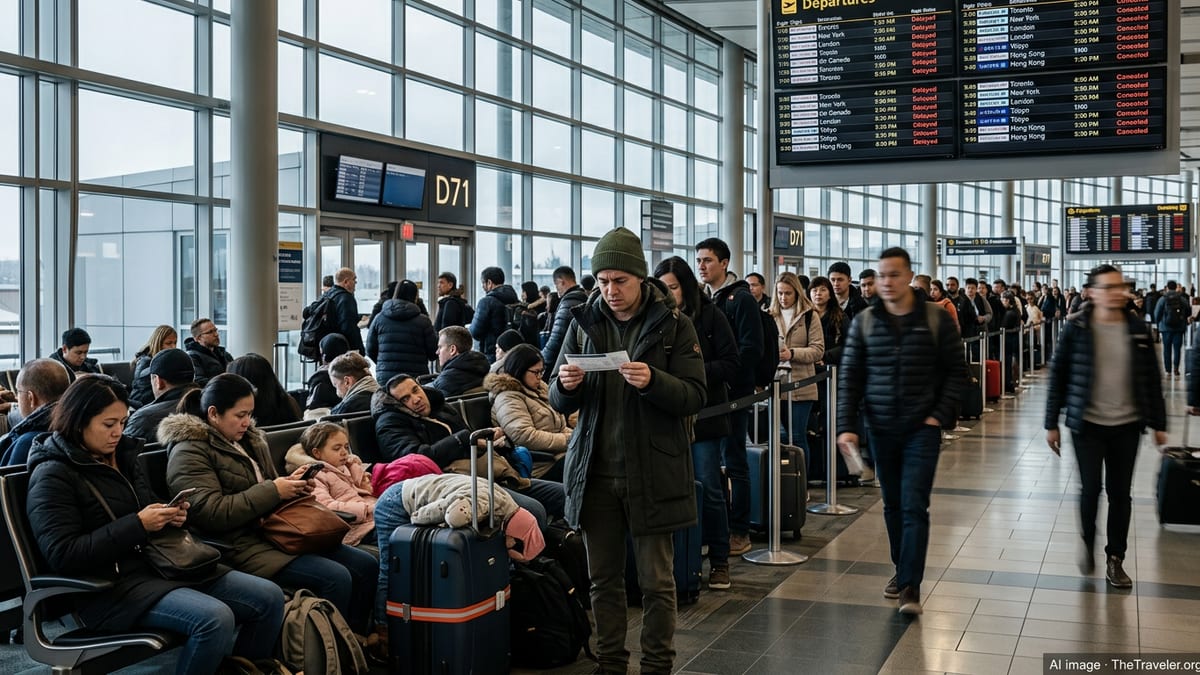
Vancouver Disruptions Trigger Global Knock On Effects
Live operational data reviewed on March 7 shows a fresh wave of schedule problems centered on Vancouver International Airport, where a combination of lingering IT constraints and tight aircraft rotations has translated into a cluster of cancellations and significant delays. While the airport is technically open and running, the pace of recovery from earlier systems issues has not kept up with demand, particularly during peak departure banks.
According to airport and airline data providers, at least 14 flights touching Vancouver have been canceled today, alongside about 88 delayed departures and arrivals. Domestic shuttle routes and popular transborder links to U.S. gateways such as New York are bearing the brunt, with late arriving aircraft and out of position crews cascading into later departures across the network.
For passengers, the result is a patchwork of disruption that can be difficult to interpret. Some flights are operating nearly on time, while others have been pushed back by several hours or scrubbed entirely as airlines attempt to consolidate loads and free up aircraft for higher priority long haul connections.
Canadian Hubs Strain Under Winter and Network Pressures
The problems at Vancouver come on top of a challenging week for Canadian aviation more broadly. Data compiled today indicates 54 cancellations and 449 delays nationwide, affecting carriers including Air Canada, WestJet, Jazz, PAL and regional operator Borealis. Toronto, Montreal, Vancouver and smaller northern stations such as Nain have all reported significant schedule disruptions as airlines juggle aircraft and crews amid late winter weather and tight capacity.
Toronto Pearson, Air Canada’s primary hub, is acting as both a pressure valve and a choke point. Aircraft and crews that begin the day in Vancouver often cycle through Toronto before continuing to Atlantic Canada or onward to Europe. Delays early in the day on the west coast are therefore arriving in Ontario hours later, complicating departure banks to London, Frankfurt and other long haul destinations.
Airline planners are also still managing the knock on effects of a turbulent winter travel season in North America, which saw major storms repeatedly disrupt operations and soak up spare capacity. With relatively little slack left in fleets and rosters, modest local issues at one hub can now escalate into a broader network problem affecting travelers thousands of kilometers away.
International Routes to New York, London, Tokyo and Hong Kong Affected
As Vancouver struggles to stabilize its schedule, international routes linking North America with Europe and Asia are beginning to show signs of stress. Flights operated or marketed by Air Canada, WestJet, Delta and United between Canadian hubs and New York area airports have registered a rising number of delays today, in part because connecting passengers and inbound aircraft are running late from western Canada.
Across the Atlantic, London bound flights from Toronto and other Canadian gateways have so far been less affected in absolute numbers, but airline sources report tighter connection windows and a higher proportion of misconnected passengers. Travelers originating in Vancouver and connecting through Toronto for Heathrow or Gatwick are particularly vulnerable when the first leg of their journey runs late.
In the Pacific markets, services linking Canada with Tokyo and Hong Kong are also under pressure. Some Japan bound flights that rely on Vancouver feeds are facing heavier rebooking volumes, while Hong Kong services are contending with both late arriving passengers and constraints on available seats for same day alternatives. In several cases, customers are being rerouted through U.S. hubs such as Seattle and San Francisco when direct options are no longer viable.
Passengers Report Isolation and Long Waits Across Continents
The operational challenges translate into very tangible hardship for travelers. At Vancouver itself, long lines have formed at check in counters and customer service desks as passengers seek new itineraries or accommodation. Those who clear security only to find their flights pushed back repeatedly describe a sense of being trapped in limbo, with limited information and few realistic options to leave the airport quickly.
Similar stories are emerging from Toronto, New York and London, where international travelers arriving from or bound for Vancouver are discovering that their carefully planned connections no longer exist. Some are being put up in airport hotels overnight, while others face extended stays in departure lounges as airlines work through backlogs and wait for inbound aircraft to arrive.
In Tokyo and Hong Kong, time zone differences compound the difficulty. Passengers report waking to find overnight messages about missed or canceled connections originating in Canada, leaving them effectively isolated from ground staff until airport desks open or call centers in North America resume daytime operations. For some, that has meant losing an entire day of a business trip or holiday while they wait for clarity.
Airlines Urge Customers to Monitor Flights and Know Their Rights
Major carriers affected by today’s disruption are advising customers to monitor their flight status closely through airline apps, text alerts and airport departure boards, and where possible to complete online rebooking rather than queueing at airport counters. Air Canada and WestJet in particular have urged travelers whose journeys touch Vancouver, Toronto or Montreal to arrive early and build additional buffer time into tight connections.
Consumer advocates, meanwhile, are reminding passengers that both Canadian and international regulations provide protections in cases of significant delay or cancellation that is within an airline’s control. Depending on the circumstances and the length of the delay, travelers may be entitled to meal vouchers, hotel accommodation, ground transportation and in some instances financial compensation or refunds.
With disruption now radiating across multiple continents, industry analysts say the episode underscores how interdependent modern air networks have become. A cluster of problems at a single hub like Vancouver can, within hours, leave passengers stranded or isolated in cities as far apart as New York, London, Tokyo and Hong Kong, highlighting the importance of resilient systems, clear communication and robust contingency planning as global travel demand continues to grow.