

More news on this day
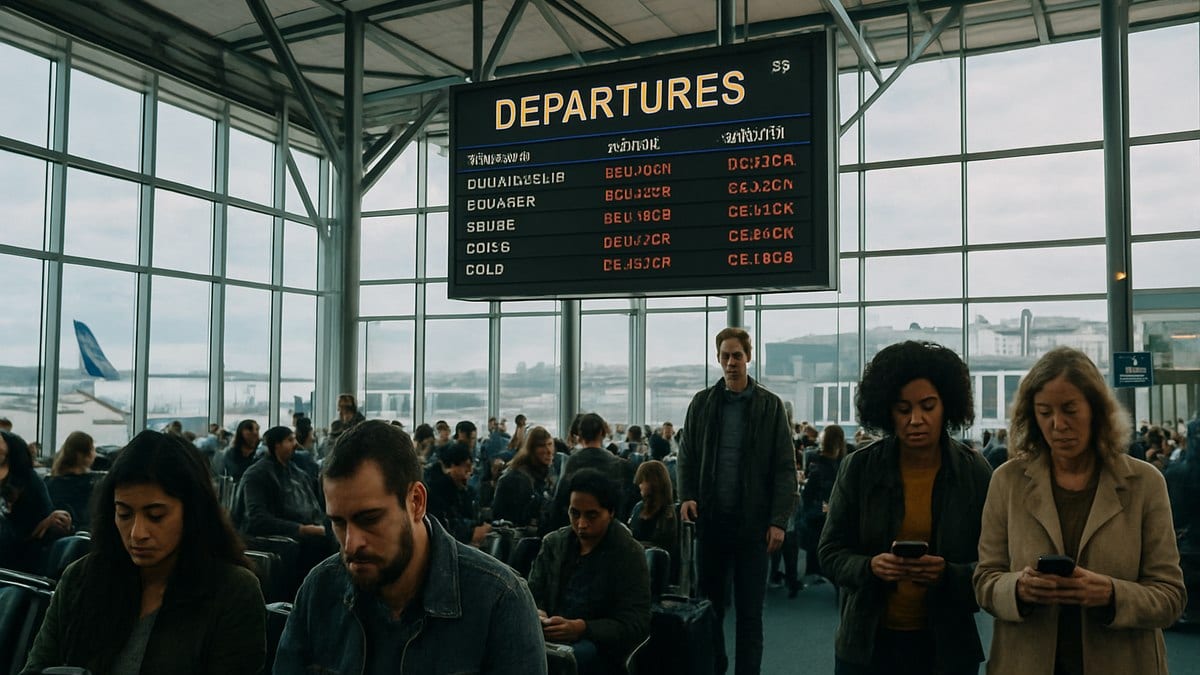
Vancouver International Airport is emerging as a critical pressure point in global aviation this April, as a wave of delays, cancellations and schedule changes radiates through more than 50 international and transborder routes linking Canada with Asia, Europe and the United States.
Get the latest news straight to your inbox!
Growing Disruptions at a Key Pacific Gateway
Recent operational data and published coverage show a steady build-up of irregular operations at Vancouver International Airport in late March and early April 2026. Reports indicate that the airport has recorded clusters of cancellations and delays on consecutive days, affecting both domestic feeder services and long-haul international flights.
On March 26, monitoring of flight movements highlighted 26 cancellations and 168 delays in a single day, involving carriers such as Air Canada, Jazz Aviation, WestJet, WestJet Encore and Pacific Coastal Airlines. The pattern continued into April, with an additional round of cancellations and at least 49 delays reported on April 8, touching services that connect Vancouver with destinations in the United States, India, China, Germany and Fiji.
Although individual daily totals fluctuate, aviation analysts point to a cumulative effect on the route map. When repeated over several weeks, rolling cancellations, late departures and missed connections begin to ripple along aircraft rotations, pushing disruption far beyond Vancouver and into onward hubs across North America, Europe and Asia.
Publicly available performance snapshots from national trackers and independent travel sites suggest that Vancouver is not experiencing isolated weather incidents, but rather a convergence of staffing, scheduling and network congestion issues that are eroding on-time reliability at one of Canada’s primary west coast gateways.
More Than 50 Routes Feeling the Strain
The impact of Vancouver’s flight disruptions is being measured less by a single headline event and more by the breadth of routes now affected. Short-haul services to Calgary, Victoria and other British Columbia and Alberta destinations have absorbed a notable share of cancellations, interrupting connections that funnel passengers into Vancouver’s long-haul banks.
At the same time, long-distance links are also coming under pressure. Published reports for April 8 alone list disruptions on flights serving major U.S. cities as well as intercontinental routes connecting Canada with India, China, Germany and Fiji. When earlier March data is factored in, the tally of affected city pairs moving through Vancouver climbs well beyond 50, encompassing everything from regional turboprop hops to widebody international services.
Schedule changes are adding to the uncertainty. Travelers posting publicly accessible itinerary details describe advanced time shifts of up to an hour on future Vancouver departures, even months ahead of travel. While these adjustments may appear small on paper, they can invalidate tightly timed connections and require wholesale rebooking for complex multi-stop itineraries.
These operational shifts are unfolding as some airlines trim or restructure their Vancouver networks. Separate industry analysis notes that WestJet plans to suspend several U.S. routes from Vancouver starting in the northern summer season, while other carriers adjust frequencies on transpacific services. Although those schedule decisions are framed as demand driven, they interact with the current wave of day-of-travel disruptions to reduce fallback options for stranded passengers.
Knock-On Effects Across North America and Beyond
The strain at Vancouver is colliding with a wider pattern of irregular operations across Canada and key international hubs. Recent compilations of flight data show Canada-wide spikes in delays and cancellations in early April, with airports in Toronto, Montreal, Calgary, Winnipeg and Vancouver all reporting elevated disruption on the same days.
In the United States, Washington Dulles International Airport experienced a concentrated disruption event on April 6, when 146 flights were affected in a single day. North American carriers subsequently faced rebooking pressure at major transatlantic gateways, including Amsterdam and other European hubs, as they attempted to move passengers onward after missed connections and aircraft rotations.
Simultaneously, Asia-Pacific is contending with its own bottlenecks. Recent analysis from TheTraveler.org highlights more than 3,000 delays across major Asian airports over just a few days in early April, with Seoul Incheon and other hubs struggling to maintain schedule integrity. When those delays collide with already stressed North American networks, connecting traffic bound for Vancouver or routed through it to other continents can experience extended misalignments.
Additional complexity stems from ongoing airspace restrictions in parts of the Middle East, which continue to force wide rerouting of some Europe to Asia and Southeast Asia services. Industry briefings indicate that thousands of weekly flights require detours around closed or constrained corridors, adding flight time and consuming aircraft and crew buffers that might otherwise absorb disruption elsewhere in the system.
Why Vancouver Is Particularly Exposed
Vancouver’s geographic position and role in airline scheduling help explain why turbulence in global aviation is manifesting so acutely at this airport in April 2026. As a major transpacific gateway, Vancouver handles a mix of overnight arrivals from Asia, daytime departures and arrivals to the United States, and evening long-haul flights to Europe and the South Pacific. This banked structure relies on tight connection windows and precise aircraft sequencing.
If a widebody aircraft from Asia arrives late due to upstream congestion or rerouting, it can delay its onward leg to Europe or a domestic connection to eastern Canada. That, in turn, can push crews toward duty-time limits, forcing last-minute cancellations or aircraft swaps. The resulting aircraft and crew imbalances can take several days to resolve, especially when fleets are already operating near maximum utilization.
Historical operating practices at Vancouver also play a role. Nighttime restrictions on one of the airport’s runways, detailed in earlier noise management reports, limit the flexibility to recover lost time during late-night hours. While these rules are designed to balance community concerns with operational needs, they can constrain how aggressively airlines and air traffic managers make up delays during periods of sustained disruption.
Capacity decisions by individual carriers further shape the picture. Recent network planning updates from major airlines show seasonal adjustments on routes such as Narita to Vancouver around mid to late April, as well as future cuts to certain transborder city pairs. When those changes coincide with operational challenges, the network can become more brittle, offering fewer alternative flights when disruptions occur.
What Travelers Can Expect Through April 2026
With several overlapping forces at play, travel analysts anticipate that irregular operations touching Vancouver are likely to persist through at least the second half of April 2026. While daily numbers of delays and cancellations may rise and fall, the underlying constraints of crew availability, aircraft positioning and limited spare capacity suggest that recovery will be gradual rather than immediate.
Passengers booked on itineraries that rely on Vancouver as a connecting point, particularly those linking North America with Asia, India, Europe or the South Pacific, face an elevated risk of missed connections and forced rerouting. Published guidance from consumer rights organizations emphasizes monitoring flight status closely in the 24 hours before departure and remaining prepared for same-day schedule changes or equipment swaps.
Aviation rights advocates note that, in many jurisdictions, travelers whose flights are canceled for reasons within an airline’s control may be entitled to rebooking at no additional cost and, in some cases, compensation or care provisions such as meal or hotel vouchers. However, the application of these rules varies by route and governing regulation, and large-scale disruption events can slow the processing of claims.
As April progresses, performance statistics from flight tracking services and airport dashboards will offer the clearest indication of whether Vancouver’s network has turned a corner. For now, the confluence of domestic congestion, international bottlenecks and structural scheduling pressures keeps the airport at the center of a widening web of global route disruptions.