

More news on this day
A mid-flight vape incident on a Virgin Australia service into Melbourne has reignited debate over lithium battery risks in aircraft cabins, placing the safety reputations of major global carriers such as Virgin Australia, Emirates and Lufthansa under renewed scrutiny and raising questions about how fresh scares might influence Australia’s hard-won tourism recovery.
Get the latest news straight to your inbox!
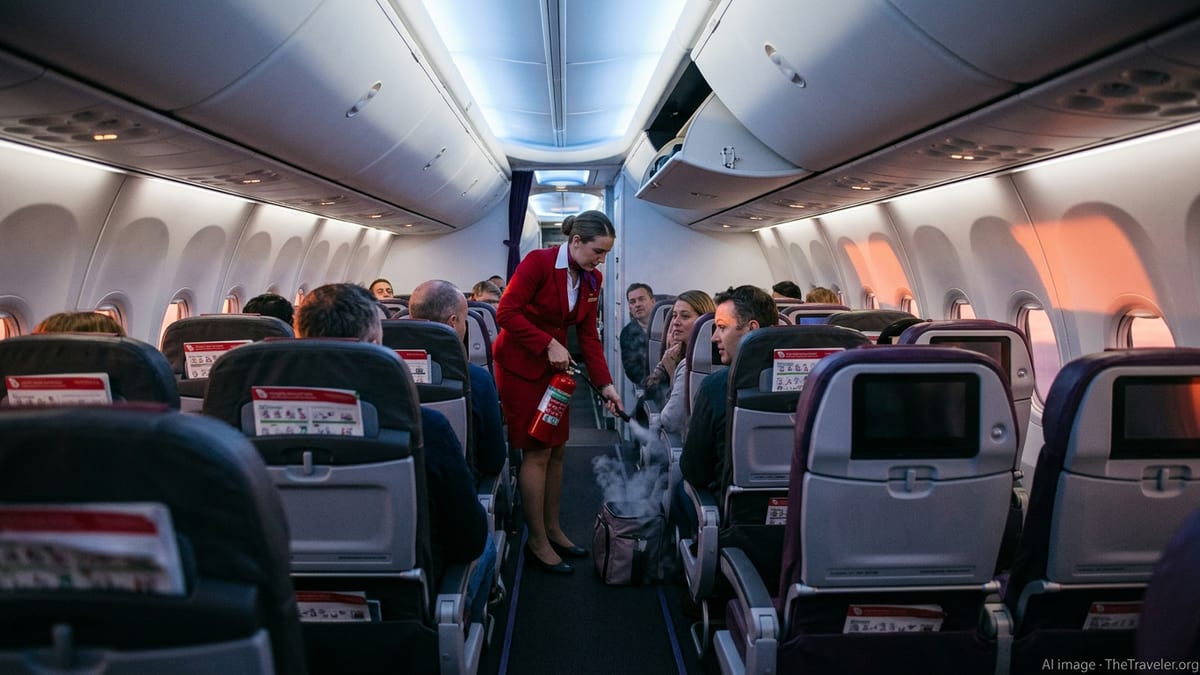
Vape Scare Highlights Ongoing Lithium Battery Risks in the Cabin
Reports shared by passengers and local coverage indicate that a vape device ignited on a Virgin Australia flight operating between Brisbane and Melbourne on Sunday 15 March 2026, prompting the crew to declare a PAN emergency and request priority handling on arrival. Social media and forum accounts describe smoke and a brief visible flame before the device was extinguished by cabin crew using onboard firefighting equipment.
The episode is the latest reminder that small personal electronics, including vapes and e-cigarettes powered by lithium-ion batteries, continue to pose a fire risk when carried into the cabin. Global safety databases record dozens of similar incidents in recent years, ranging from overheating power banks in overhead bins to e-cigarettes activating accidentally in pockets or bags. While most are contained quickly, they demand immediate response because even a small fire at altitude can escalate rapidly.
Virgin Australia has long required passengers to keep battery-powered devices in carry-on baggage and prohibits their use or charging in checked luggage, consistent with international guidance. The Melbourne incident appears to have occurred despite these rules, underscoring the challenge airlines face in enforcing compliance and educating passengers about the hazards associated with vaping devices at 30,000 feet.
Aviation safety specialists have repeatedly pointed to lithium batteries as one of the fastest-growing operational risks for airlines, with regulators tightening packaging and carriage requirements for both cargo and passenger flights. The Virgin Australia vape scare feeds into this broader pattern and ensures the topic remains prominent in risk assessments and public debate.
Emirates and Lufthansa Move to Clamp Down on Onboard Power Use
The focus on Virgin Australia comes as other major carriers, including Emirates and Lufthansa, adjust policies in response to battery-related fires. Publicly available information shows that Emirates introduced a ban on the use of power banks during flight in late 2025, following a series of global incidents involving overheating portable chargers and e-cigarettes. Passengers may still carry compliant power banks in the cabin, but they must remain unplugged for the duration of the flight.
Lufthansa Group has taken similar steps. Corporate updates published in January 2026 detail new rules that prohibit passengers from using or charging power banks on board its airlines from mid-January onward. The move follows a 2025 incident in which a power bank ignited in the overhead compartment of another carrier’s aircraft in Asia, an event widely cited across the industry as a warning about how quickly smoke can fill a cabin if a device fails inside a closed locker.
Both carriers already enforce restrictions on e-cigarettes and vapes, requiring them to be carried only in hand luggage and kept switched off, while use on board remains strictly banned. These changes illustrate a tightening regime in which airlines are trying to reduce the number of live lithium-powered devices in use simultaneously, limiting charging, discouraging improvised connections and encouraging passengers to store devices where crew can access them quickly.
For travellers, these evolving rules can feel restrictive, particularly on long-haul journeys where demand for in-seat power is high. However, the Virgin Australia incident is likely to strengthen the case for such measures and may encourage other airlines in the Australia–Middle East–Europe corridor to clarify or toughen their own guidelines around vapes, power banks and portable electronics.
Public Perception, Airline Reputation and Australia’s Tourism Ambitions
The vape emergency arrives at a time when Australia’s visitor economy is finally regaining momentum. Data from national tourism and statistics agencies indicate that international arrivals through late 2025 matched or slightly surpassed comparable pre-pandemic monthly totals, with spending by overseas visitors reaching or exceeding 2019 levels. Forecasts for 2026 from Tourism Research Australia point to around 10 million international arrivals, signalling a full return in headline numbers if current trends hold.
That recovery depends heavily on long-haul aviation links. Expanded air capacity and dozens of new or reinstated routes into Australian gateways have been credited with lifting hotel occupancy, length of stay and total visitor expenditure. Industry reports suggest that additional international services could deliver well over a million extra short-stay visitors by the end of 2026, supporting jobs across accommodation, tours and regional destinations.
Against this backdrop, any event that raises questions about flight safety, even if swiftly contained, has the potential to influence sentiment among would-be travellers. Surveys of long-haul travellers released in early 2026 show a more cautious mindset, with safety and reliability ranking alongside cost and flexibility as key decision drivers. For destination marketers, the safety reputation of partner airlines is increasingly intertwined with the broader appeal of the country itself.
Virgin Australia, Emirates and Lufthansa all play important roles in connecting major source markets to Australian cities, whether through direct services or one-stop itineraries via hubs in the Middle East and Europe. Their efforts to demonstrate robust battery-safety measures, crew training and incident response capacity will form part of the wider story that Australia presents to international audiences about the reliability of its aviation links.
Will Battery Incidents Deter Long-Haul Travellers?
History suggests that isolated cabin incidents, particularly those that end without injuries, rarely trigger mass cancellations. Travellers are familiar with in-flight announcements about not charging devices and with cabin crew intervening when smoke alarms register potential issues in lavatories. Many regard such responses as evidence that systems work as designed rather than as signs of systemic danger.
Yet the cumulative effect of repeated stories about onboard fires, diversions or emergency responses can shape perceptions over time. For first-time long-haul travellers from emerging markets, where awareness of lithium battery rules may be lower, coverage of a vape fire on an Australian domestic flight can amplify anxieties about unfamiliar aircraft environments. Travel advisers already report fielding more questions about cabin safety and medical readiness, especially from older travellers and family groups.
There is also a competitive dimension. Europe has positioned itself strongly on the themes of safety and infrastructure reliability in recent travel-intention barometers, which may help sustain demand from markets like Australia despite cost pressures. If safety narratives around long-haul flying to and from Australia become more negative, some travellers could opt for closer regional destinations in Asia or the Pacific that feel less complex or daunting, even if the objective risk of a cabin battery incident remains very low.
For now, analysts generally view lithium battery fires as a contained operational challenge rather than a macro threat to aviation demand. Aircraft are equipped with fire extinguishers and procedures designed around such scenarios, and cabin crew undergo recurrent training to respond rapidly to smoke or flames. The key question for tourism is whether airlines and regulators can keep incident rates low enough, and communication clear enough, that confidence in long-haul travel keeps growing in line with capacity.
Policy Responses and the Next Phase of Safety Messaging
In the wake of the Melbourne vape scare, attention is likely to turn to whether existing regulations and passenger education campaigns are sufficient. Aviation regulators have progressively updated guidance on the carriage of vapes, e-cigarettes and spare batteries, generally requiring them to be kept in the cabin rather than checked luggage so that any malfunction can be addressed quickly. Some industry commentators are now asking whether more explicit briefings, clearer signage at boarding gates or stricter enforcement at security checkpoints are needed.
Airlines including Virgin Australia, Emirates and Lufthansa are expected to continue refining their own policies, potentially aligning more closely around bans on in-flight charging of personal batteries and tighter controls on where devices can be stored during take-off and landing. Any coordinated approach among major carriers could simplify messaging for passengers who move frequently between different jurisdictions and service models.
Australia’s tourism authorities, meanwhile, are investing heavily in campaigns that promote the country as a safe, high-quality, nature-rich destination. Those messages sit alongside broader efforts to ensure that airports, airlines and visitor infrastructure are seen as modern and dependable. As international arrivals approach and then exceed pre-pandemic levels, maintaining that perception will require both transparent reporting of incidents and visible, practical steps to minimise the chance of recurrence.
For global aviation, the Virgin Australia vape fire is one more data point in an ongoing struggle to balance connectivity with the realities of a battery-powered world. How quickly airlines, regulators and travellers adapt to stricter norms around personal electronics may help determine whether such incidents remain rare footnotes in safety reports or edge closer to a factor that shapes the future trajectory of long-haul tourism to destinations like Australia.