

More news on this day
A Virgin Australia flight operating between Brisbane and Melbourne declared an in-flight emergency after a vape device reportedly ignited in the cabin, prompting a full emergency response yet ending in a controlled, uneventful landing that highlighted the effectiveness of modern airline safety procedures.
Get the latest news straight to your inbox!
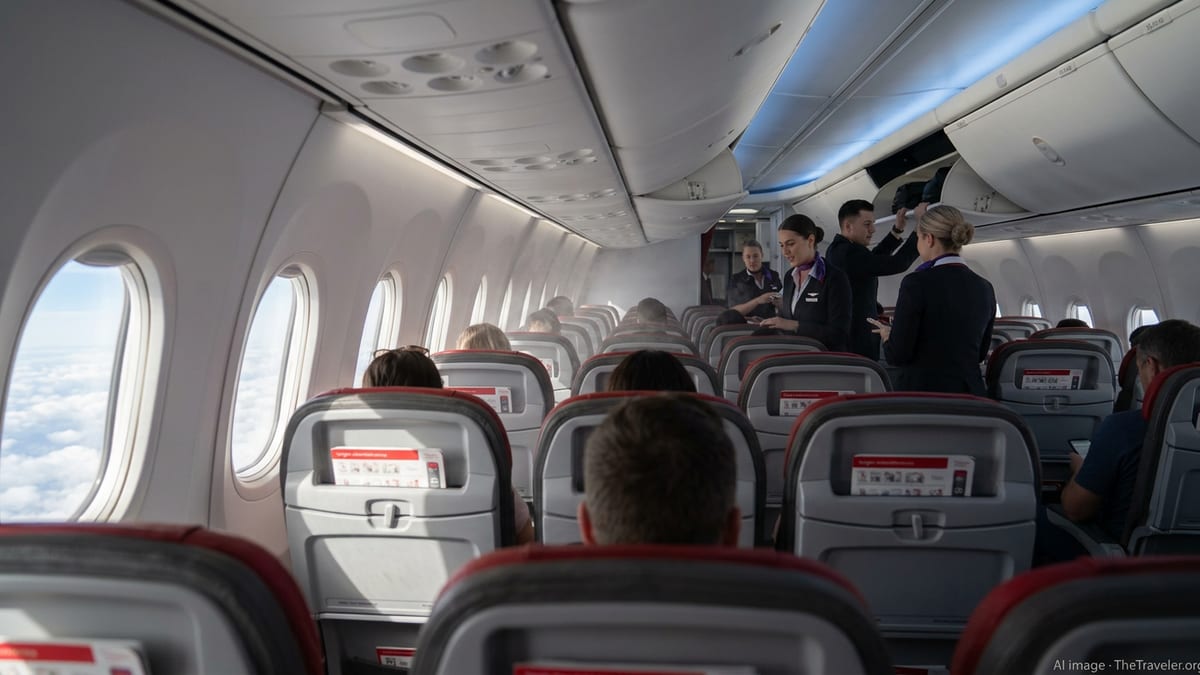
Emergency Declared After Vape Ignites Mid-Flight
Recent reports from Australian aviation watchers and passenger accounts indicate that a Virgin Australia service on the busy Brisbane–Melbourne route experienced an onboard incident when a vape device ignited in the cabin. The flight crew issued a PAN alert, an internationally recognised urgency call that signals a serious but manageable situation, and the aircraft entered a holding pattern while an emergency response was prepared on the ground at Melbourne Airport.
Passengers reported seeing smoke in the cabin after the vape malfunctioned, triggering an immediate crew response. The situation was quickly brought under control, and there were no injuries reported among those on board. The aircraft landed safely with fire and rescue teams positioned alongside the runway as a precaution, consistent with standard procedures for any in-flight fire or smoke event.
While full official documentation of the event has not yet been released, publicly available commentary suggests that the device did not experience a full lithium battery thermal runaway of the kind seen in more severe incidents. Even so, the episode demonstrated how quickly a small electronic device can disrupt a routine domestic service and require the coordinated activation of emergency protocols.
Safety Protocols Contain Risk and Protect Passengers
In-cabin fires are treated as among the most serious scenarios in commercial aviation, and airlines train extensively for rapid response. On this Virgin Australia flight, the crew’s actions followed widely accepted procedures for dealing with smoke or fire from a personal electronic device, including isolating the source, alerting the flight deck and preparing the cabin for a possible expedited landing.
Standard guidance for cabin crews in such events typically involves using fire extinguishers to knock down visible flames, then applying water or non-alcoholic liquids to cool the device and reduce the risk of reignition. Reports suggest that the response on board the Brisbane–Melbourne service was swift enough that the incident remained a contained cabin event rather than escalating into a larger emergency.
Industry records from past cases show that even relatively small lithium-powered items such as vapes, smartphones and power banks can generate intense heat if they malfunction, particularly in enclosed spaces. Aviation safety specialists have repeatedly highlighted that early detection, calm management and adherence to checklists are the factors most strongly associated with safe outcomes in these situations, all of which appear to have been present on this flight.
Growing Focus on Lithium Battery and Vape Risks
The incident comes amid heightened scrutiny of lithium battery risks on aircraft across Australia and globally. Previous events involving Virgin Australia, including a power bank fire on a Sydney–Hobart service that led to minor damage in an overhead locker, have already prompted tighter policies on how portable batteries are carried and used on board.
Regulators and airlines have gradually tightened rules on lithium-powered devices as incident data has accumulated. International safety bodies recommend that power banks and many spare batteries travel only in carry-on baggage so that crews can quickly intervene if a failure occurs. Some carriers have gone further, restricting the in-flight use of power banks and reinforcing messaging on the correct handling of e-cigarettes and vapes.
Vaping itself is typically prohibited during flights under airline conditions of carriage, which generally categorise vapes alongside smoking devices. However, vapes still rely on lithium cells, and those can fail whether or not the device is being actively used. That reality has driven calls from aviation safety advocates for clearer passenger education and stronger enforcement of existing onboard restrictions.
Passenger Awareness Now Central to Onboard Safety
While the Brisbane-linked vape fire incident ended safely, it has reinforced a central message in modern air travel: passengers play a critical role in preventing in-flight emergencies. Publicly available airline policies urge travellers to keep personal devices, power banks and vapes within sight or in easily accessible cabin baggage, rather than buried deep in bags where a problem might go unnoticed.
Travellers are also being reminded to avoid packing lithium-powered devices in checked baggage, and to refrain from carrying items that appear swollen, damaged or modified. Aviation safety materials emphasise that any sign of heat, smoke, unusual noise or smell from an electronic device should be reported immediately to cabin crew so that procedures can be activated without delay.
For many passengers on short domestic hops between Australian cities, it can be tempting to overlook safety briefings or to assume that small devices pose minimal risk. The Virgin Australia incident has become another real-world example shared across social media and news coverage that even minor-seeming items, such as a single vape, can affect an entire flight if they fail in the wrong way at the wrong time.
What This Means for Future Flights into Brisbane and Beyond
Brisbane is one of Virgin Australia’s major domestic hubs, and the incident has drawn fresh attention to the airline’s safety culture and operational readiness. The controlled handling of the event, combined with the safe landing and absence of injuries, aligns with a broader industry pattern where robust training and clear checklists are limiting the consequences of lithium-related incidents when they arise.
For travellers, the most immediate effect is likely to be more frequent and more explicit pre-flight announcements about the carriage and use of vapes, e-cigarettes and portable batteries. Some passengers have already reported additional reminders during boarding and safety demonstrations on Australian domestic services, reflecting a wider push to make cabin environments more resilient to device-related problems.
The vape fire on the Brisbane–Melbourne route sits within a wider global discussion about how aviation can safely coexist with the rapid proliferation of personal electronics. As airlines refine their policies and regulators evaluate new data, the core expectation for passengers remains unchanged: follow crew instructions, respect device rules and treat every safety message as directly relevant. When that happens, as this Virgin Australia flight demonstrated, even an unexpected mid-air emergency can be managed in a way that keeps everyone on board safe.