

More news on this day
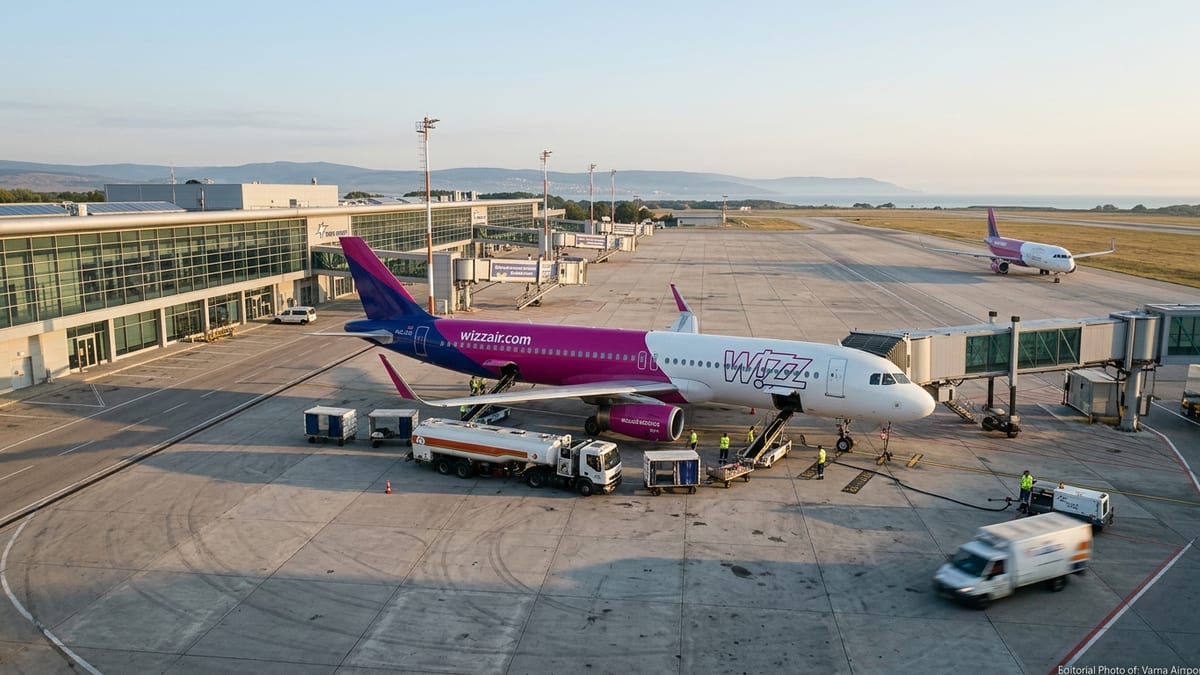
Varna Airport is emerging as one of the fastest-growing gateways on Bulgaria’s Black Sea coast, as low cost carrier Wizz Air adds new European routes, stations additional aircraft in the country and significantly increases seat capacity for upcoming seasons.
Get the latest news straight to your inbox!
New Wizz Air Routes Put Varna on More European Maps
Recent announcements from Wizz Air indicate that Varna will feature more prominently in the airline’s expanding European network over the next two summer seasons. Publicly available schedules and company communications show new and resumed links between Varna and several cities in Germany, Israel, the United Arab Emirates and other European markets, supported by aircraft based in Bulgaria.
Coverage from Bulgarian and international travel outlets highlights that Wizz Air is resuming or launching services from Varna to destinations such as Frankfurt-Hahn, Nuremberg, Tel Aviv and Abu Dhabi, while also opening new connections like Leipzig, which becomes the first direct link between the Black Sea city and that German market. Additional point to point services to Varna are appearing in the airline’s broader European expansion plans, including routes from Warsaw Modlin and Wrocław in Poland, as well as new flights tied to a larger network build-out from Bratislava.
The new and returning routes further diversify Varna’s catchment beyond its traditional focus on inbound leisure traffic from Central and Western Europe. With more city pairs on offer, the airport is positioned as both a sun and sea destination for foreign visitors and a low cost gateway for Bulgarian travelers heading to European cities for work, study or family visits.
Timetables published for the 2025 and 2026 summer seasons suggest that many of these routes will operate multiple times per week, increasing the likelihood that services become a regular feature rather than short term experiments. The broader pattern underlines Wizz Air’s intention to maintain Varna as an integral node in its Central and Eastern European network.
Capacity Surge Driven by Based Aircraft and Larger Fleet
The route announcements are backed by a notable rise in capacity. Industry coverage indicates that Wizz Air is basing additional Airbus A321neo aircraft in Bulgaria, including at coastal airports, and boosting its seat offer from the country by hundreds of thousands of seats year on year. In Varna’s case, reports describe capacity growth of close to 90 percent compared with 2024 levels once the full effect of extra aircraft and frequencies is factored in.
These gains are part of a wider fleet strategy in which Wizz Air increasingly deploys high density A321neo aircraft across its network. The type’s larger seat count, improved fuel efficiency and lower unit costs enable the airline to add capacity on existing routes and open thinner markets that might not be viable with smaller aircraft. For Varna, this translates into more available seats at competitive fares on both established and new routes during peak summer months.
Fraport, the operator of Varna and nearby Burgas airports, has reported steady traffic growth at its Bulgarian coastal gateways, with combined passenger numbers rising and many group airports outpacing the performance of larger Western European hubs. In this context, Wizz Air’s expanded presence at Varna aligns with a broader upward trend, with low cost carriers capturing a growing share of regional leisure and visiting friends and relatives traffic.
While airline capacity plans can be adjusted in response to demand, operational conditions or regulatory changes, the scale of the announced increases signals a medium term commitment. The combination of more based aircraft, denser seating and higher frequencies suggests that Varna is expected to sustain, and potentially grow, its role as a seasonal high volume market within Wizz Air’s network.
Passenger Numbers Climb as Varna Strengthens Its Black Sea Role
Traffic statistics published by Fraport Twin Star show how Varna has been recovering and expanding in recent years. In 2024 the airport welcomed more than one million passengers, with a diverse flight program serving over one hundred destinations through dozens of airlines. Data for the summer of 2025 indicates that Burgas and Varna together posted a year on year increase in passenger traffic, underlining renewed strength in coastal tourism flows.
For the 2025 summer season, Fraport reported that Varna would be served by more than sixty routes in over twenty countries, with several airlines increasing frequencies on popular links. The schedule includes new carriers entering the market, alongside long standing operators that are rebuilding capacity after earlier reductions. Within this expanding ecosystem, Wizz Air features among the largest contributors to passenger volumes, often topping rankings of airlines by traffic at the airport.
Varna’s position as Bulgaria’s historical maritime capital supports its appeal as a leisure destination for travelers from Central Europe, the Nordic countries and the United Kingdom. The airport’s growing network also benefits local residents and businesses, who gain easier access to key European hubs and regional centers. As Wizz Air and other airlines invest in additional capacity, stakeholders in tourism and hospitality anticipate knock on effects in hotel occupancy, seasonal employment and related services.
However, the sharpened focus on growth also makes Varna more sensitive to fluctuations in European travel demand, currency movements and regulatory developments affecting low cost operations. The airport’s performance in upcoming seasons will depend on how resilient demand proves in the face of changing economic conditions and evolving competition on overlapping routes from other regional airports.
New Connectivity Boosts Tourism, Jobs and Competition
With Wizz Air’s enlarged schedule, Varna Airport is positioned to benefit from a wider mix of inbound source markets. New links from Poland, Germany, Slovakia and the Middle East broaden the city’s exposure beyond its traditional core of charter and package tour traffic. Travel industry analysis suggests that such diversification can lengthen the effective season, attract independent travelers and encourage repeat visits.
Local tourism bodies and businesses are preparing for the impact of these changes through marketing campaigns and product development aimed at city breaks, cultural tourism and conferences alongside beach holidays. Increased flight options at competitive prices can help Varna compete more directly with other Black Sea and Mediterranean destinations that also rely heavily on low cost air access.
The additional capacity is expected to support seasonal employment at the airport and in related sectors such as ground handling, retail and hospitality. As more flights are scheduled in early spring and late autumn, some operators anticipate longer contracts for staff and more stable planning horizons. At the same time, there is growing discussion in Bulgarian media about the need to balance rapid growth with investment in infrastructure, service quality and environmental management.
Competition on routes to and from Varna is likely to intensify, particularly as other low cost and leisure carriers adjust their own offerings in response to Wizz Air’s expansion. Travelers stand to benefit from a wider choice of departure points and potentially lower fares, though they may also face the typical volatility associated with ultra low cost models, including occasional schedule changes and shifting seasonal patterns.
Strategic Outlook for Varna as a Regional Low Cost Hub
Looking ahead to the 2026 summer season, published route plans and capacity projections suggest that Varna will continue to evolve from a primarily charter focused airport into a more robust low cost hub for Bulgaria’s northern Black Sea coast. Wizz Air’s decision to integrate new Varna routes into its broader Central and Eastern European expansion, alongside growth in markets such as Poland and Slovakia, connects the city more tightly to a continental network of secondary airports.
Industry observers note that this strategy reflects wider trends in European aviation, where point to point low cost connections increasingly bypass traditional hub airports. For Varna, the practical outcome is a higher profile among travelers who may previously have associated Bulgaria only with Sofia or more established resort destinations. As awareness grows and more flights appear in online search results, the city’s tourism and business sectors may benefit from fresh demand.
Varna Airport’s long term trajectory will depend on how successfully it can accommodate rising volumes while maintaining operational reliability and passenger experience. Infrastructure investments in terminal facilities, airside capacity and ground transport links will shape the airport’s ability to handle peak period traffic generated by dense low cost operations. Coordination between the airport operator, airlines and local authorities will remain central to sustaining the current growth phase.
For now, the combination of strong capacity growth from Wizz Air, expanding route maps and encouraging passenger figures positions Varna among the more dynamic regional airports in Southeast Europe. The next two summer seasons will test whether the current wave of low cost expansion can be converted into durable, year on year growth for Bulgaria’s Black Sea gateway.