

More news on this day
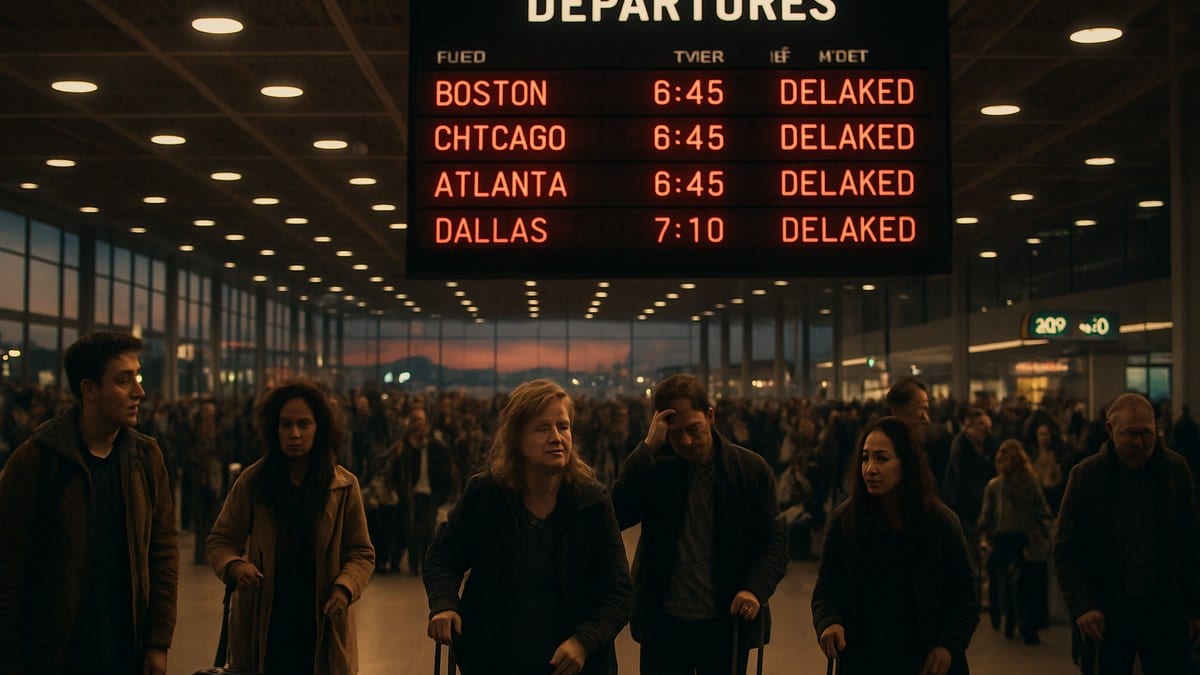
Hundreds of travelers were left in limbo at Harry Reid International Airport in Las Vegas on April 11, 2026, as an unusual wave of delays and cancellations rippled through one of the United States’ busiest leisure gateways.
Get the latest news straight to your inbox!
Heavy Disruption Hits Key Las Vegas Hub
Publicly available flight-tracking data and industry reports show that Harry Reid International Airport experienced an abnormal spike in operational problems on April 11, with more than 250 flights delayed and several canceled. One sector-focused outlet reported 251 delayed departures and arrivals and two cancellations tied to the disruption, leaving terminals crowded with passengers waiting for updated departure times and available seats.
The disruption came at a time when Las Vegas has been actively rebuilding and expanding its air connectivity. Recent traffic summaries and route announcements indicate that Harry Reid remains a critical entry point for both domestic and international visitors, even as overall volumes have softened slightly compared with prior record years. That importance meant that even a relatively small number of outright cancellations, combined with extensive delays, translated quickly into hundreds of stranded travelers.
While the full operational picture is still emerging, the April 11 event stands out from the airport’s usual pattern of manageable congestion and seasonal busy periods. In recent weeks, many Las Vegas-bound passengers have reported relatively smooth experiences at security and check-in, suggesting that the sudden surge in disruption caught some travelers and airlines off guard.
The problems in Las Vegas also appeared against a broader backdrop of April flight issues across the United States. A separate analysis of National Airspace System data for early April highlighted multiple major hubs, including Las Vegas, that were dealing with weather-related constraints and knock-on congestion, underscoring how quickly local problems can feed into national bottlenecks.
Weather, Network Strain and Knock-on Delays
National aviation summaries for April 2026 indicate that Las Vegas has been among several airports affected by weather-related constraints and airspace management programs. Recent Federal Aviation Administration reporting has pointed to wind and low-visibility patterns as recurring challenges at various hubs during the month, with Harry Reid listed among airports seeing weather-driven impacts on operations.
Even when conditions at the field remain flyable, strong or shifting winds can require wider spacing between aircraft arrivals and departures, reducing runway capacity. When combined with heavy weekend schedules and large numbers of leisure travelers, this can quickly translate into extended departure queues, gate holds, and arrival delays for inbound flights waiting for a place to park. Industry briefings have repeatedly noted that this kind of constrained throughput can ripple across airline networks.
On April 11, route and hub data suggest that delays at Harry Reid affected flights to and from major U.S. cities including Los Angeles, Denver, Chicago, New York, and Toronto. Carriers with significant Las Vegas operations, such as American, Delta, United, and several low-cost airlines, all saw schedules pushed back as aircraft and crews became out of position. This type of cascading disruption often leaves travelers facing missed connections and unexpectedly long layovers.
Air travel analysts have emphasized that even a modest number of cancellations can amplify the impact of delays. When two or three flights are canceled at a busy leisure hub, displaced passengers frequently need to be rebooked through alternative cities or onto later departures that are already near capacity, which can leave many people waiting in terminals for hours while airlines search for available seats.
Passenger Experience on the Terminal Floor
Social media posts and on-the-ground descriptions from Las Vegas on April 11 depicted long lines at departure gates, crowded seating areas, and passengers stretched along terminal corridors as they waited for updated information. Some travelers reported multiple rolling departure time changes as airlines worked through maintenance checks, crew rest requirements, and slot restrictions further along their routes.
The experience contrasted with reports from earlier in the month, when travelers described early-morning and late-evening departures from Harry Reid as relatively uncrowded, with short waits at security. The sudden shift highlighted how quickly conditions at a major hub can change when weather, airspace, and network strain converge on a single day.
Harry Reid has recently introduced tools aimed at making the passenger journey more predictable, including real-time security checkpoint wait times displayed on the airport’s website and on flight information screens. According to local news coverage, the system is designed to give departing passengers a better sense of when to leave their hotel or home, although the airport has cautioned that conditions can change rapidly and that travelers should still follow standard guidance for arrival times.
For passengers caught in the April 11 disruption, those technological improvements were only part of the story. Once delays spread across gates and baggage carousels, stranded travelers still faced familiar frustrations such as difficulty finding updated information, limited food and seating options in crowded concourses, and uncertainty over when replacement flights or hotel accommodations might become available.
Traveler Rights and Options During Major Disruptions
Consumer-rights organizations tracking U.S. flight disruptions in April have pointed to the Las Vegas delays as another reminder for passengers to understand their options when flights are significantly late or canceled. Guidance from advocacy groups notes that in the United States, airlines are not automatically required to provide compensation for weather-related or air-traffic-control-driven delays, but they may offer rebooking, meal vouchers, or hotel accommodations under certain circumstances as a customer service gesture.
Tools provided by third-party flight-disruption specialists outline several steps stranded passengers can take. These include checking whether their disruption qualifies for compensation under carrier policies, monitoring alternative routing options on mobile apps or departure boards, and keeping documentation of boarding passes and delay notifications. Some services also encourage travelers to proactively request rebooking through digital channels to avoid lengthy queues at airport service desks on heavily disrupted days.
Recent analyses of April’s nationwide disruption patterns emphasize that major hubs like Las Vegas, Atlanta, Denver, Houston, Phoenix, and Washington-area airports have all experienced pressure from a combination of weather and traffic-management initiatives. Travelers using these airports are being advised by travel-planning outlets to build extra buffer time into itineraries, particularly when connecting to cruises, tours, or time-sensitive events in Las Vegas.
For those already at Harry Reid when the April 11 disruption unfolded, the situation underscored the value of flexible tickets and travel insurance that explicitly covers delays and missed connections. Policy fine print can vary, but some plans reimburse additional hotel nights, meals, and transportation costs when travelers are forced to extend stays because of severe schedule changes.
What the April Chaos Signals for Upcoming Travel
The April 2026 turbulence at Harry Reid arrives just as Las Vegas enters a busy calendar of conventions, entertainment residencies, and sports events that typically draw spikes in visitor numbers. Airport traffic reports from 2025 show that the hub handled nearly 55 million passengers last year, underscoring the scale of demand that even minor operational hiccups can affect.
At the same time, industry briefings suggest that Las Vegas has seen a modest year-on-year softening in passenger volumes, a shift that could give airlines slightly more room to absorb irregular operations if managed carefully. Route announcements in early April highlighted new and expanded services to and from Las Vegas, indicating that carriers still view the city as a key growth market for both domestic and international leisure travel.
Infrastructure upgrades at Harry Reid, including digital tools such as live TSA wait-time displays and ongoing airfield and roadway projects, are intended to support that growth by smoothing bottlenecks that have historically triggered lengthy queues. However, the events of April 11 show that even upgraded facilities remain vulnerable to the combined pressures of weather, air traffic control measures, and tightly wound airline schedules.
For upcoming travelers, the message emerging from April’s disruption is to watch conditions closely in the days before departure, make use of airline and airport apps for real-time updates, and allow additional time at the airport when flying during peak periods. As Las Vegas continues to attract visitors for its shows, sports, and convention business, the reliability of flight operations at Harry Reid will remain a central factor in how smoothly those journeys begin and end.